
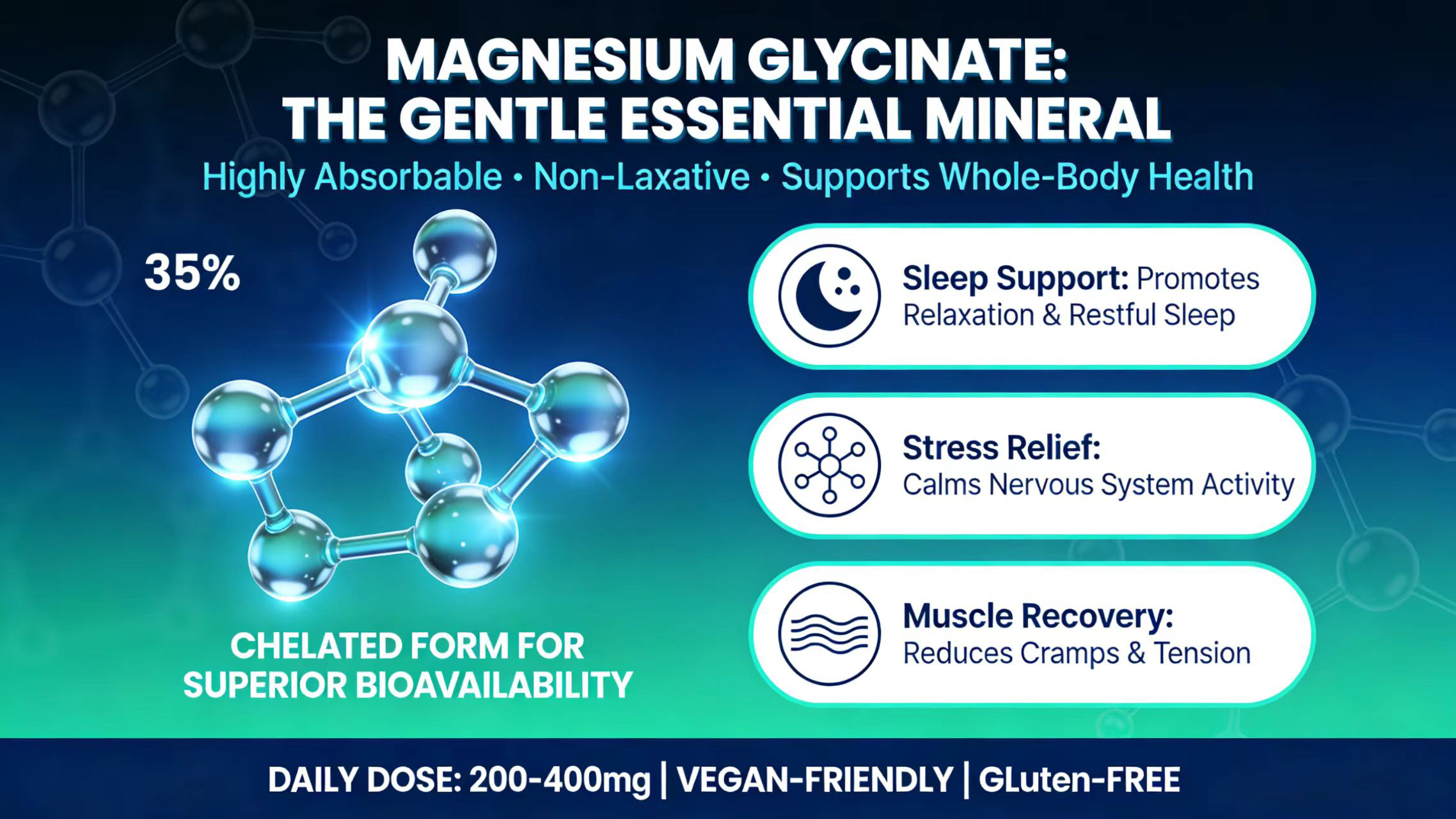
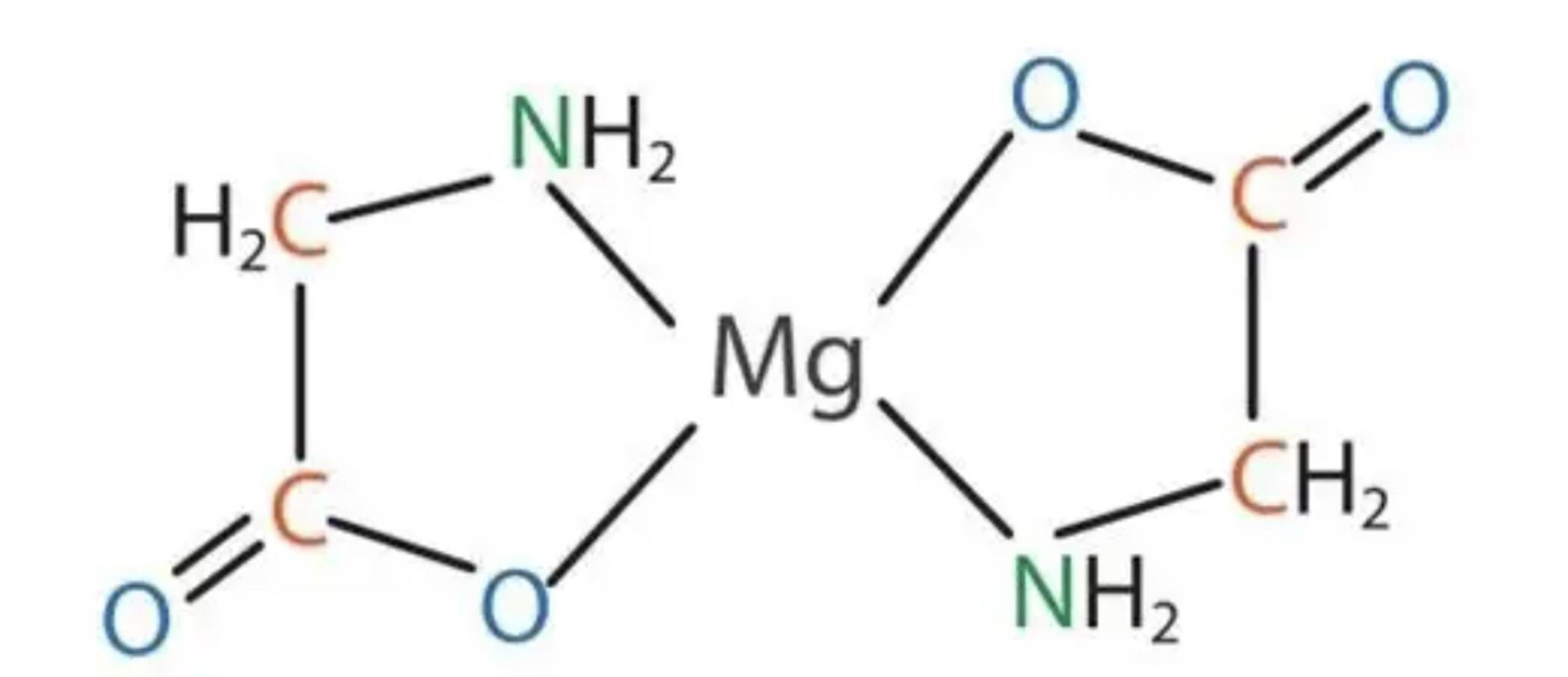
Magnesium glycinate is a form of magnesium where the mineral is bound to glycine, an amino acid. This chelated form affects how it’s absorbed and utilized in the body. Here’s a detailed breakdown:
Absorption
1. Chelation Enhances Absorption
- Magnesium glycinate is a chelated magnesium, meaning magnesium ions are attached to glycine molecules.
- This chelation protects magnesium from interacting with substances in the gut that can inhibit absorption, like phytates (found in grains) or oxalates (found in spinach).
- As a result, magnesium glycinate tends to have higher bioavailability than non-chelated forms like magnesium oxide.
2. Transport into Cells
- Glycine helps magnesium cross the intestinal wall via amino acid transporters.
- This allows magnesium to enter the bloodstream more efficiently.
3. Gentle on the Gut
- Unlike some magnesium salts (e.g., magnesium citrate or oxide), magnesium glycinate is less likely to cause diarrhea, because it is absorbed in the small intestine rather than drawing water into the colon.
Utilization in the Body
Once absorbed, magnesium glycinate serves multiple critical roles:
1. Enzymatic Functions
- Magnesium is a cofactor for over 300 enzymatic reactions.
- These include energy production (ATP synthesis), protein synthesis, and regulation of neurotransmitters.
2. Muscle and Nerve Function
- Magnesium helps regulate nerve signals and muscle contractions, supporting relaxation and preventing cramps.
3. Bone Health
- Magnesium is stored in bones and helps regulate calcium balance and bone density.
4. Cardiovascular Support
- It plays a role in maintaining normal heart rhythm, blood pressure, and vascular tone.
5. Nervous System and Sleep
- Magnesium glycinate is glycine component may also contribute to calming effects on the nervous system, potentially improving sleep quality.
Summary
- Absorption: High due to chelation with glycine, gentle on the gut, fewer gastrointestinal side effects.
- Uses in the body: Supports enzymatic reactions, muscle and nerve function, bone health, cardiovascular function, and may promote relaxation and sleep.