
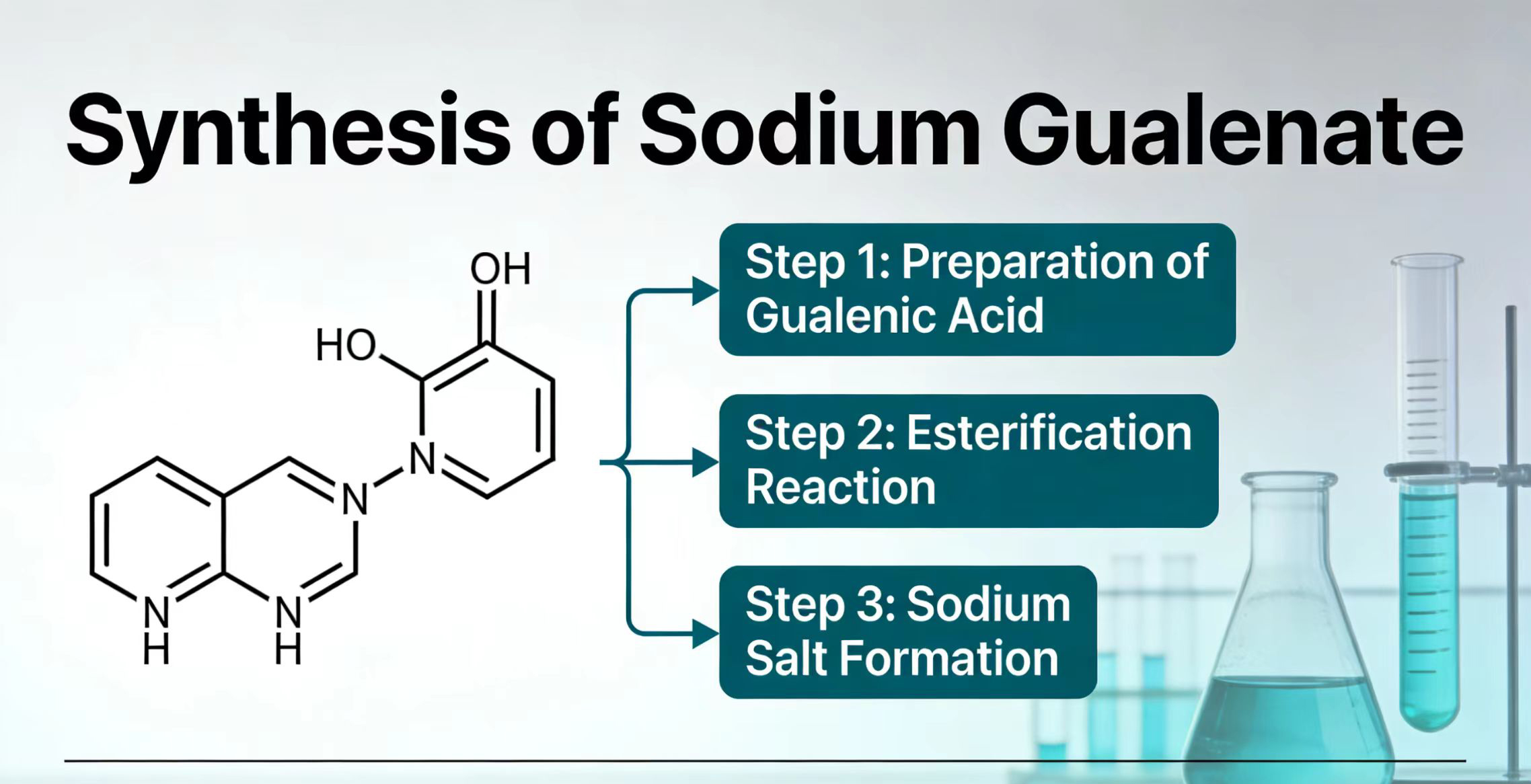
Sodium Gualenate is the sodium salt of gualenic acid, which is often used in pharmaceuticals, cosmetics, and industrial formulations for its bioactive properties. Here’s a detailed overview of the synthesis of Sodium Gualenate:
Chemical Background
Sodium Gualenate is the sodium salt form of gualenic acid (a derivative of guaiazulene-type compounds), often used for its anti-inflammatory and skin-protective properties. It is water-soluble, which makes the sodium salt form preferable for formulations.
General formula:
C15H9NaO3
Materials Required
- Gualenic acid (or its precursor)
- Sodium hydroxide (NaOH) solution
- Distilled water
- Optional: ethanol or another solvent for purification
Synthesis Steps
Step 1: Dissolving Gualenic Acid
- Dissolve the gualenic acid in a minimal amount of warm distilled water or ethanol.
- Ensure complete dissolution to allow for proper reaction with NaOH.
Step 2: Formation of Sodium Salt
- Slowly add an aqueous sodium hydroxide solution (e.g., 0.1–1 M) to the solution while stirring.
- The carboxylic acid group of gualenic acid reacts with NaOH to form the sodium salt:
C15H10O3+NaOH→C15H9NaO3+H2O
- Maintain a slightly basic pH (~7–8) to ensure complete conversion.
Step 3: Purification
- Filter out any undissolved solids.
- Concentrate the solution under reduced pressure (rotary evaporation if using ethanol).
- Optional: crystallize the product by adding a non-solvent like cold acetone or ethanol.
Step 4: Drying
- Dry the obtained Sodium Gualenate under vacuum at a low temperature (~40–50°C) to avoid decomposition.
Key Notes
- Temperature should be controlled; overheating can degrade the compound.
- Avoid excess NaOH; it can cause hydrolysis of other functional groups.
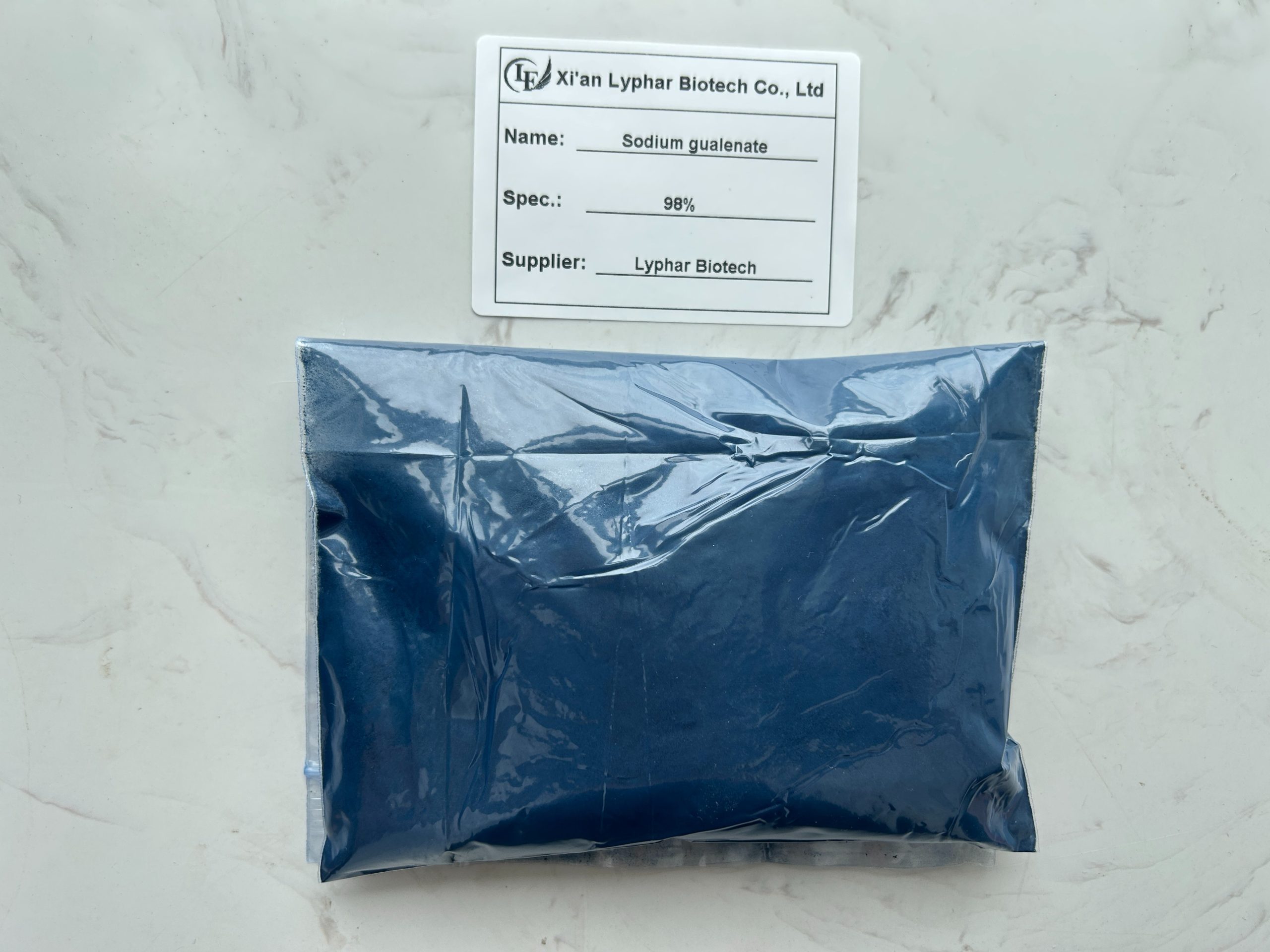
- The final product should be a white to light yellow crystalline powder.
If you want, I can also draw a step-by-step reaction scheme for this synthesis, showing the structural changes from gualenic acid to Sodium Gualenate—it helps a lot for visualizing the reaction.
Do you want me to do that?