
Sodium Gualenate, Chamomile Blue (blue chamomile / azulene), and Guazulene (guaiazulene) — focusing on what they are and how they differ in cosmetic or therapeutic use:
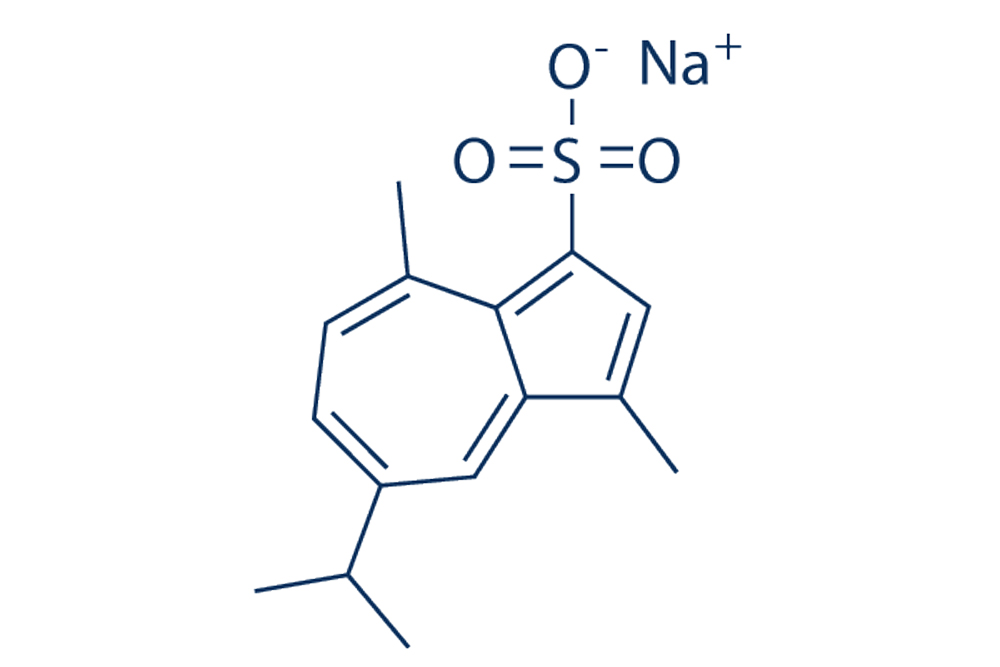
1. Sodium Gualenate
What it is:
- A derivative of azulene — chemically its sodium sulfonate salt (often called sodium guaiazulene sulfonate). It’s water-soluble and has a distinctive blue color.
Primary roles:
- Soothing & anti-inflammatory: helps calm irritated skin.
- Skin repair: used for reducing irritation and promoting healing.
- Formulation aid: because it’s water-soluble and surfactant-friendly, it can help improve texture and compatibility in formulas.
How it differs:
- It’s a salt form of azulene, meaning it dissolves in water easier than the oil-soluble forms and can be more convenient in lotions/creams.

2. Blue Chamomile (Blue Chamomile Oil / Chamazulene)
What it is:
- A botanical extract — essential oil from German chamomile that gets its blue color from chamazulene, a compound formed during steam distillation.
Primary roles & benefits:
- Natural anti-inflammatory & soothing: reduces redness and irritation.
- Skin-calming and healing support: often used in oils, creams, and serum bases for sensitive or stressed skin.
- Aromatherapy: traditional use for relaxation and calming mood.
How it differs:
- This is a plant extract rich in multiple bioactives (not just azulene), including alpha-bisabolol and other terpenes, giving it broader traditional uses.
- Less standardized — effects can vary with plant source and distillation quality.
3. Guazulene (Guaiazulene)
What it is:
- A specific azulene derivative — a blue-colored hydrocarbon used in cosmetics either sourced from plants (chamomile, yarrow) or synthetically.
Primary roles & benefits:
- Anti-inflammatory and soothing: reduces skin irritation, redness, and reactivity.
- Antioxidant: can help protect skin from oxidative stress.
- Colorant: approved as a cosmetic color additive.
- Often valued in sensitive-skin serums, after-sun products, etc.
How it differs:
- It’s more specific and chemically consistent than chamomile oil — so products can label it directly and reliably.
- Usually oil-soluble (unlike sodium gualenate which is water-soluble).
Quick Comparison
| Feature | Sodium Gualenate | Blue Chamomile | Guaiazulene |
| Source | Derivative of azulene; sulfonated | Essential oil from chamomile | Azulene derivative (natural or synthetic) |
| Solubility | Water-soluble | Oil-soluble | Oil-soluble |
| Main use | Soothing, formulation aid | Soothing + traditional uses | Soothing + antioxidant + color |
| Complexity | One defined chemical | Complex botanical mixture | One defined chemical |
| Formulation flexibility | Better in water-based products | Best in oils/serums | Best in oil/serum formulas |
In Practical Skincare Terms
- Sodium Gualenate is great if you want the calming benefits of azulene in a water-compatible form.
- Blue Chamomile provides broader botanical properties beyond just azulene — soothing, calming, and aromatic.
- Guaiazulene is the pure azulene compound most often used for targeted anti-inflammatory and antioxidant effects in cosmetic products.
If you want, I can also give a ranking by skin type or typical uses (e.g., sensitive vs oily skin), or explain how they compare to other soothing ingredients like allantoin or centella asiatica.