
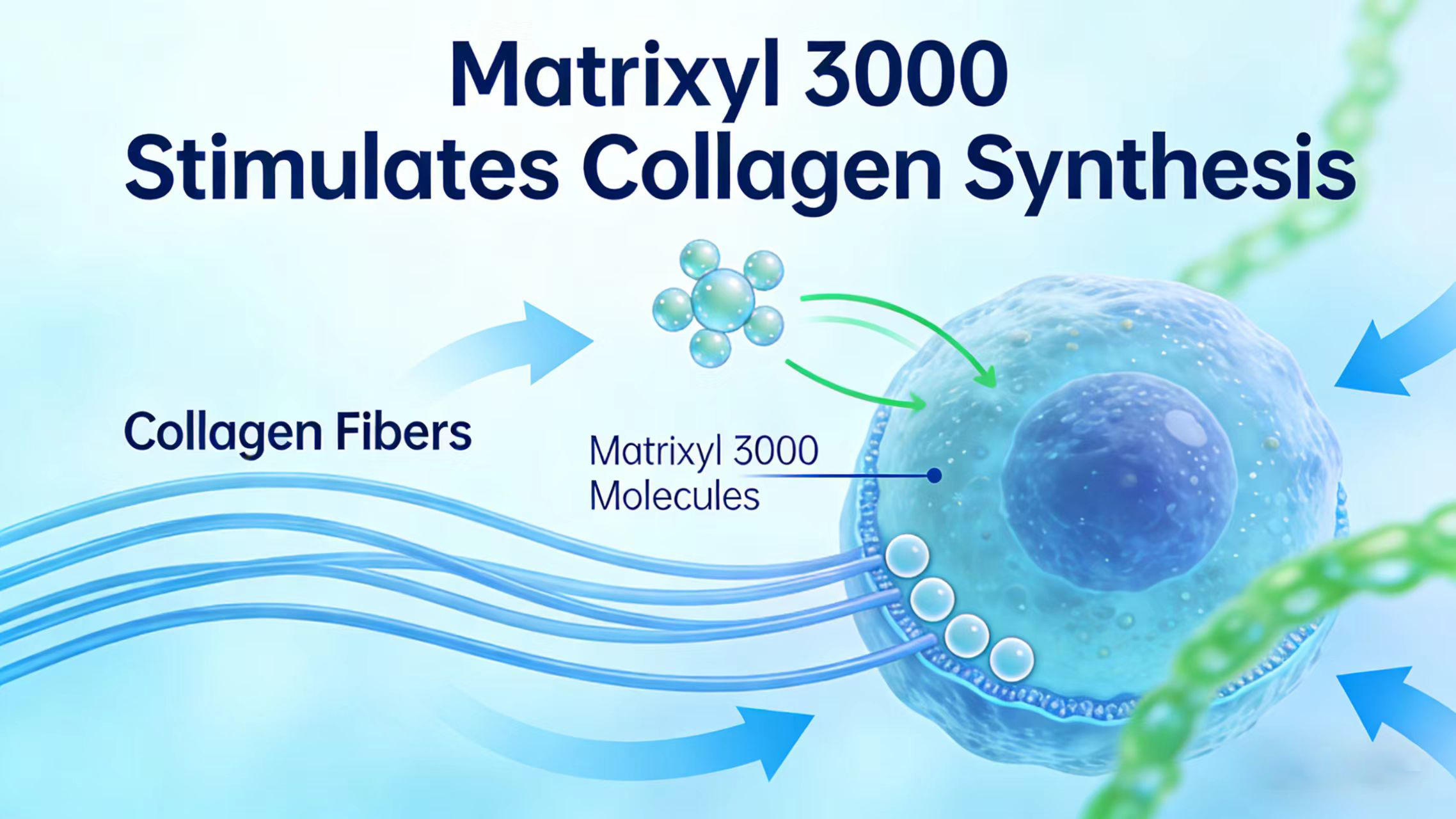
Matrixyl 3000 isn’t a single molecule—it’s a synergistic complex of two lipo-peptides. Because it’s a patented cosmetic ingredient, manufacturers don’t publish a full lab recipe, but the general synthesis concept is well understood and publicly described at a high level.
What Matrixyl 3000 Is Made Of
Matrixyl 3000 = Palmitoyl Oligopeptide + Palmitoyl Tetrapeptide
In INCI terms:
- Palmitoyl Tripeptide-1 (Pal-Gly-His-Lys)
- Palmitoyl Tetrapeptide-7 (Pal-Gly-Gln-Pro-Arg)
These are short bioactive peptides chemically linked to palmitic acid to improve skin penetration and stability.
High-Level Synthesis Strategy (Conceptual)
1. Peptide Backbone Formation
Each peptide is assembled from amino acids in a defined sequence
Industrially done using solid-phase peptide synthesis (SPPS)
Amino acids are added one at a time to ensure correct order and purity
(This step defines the biological activity)
2. Palmitoylation (Key Step)
Palmitic acid (a C16 fatty acid) is covalently attached to the N-terminus of each peptide
This lipid modification:
- Increases lipophilicity
- Enhances skin penetration
- Improves peptide stability
(Without palmitoylation, these peptides would be far less effective topically)
3. Cleavage & Purification
The finished lipo-peptides are released from the solid support
Purified to cosmetic-grade standards (removal of unreacted residues and by-products)
4. Complex Formation
The two purified palmitoylated peptides are:
- Combined at a defined ratio
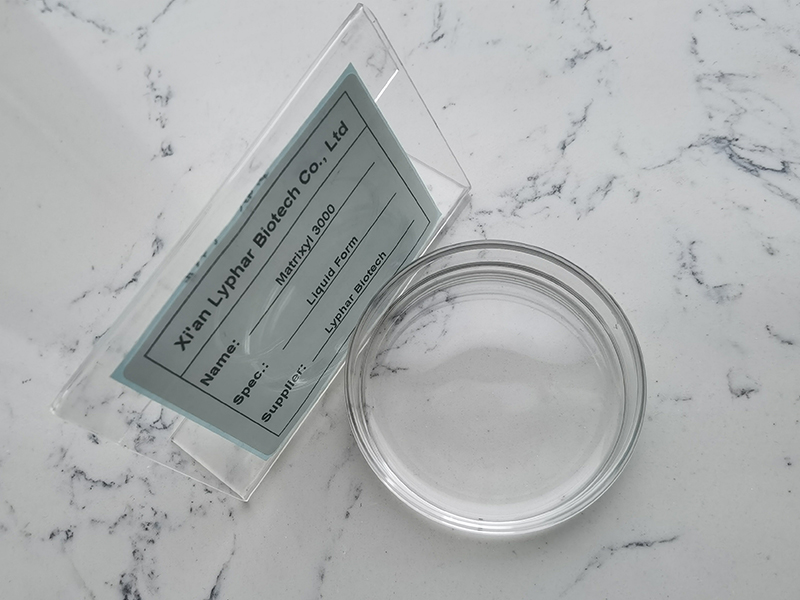
- Stabilized in a carrier system (often glycerin/water or similar cosmetic solvents)
This combination, not either peptide alone, is what gives Matrixyl 3000 its collagen-stimulating and anti-inflammatory synergy.
Why the Exact Recipe Isn’t Public
Matrixyl 3000 is patented and trademarked
Exact reaction conditions, ratios, and purification methods are proprietary
Public literature only describes mechanism and composition, not lab protocols
Summary (Quick View)
| Stage | Purpose |
| Peptide synthesis | Build bioactive sequences |
| Palmitoylation | Improve penetration & stability |
| Purification | Cosmetic-grade safety |
| Blending | Synergistic anti-aging activity |
If you want, I can also:
- Explain why these two peptides work better together
- Compare Matrixyl 3000 synthesis vs Matrixyl (Pal-Tripeptide-1 alone)
- Discuss formulation challenges (pH, solubility, stability)
- Outline regulatory / cosmetic manufacturing considerations
Just tell me how deep you want to go