
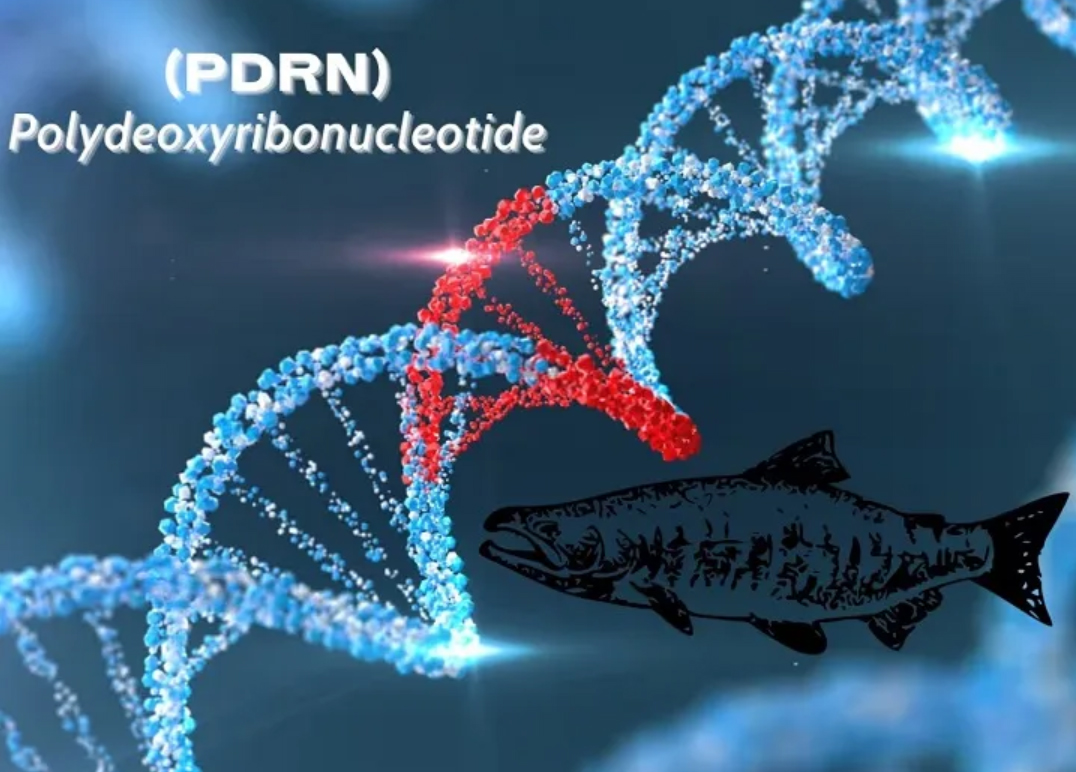
Polydeoxyribonucleotide (PDRN) is a biologically active DNA-derived polymer composed of deoxyribonucleotide chains. It is typically extracted from salmon or trout sperm DNA, purified, and standardized for medical and cosmetic use.
Polydeoxyribonucleotide is best known for its:
- Tissue regenerative properties
- Anti-inflammatory effects
- Angiogenesis (blood vessel formation) stimulation
It is widely used in wound healing, dermatology, orthopedics, and aesthetic medicine.
Origin and Composition
Polydeoxyribonucleotide consists of:
- Low- to medium-molecular-weight DNA fragments (50–1500 kDa)
- Purine and pyrimidine nucleotides (adenine, guanine, cytosine, thymine)
Source:
- Most commonly extracted from Oncorhynchus mykiss (rainbow trout) or salmon sperm
- Selected for high DNA yield and low immunogenicity after purification
Mechanism of Action
Polydeoxyribonucleotide works mainly through adenosine A2A receptor activation and DNA salvage pathways.
(1) Adenosine A2A Receptor Activation
Polydeoxyribonucleotide increases extracellular adenosine levels
Activates A2A receptors
Results in:
- Reduced inflammation (↓ TNF-α, IL-6)
- Increased VEGF (vascular endothelial growth factor)
- Enhanced tissue repair and angiogenesis
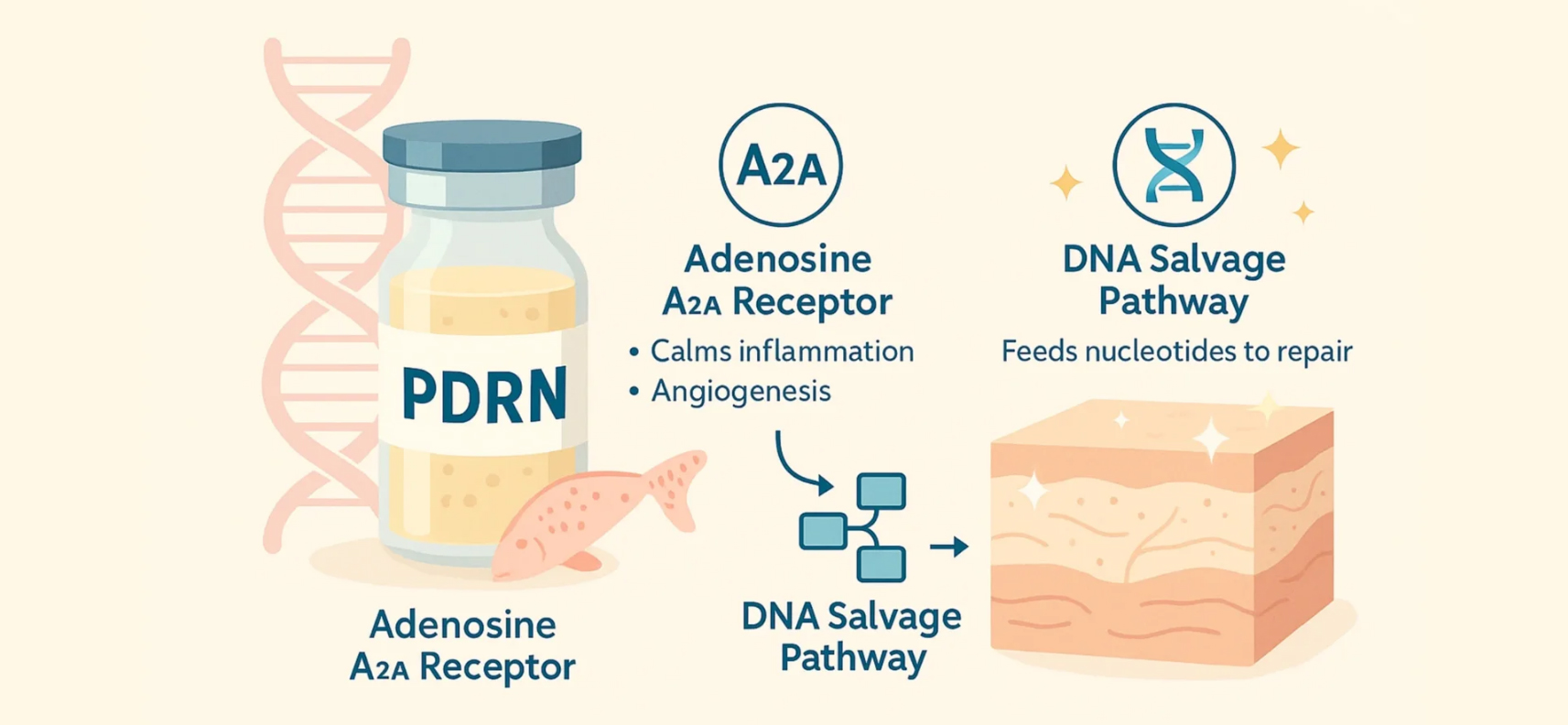
(2) DNA Salvage Pathway
Provides nucleotides for DNA synthesis
Supports:
- Cell proliferation
- Fibroblast activity
- Tissue regeneration
Pharmacological Effects
(1) Tissue Regeneration
- Stimulates fibroblast proliferation
- Enhances collagen synthesis
- Promotes skin and connective tissue repair
(2) Anti-inflammatory Action
- Suppresses inflammatory cytokines
- Reduces oxidative stress in damaged tissues
(3) Angiogenesis
- Increases VEGF expression
- Promotes formation of new capillaries
- Improves oxygen and nutrient delivery to injured tissue
(4) Wound Healing Acceleration
- Speeds up epithelialization
- Enhances recovery of chronic wounds
Clinical Applications
(1) Dermatology & Aesthetic Medicine
- Skin rejuvenation
- Treatment of acne scars
- Improvement of skin elasticity and hydration
- Post-laser or microneedling recovery
(2) Wound Healing
- Chronic ulcers (diabetic foot ulcers, venous ulcers)
- Surgical wound repair
- Burn injuries
(3) Orthopedics
- Tendon and ligament injuries
- Osteoarthritis (cartilage support and inflammation reduction)
(4) Urology (less common but studied)
- Bladder tissue repair in interstitial cystitis
Administration Methods
Polydeoxyribonucleotide is used in several forms depending on indication:
- Intradermal injections (mesotherapy): most common in aesthetics
- Topical formulations: creams, serums (lower penetration)
- Intra-articular injections: for joint disorders
- Subcutaneous or localized injections: wound sites
Typical aesthetic protocols:
- 2–4 sessions spaced 2–4 weeks apart
- Maintenance every 2–3 months
Evidence and Research Findings
(1) Skin and Aesthetic Studies
Clinical studies show:
- Improved skin elasticity
- Reduced wrinkle depth
- Enhanced dermal thickness
- Faster post-procedure healing
(2) Wound Healing Research
- Faster closure rates in chronic ulcers
- Improved granulation tissue formation
- Reduced inflammatory markers
(3) Osteoarthritis Studies
- Reduced pain scores
- Improved joint function
- Potential cartilage protective effects
Overall evidence is moderate and growing, with stronger support in dermatology and wound healing than in systemic diseases.
Safety Profile
Polydeoxyribonucleotide is generally considered safe and well-tolerated.
Common mild effects:
- Injection site redness
- Swelling
- Bruising
- Temporary discomfort
Rare effects:
- Allergic reactions (very uncommon due to purification)
- Infection risk (if improperly administered)
Because it is DNA-derived, purification quality is critical to avoid immunogenicity.
Contraindications
Polydeoxyribonucleotide should be avoided or used cautiously in:
- Known hypersensitivity to fish-derived products
- Active systemic infections
- Severe immune disorders (case-dependent)
- Pregnancy (insufficient safety data in some applications)
Advantages and Limitations
Advantages
- Biocompatible and low toxicity
- Multi-target regenerative action
- Suitable for combination therapies (laser, PRP, microneedling)
Limitations
- Requires repeated treatments
- Limited large-scale long-term clinical trials
- Variable regulatory approval across countries
- Effects are gradual, not immediate
Comparison with Similar Regenerative Therapies
| Therapy | Main Mechanism | Key Difference |
| Polydeoxyribonucleotide | Adenosine A2A + DNA salvage | Anti-inflammatory + regenerative |
| PRP | Growth factors from platelets | Autologous protein-based signaling |
| Hyaluronic Acid | Hydration and ECM support | Structural filler, not regenerative signaling |
Polydeoxyribonucleotide is often considered a true tissue repair stimulant, while HA is mainly structural and PRP is growth-factor driven.
Future Research Directions
- Enhanced drug delivery systems (nanocarriers, sustained release gels)
- Combination therapy with stem cells or exosomes
- Expanded use in neuroregeneration and chronic inflammatory diseases
- Standardized dosing protocols
Summary
Polydeoxyribonucleotide (PDRN) is a DNA-derived regenerative compound with strong anti-inflammatory, angiogenic, and tissue-repair properties. It is widely used in dermatology and wound healing, with promising applications in orthopedics and regenerative medicine. While generally safe and effective, its full potential is still being explored through ongoing clinical research.