
Pyridoxal-5-Phosphate (PLP), the active coenzyme form of vitamin B6, isn’t a “headline” lipid enzyme cofactor like CoA or NADPH—but it quietly shows up at several key crossroads of lipid metabolism, mostly by enabling amino-acid–derived steps that lipids depend on. Here’s the clean breakdown:
1. Sphingolipid synthesis (this is the big one)
Pyridoxal-5-Phosphate is essential here.
- Enzyme: Serine palmitoyltransferase
- Reaction:
L-serine + palmitoyl-CoA → 3-ketosphinganine → sphingolipids
- Pyridoxal-5-Phosphate role: Cofactor for the PLP-dependent condensation reaction
Why it matters:
Sphingolipids are critical components of:
- Cell membranes
- Myelin (nerve insulation)
- Lipid rafts (signaling platforms)
B6 deficiency can impair sphingolipid synthesis, affecting nerve function and membrane integrity.
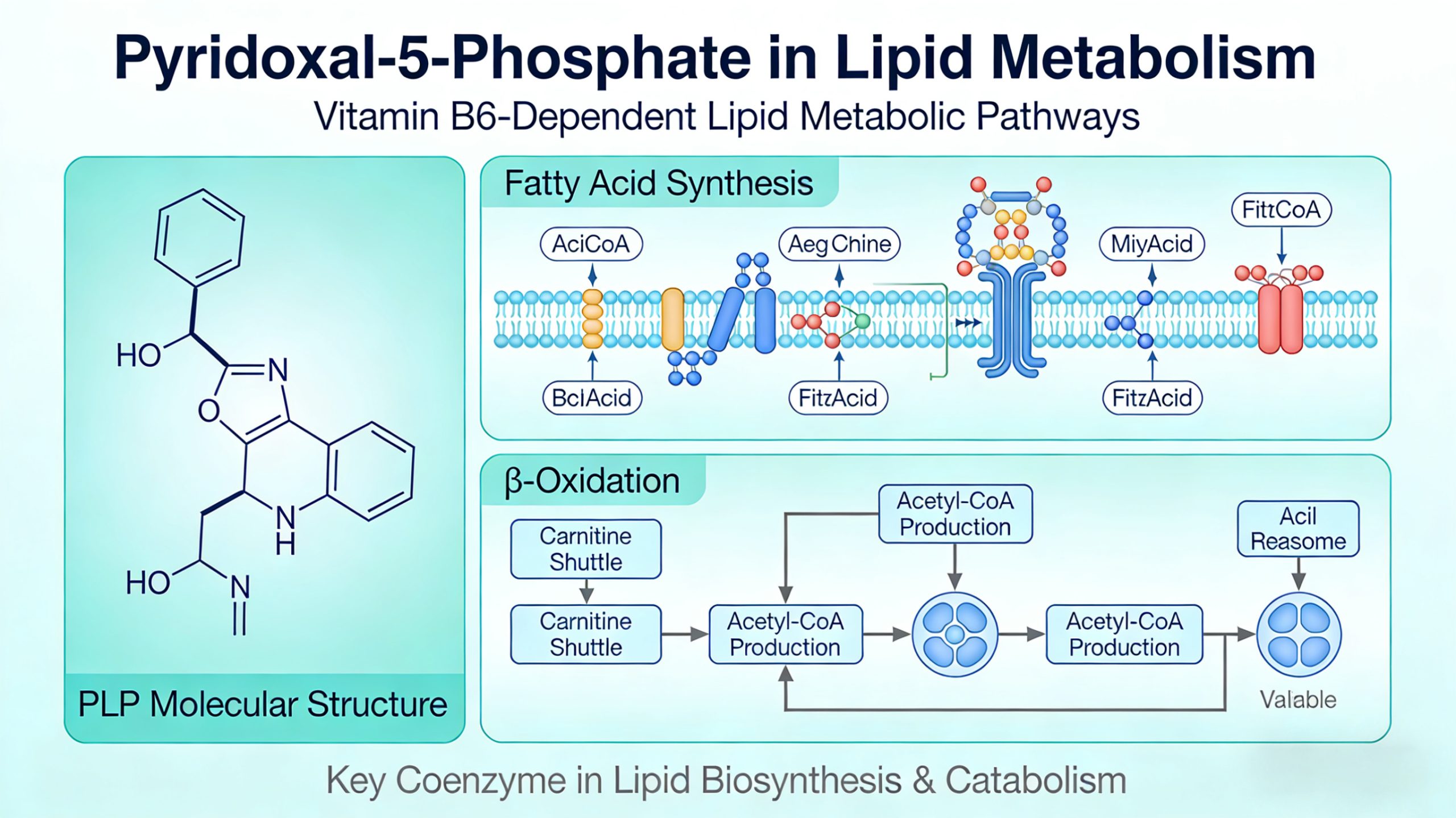
2. Fatty acid elongation and desaturation (indirect support)
Pyridoxal-5-Phosphate doesn’t act directly on fatty acid synthase, but it supports the amino-acid reactions that supply key intermediates.
Pyridoxal-5-Phosphate-dependent transaminases help generate:
- Acetyl-CoA
- Succinyl-CoA
These feed into:
- Fatty acid elongation pathways
- Energy supply for lipid synthesis
Think of PLP as keeping the carbon traffic flowing.
3. Phospholipid metabolism via serine and ethanolamine
Pyridoxal-5-Phosphate participates in amino-acid transformations needed for phospholipid head groups.
Serine metabolism (PLP-dependent):
- Serine → ethanolamine → phosphatidylethanolamine (PE)
PE can then be converted to:
- Phosphatidylcholine (PC)
Why it matters:
PE and PC are major membrane phospholipids, crucial for:
- Membrane fluidity
- Lipoprotein assembly
- Cell signaling
4. Regulation of lipid metabolism through one-carbon and methylation pathways
Pyridoxal-5-Phosphate supports enzymes involved in:
- Homocysteine → cysteine conversion
- One-carbon metabolism
These pathways influence:
- Phosphatidylcholine synthesis
- VLDL assembly and lipid export from the liver
Low Pyridoxal-5-Phosphate can contribute to fatty liver (hepatic steatosis) due to impaired lipid transport.
5. Lipid-derived signaling molecules
Pyridoxal-5-Phosphate-dependent enzymes help regulate amino-acid pools needed for:
- Neurotransmitters
- Bioactive lipids (e.g., sphingolipid signaling metabolites)
This indirectly affects:
- Inflammation
- Insulin sensitivity
- Neural lipid signaling
Quick Summary Table
| Lipid pathway | Pyridoxal-5-Phosphate role | Importance |
| Sphingolipid synthesis | Direct cofactor | Membranes, myelin |
| Fatty acid metabolism | Indirect | Energy & lipid synthesis |
| Phospholipid biosynthesis | Indirect | Cell membranes |
| Lipoprotein assembly | Regulatory | Liver lipid export |
| Lipid signaling | Supportive | Metabolic control |
Bottom line
Pyridoxal-5-Phosphate is not a fatty acid enzyme cofactor, but it is essential for lipid metabolism at structural and regulatory levels, especially sphingolipid synthesis and membrane lipid homeostasis.
If you want, I can also:
- Map Pyridoxal-5-Phosphate-dependent enzymes onto a lipid metabolism diagram
- Explain what happens to lipid metabolism in vitamin B6 deficiency
- Compare Pyridoxal-5-Phosphate is role in lipid vs amino acid metabolism