
1. Introduction of Saccharide Isomerate
Saccharide Isomerate is a naturally derived carbohydrate-based moisturizing ingredient widely used in cosmetics and personal care products. It is a mixture of small, stable sugar isomers produced through the enzymatic rearrangement (isomerization) of plant-derived sugars. Due to its strong ability to bind water and its high affinity for skin proteins, Saccharide Isomerate is often described as a “skin-identical humectant” and is commonly included in formulations designed for deep hydration, skin barrier support, and long-lasting moisture retention.
In the cosmetic ingredient database, it is classified as a humectant, skin-conditioning agent, and moisturizing active. It is particularly valued because it can form durable interactions with the amino acids of the stratum corneum (outer skin layer), allowing hydration effects to persist even after rinsing.
- INCI Name: Saccharide Isomerate
- Ingredient Class: Carbohydrate derivative / sugar complex
- Primary Function: Moisturizer, humectant, skin-conditioning agent
2. Origin of Saccharide Isomerate
2.1 Natural Origin
Saccharide Isomerate originates from plant-derived sugars, mainly glucose-rich carbohydrates obtained from sources such as:
- Corn starch
- Wheat starch
- Rice starch
- Other renewable plant polysaccharides
The starting materials are usually hydrolyzed into simple sugars, which are then enzymatically converted into specific sugar isomers.
Unlike synthetic petroleum-derived moisturizing agents, Saccharide Isomerate is considered a naturally derived cosmetic ingredient because its carbon backbone originates from renewable botanical carbohydrates.
2.2 Biotechnological Production
Commercial Saccharide Isomerate is produced using controlled enzymatic biotechnology:
Step 1: Extraction of carbohydrates
Plant starch is hydrolyzed to produce simple sugars, mainly glucose.
Step 2: Enzymatic conversion
Specific enzymes rearrange the molecular structure of the sugars through isomerization reactions.
Step 3: Purification and stabilization
The resulting sugar mixture is purified, concentrated, and standardized for cosmetic applications.
The process produces a mixture containing various sugar isomers, including:
- Glucose derivatives
- Fructose-related isomers
- Other low molecular weight carbohydrate molecules
The exact composition depends on the manufacturing process.
3. Nature of Saccharide Isomerate
3.1 Chemical Nature
Saccharide Isomerate is not a single pure molecule but a complex mixture of carbohydrate isomers.
It belongs to the chemical family of:
- Monosaccharides
- Sugar derivatives
- Polyhydroxy compounds
General characteristics:
| Property | Description |
| Chemical class | Carbohydrate mixture |
| Origin | Plant-derived sugars |
| Molecular weight | Low molecular weight sugar mixture |
| Solubility | Highly water soluble |
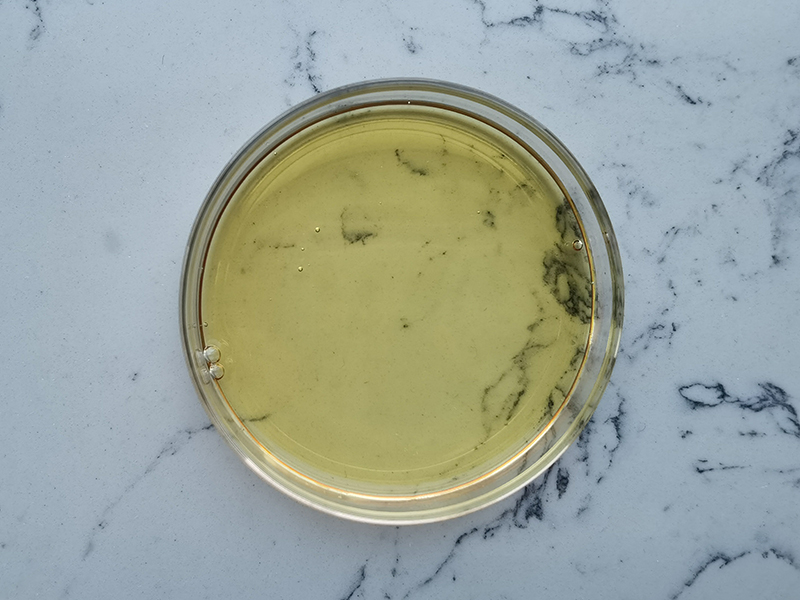
| Appearance | Clear to pale yellow liquid |
| Odor | Slight or nearly odorless |
| pH | Generally mildly acidic to neutral |
| Function | Humectant and skin conditioner |
3.2 Biological Nature
Saccharide Isomerate resembles components naturally present in the skin’s Natural Moisturizing Factor (NMF) system.
The skin’s NMF contains:
- Amino acids
- Lactate
- Urea
- Sugars
- Mineral salts
These compounds attract and retain water within the stratum corneum.
Saccharide Isomerate contributes to hydration by mimicking this natural moisturizing mechanism.
4. Historical Development
The development of Saccharide Isomerate was driven by the search for:
- Long-lasting moisturizers
- Naturally derived cosmetic ingredients
- Skin-compatible humectants
Traditional humectants such as:
- Glycerin
- Sorbitol
- Propylene glycol
provide excellent hydration but may be removed easily by washing.
Research into carbohydrate-based moisturizing molecules led to the development of Saccharide Isomerate because sugar molecules can interact strongly with skin proteins.
Today, Saccharide Isomerate is widely used in:
- Facial moisturizers
- Hydrating serums
- Anti-aging products
- Eye creams
- Sensitive skin formulations
- Hair-care products
5. Key Characteristics of Saccharide Isomerate
5.1 Strong Water-Binding Ability
Saccharide Isomerate contains multiple hydroxyl (-OH) groups that form hydrogen bonds with water molecules.
This allows it to:
- Attract moisture from the environment
- Increase water content in the stratum corneum
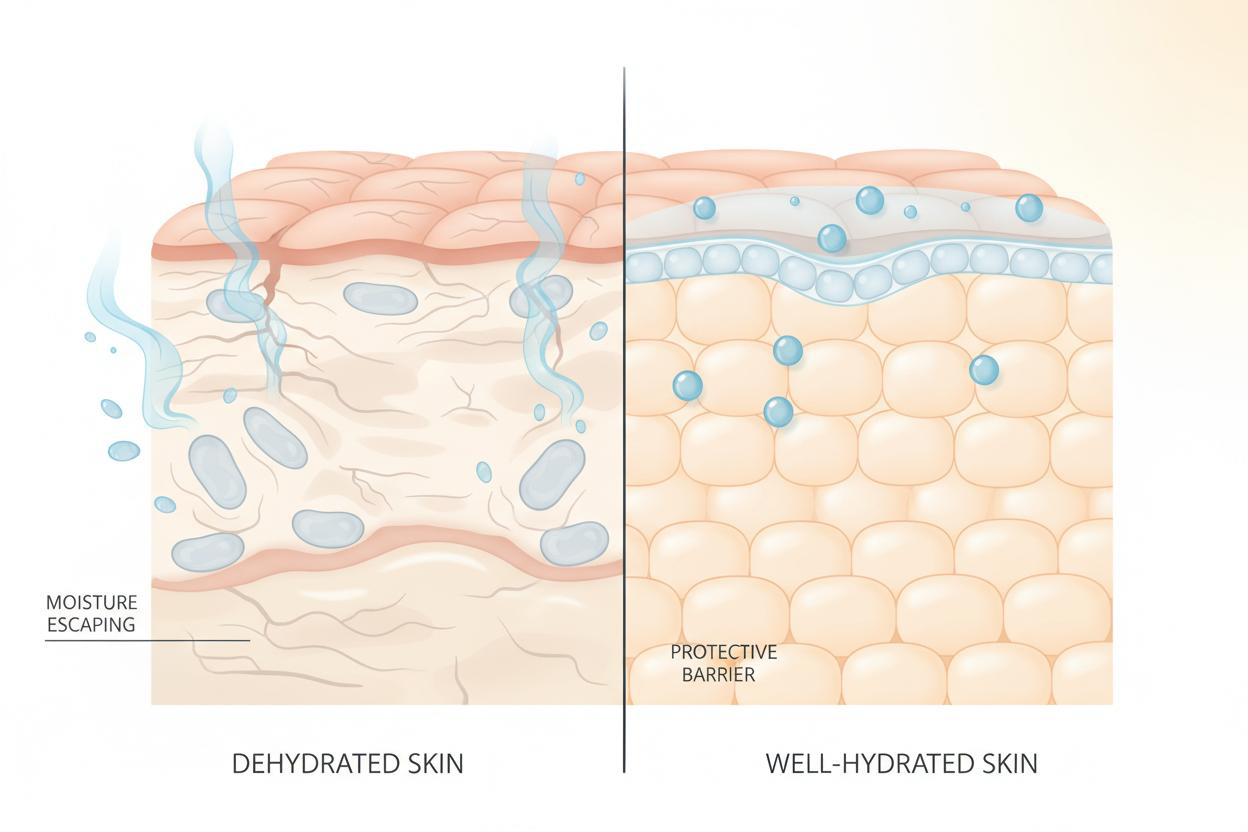
- Reduce transepidermal water loss (TEWL)
5.2 Skin Affinity
One of its unique properties is its ability to bind with lysine and other amino acid residues in keratin proteins.
This creates:
- Long-lasting hydration
- Improved skin smoothness
- Reduced dryness after cleansing
5.3 Gentle Skin Compatibility
Saccharide Isomerate is generally:
- Non-irritating
- Suitable for sensitive skin
- Compatible with most active ingredients
It is commonly combined with:
- Hyaluronic acid
- Ceramides
- Niacinamide
- Peptides
- Panthenol
- Beta-glucan
6. Why Saccharide Isomerate Is Important in Cosmetics
Compared with conventional humectants, Saccharide Isomerate provides:
Immediate hydration
Rapidly increases skin moisture levels.
Long-lasting moisturizing effect
Remains associated with skin proteins, providing prolonged hydration.
Barrier-supporting effects
Helps maintain the integrity of the stratum corneum.
Improved skin texture
Makes skin feel:
- Softer
- Smoother
- More elastic
7. Summary
| Category | Information |
| Name | Saccharide Isomerate |
| Origin | Plant-derived sugars |
| Production | Enzymatic sugar isomerization |
| Nature | Carbohydrate-based moisturizing complex |
| Cosmetic role | Humectant and skin-conditioning agent |
| Main action | Water retention and barrier hydration |
| Skin compatibility | Excellent, suitable for sensitive skin |
| Common uses | Moisturizers, serums, creams, masks, eye products |
In summary, Saccharide Isomerate is a biotechnology-derived sugar complex obtained from renewable plant carbohydrates. Its unique ability to bind water and interact with skin proteins makes it one of the most effective long-lasting natural humectants used in modern skincare formulations.