
Saccharide Isomerate is a carbohydrate-based cosmetic humectant designed to provide long-lasting hydration, particularly by interacting with components of the stratum corneum (the outermost layer of skin).
1. Binds to the skin surface
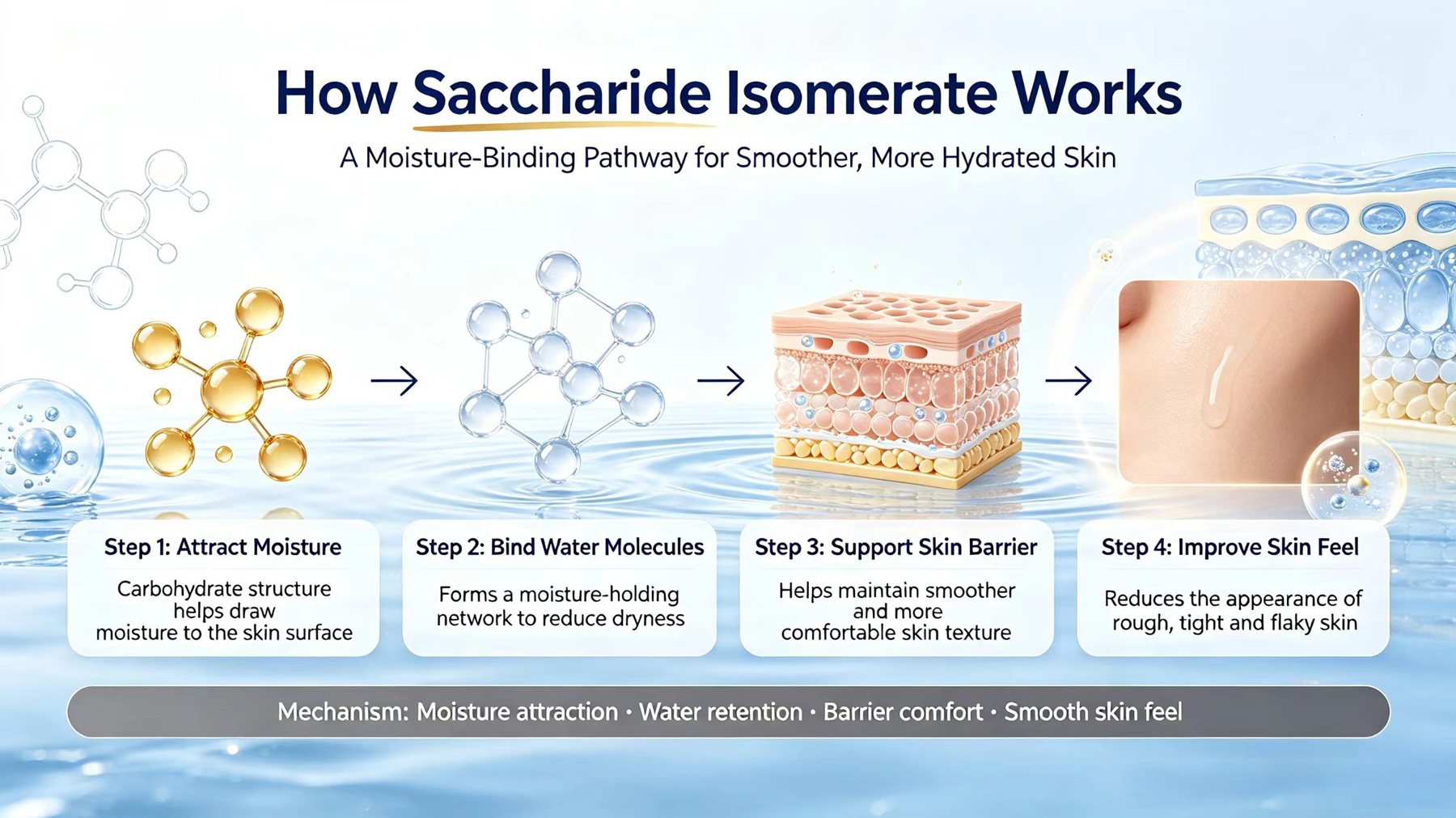
Saccharide Isomerate contains small sugar-derived molecules with multiple hydroxyl (-OH) groups. These groups can form hydrogen bonds with water and with polar components of the skin.
As a result, it helps attract and retain water within the outer layers of the skin, reducing moisture loss and improving hydration.
2. Associates with the stratum corneum
One of its distinguishing characteristics is its substantivity—it can remain associated with the skin after application rather than being removed immediately.
This helps create a reservoir of moisture at the skin surface and contributes to its reputation as a long-lasting moisturizing active.
3. Supports the skin’s natural moisturizing system
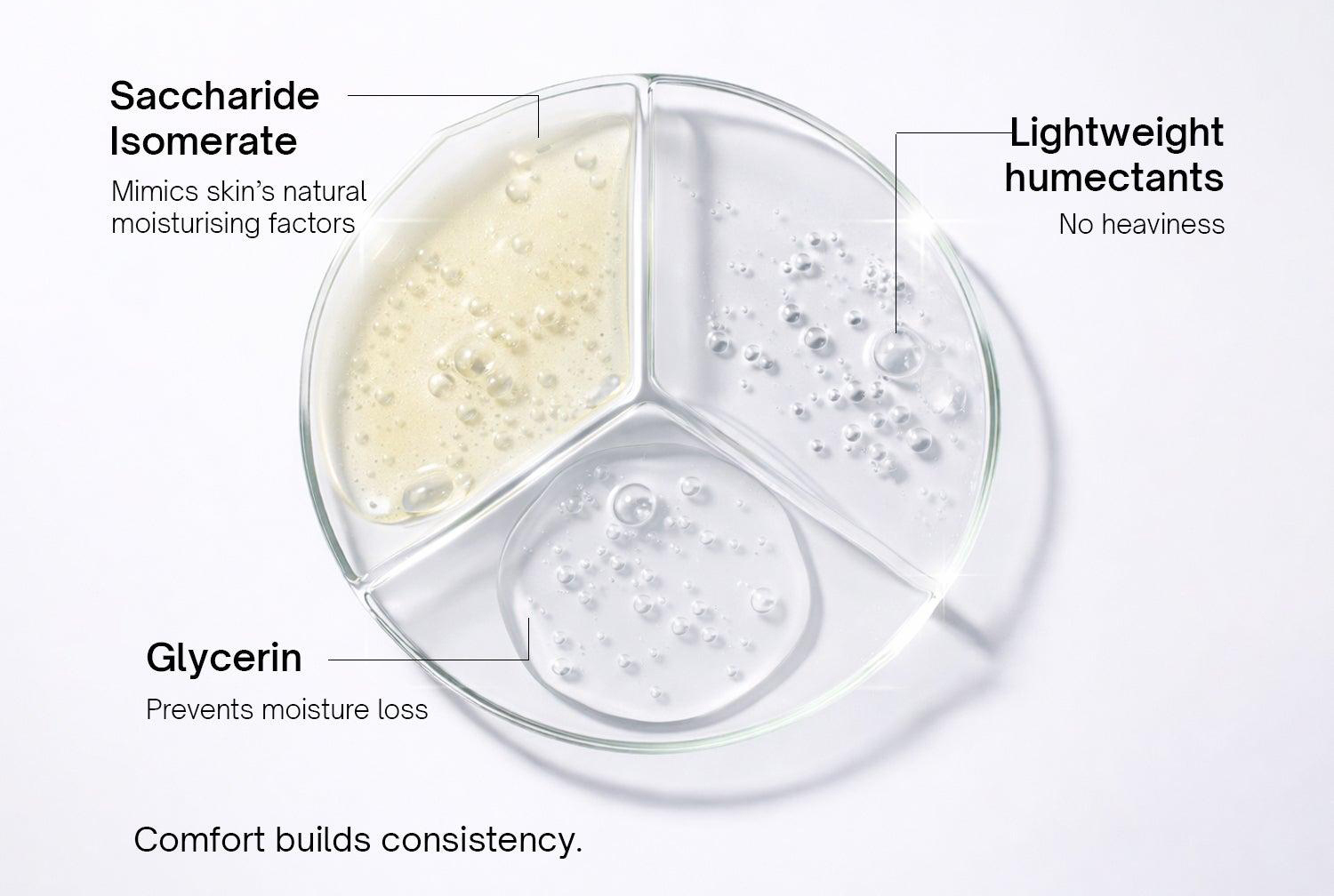
The stratum corneum naturally contains natural moisturizing factors (NMFs), including amino acids, sugars and other water-binding substances.
Saccharide Isomerate can complement this system by functioning as an additional water-binding humectant, helping maintain a hydrated environment around corneocytes.
4. Helps reduce dryness
Better hydration makes the stratum corneum more flexible and less prone to the rough, tight feeling associated with dehydration.
Consequently, Saccharide Isomerate can help improve:
- Dryness and roughness
- Skin tightness
- Flaking caused by dehydration
- Surface softness
- Skin smoothness
5. Supports the skin barrier indirectly
Adequate hydration is important for proper stratum-corneum function. By maintaining water content in the outer skin layer, Saccharide Isomerate can support barrier function indirectly.
It should not, however, be considered a lipid-replenishing barrier ingredient like ceramides, cholesterol, or fatty acids. Its primary role is humectant moisturization.
6. Why its hydration can be long-lasting
The key difference between Saccharide Isomerate and many conventional humectants is its strong affinity/substantivity toward the stratum corneum.
A simplified mechanism is:
Saccharide Isomerate → binds/associates with stratum corneum → attracts water → retains water near the skin surface → improves hydration → reduces the sensation of dryness
In hair care
The same water-binding principle can be useful for hair. Saccharide Isomerate can associate with the hair fiber and help maintain moisture, potentially improving softness, manageability and the feel of dry or damaged hair.
However, it is primarily a moisturizing/humectant ingredient, rather than a protein-repair or bond-repair active.
Bottom line
The main mechanism of Saccharide Isomerate is humectant hydration combined with substantivity. Its sugar-derived structure allows it to bind water, while its affinity for the stratum corneum helps maintain hydration for longer than a simple, readily rinsed-off humectant.