
Sialic acid, particularly N-acetylneuraminic acid (Neu5Ac), is a nine-carbon acidic monosaccharide found mainly at the terminal positions of glycoproteins and glycolipids on cell surfaces. It has important biological, pharmaceutical, nutritional, and cosmetic applications.
1. Pharmaceutical and medical uses
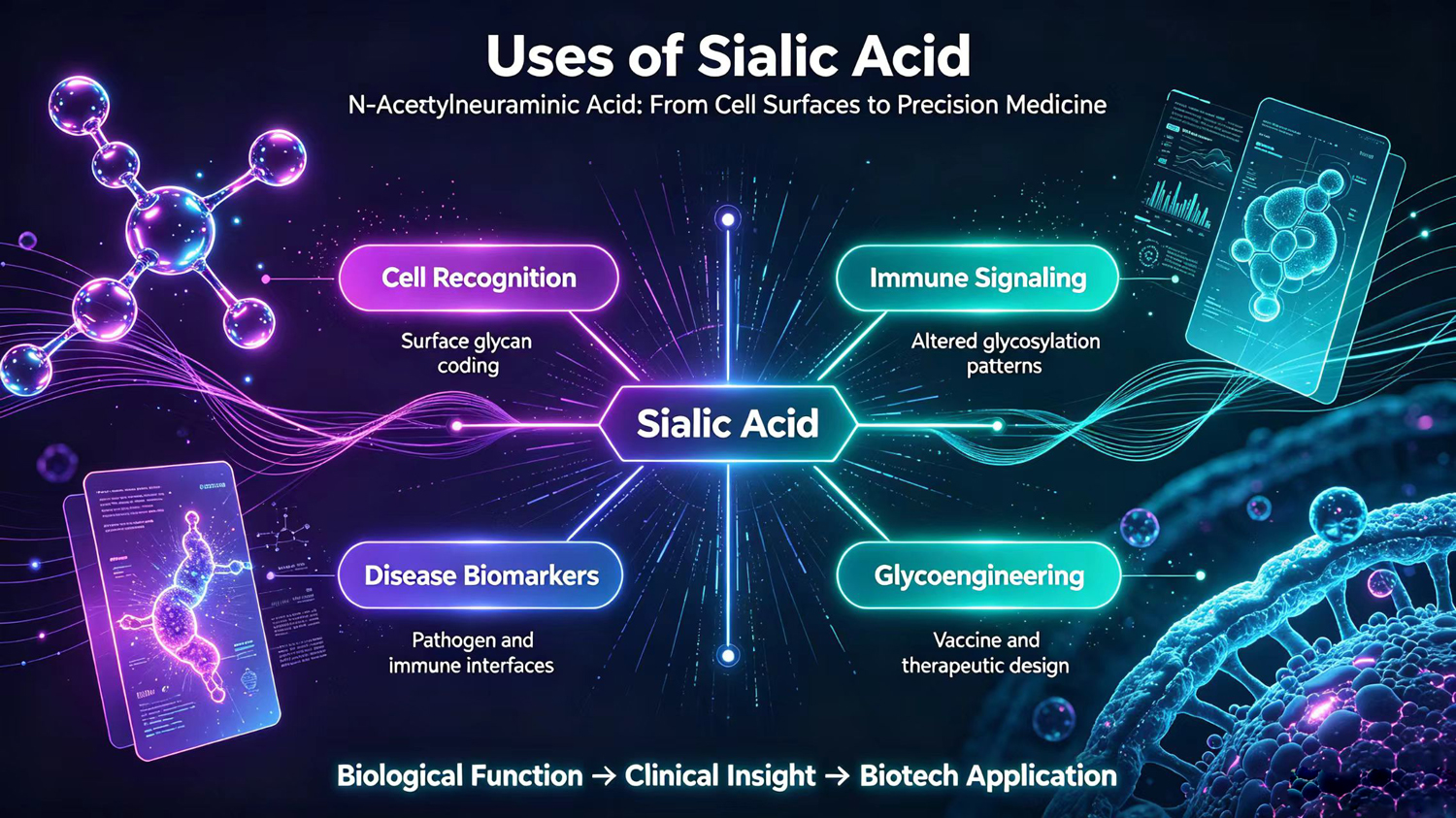
- Drug development: Used in research on cell recognition, receptor interactions, inflammation, and immune regulation.
- Targeting therapies: Because sialic-acid-containing structures occur on cell surfaces, they are investigated for targeted drug-delivery and cancer-related applications.
- Antiviral research: Sialic-acid receptors are involved in the attachment of several viruses, making Neu5Ac-containing structures useful in antiviral research.
- Biomarker research: Altered sialylation is investigated as a biomarker associated with cancer, inflammation, infection, and other diseases.
- Glycobiology: Used to study cell–cell communication and molecular recognition.
2. Nutritional applications
Sialic acid occurs naturally in foods such as human milk, dairy products, eggs, and meat. It is particularly abundant in human milk oligosaccharides and glycoproteins.
It is investigated as a functional nutritional ingredient, especially for:
- supporting normal neurological development,
- contributing to cell-membrane structure,
- supporting glycoprotein and glycolipid synthesis,
- studying cognitive and developmental functions.
However, evidence for benefits from supplemental sialic acid in healthy adults is much less established than its well-established biological role in the body.
3. Infant nutrition
Sialic acid is of particular interest in infant nutrition because human milk contains substantial amounts of sialylated oligosaccharides and glycoproteins.
Applications include research and formulation of:
- infant formulas,
- human-milk oligosaccharide-related ingredients,
- nutritional products designed to mimic selected components of human milk.
4. Cosmetics and skincare
Sialic acid and sialylated compounds are investigated as cosmetic ingredients because sialylation is important in the biology of skin cells.
Potential applications include:
- skin moisturization
- skin-conditioning formulations
- anti-aging research
- supporting the appearance of smoother and healthier skin
- research into cellular signaling and skin-barrier biology
Claims about wrinkle reduction, whitening, or major skin rejuvenation should be distinguished from established biological functions because clinical evidence for topical Neu5Ac itself is limited.
5. Biotechnology and glycoscience
Neu5Ac is an important building block for glycoconjugate research. It is used in:
- glycoprotein engineering,
- glycan synthesis,
- enzyme-substrate studies,
- lectin research,
- cell-surface carbohydrate research,
- production of sialylated biomolecules.
6. Food and functional ingredients
Sialic acid can be incorporated into research involving functional foods and specialized nutritional products, particularly products designed around milk-derived or glycan-related nutritional components.
7. Research on immunity and inflammation
Sialic acids participate in interactions between cell-surface glycans and immune receptors. Consequently, Neu5Ac is widely used in research investigating:
- immune-cell recognition,
- inflammatory signaling,
- pathogen–host interactions,
- regulation of immune responses.
8. Cancer research
Changes in cell-surface sialylation are common in many cancers. Neu5Ac-containing glycans are therefore studied in relation to:
- tumor-cell recognition,
- metastasis,
- tumor immune evasion,
- cancer biomarkers,
- development of anti-cancer therapies.
Summary
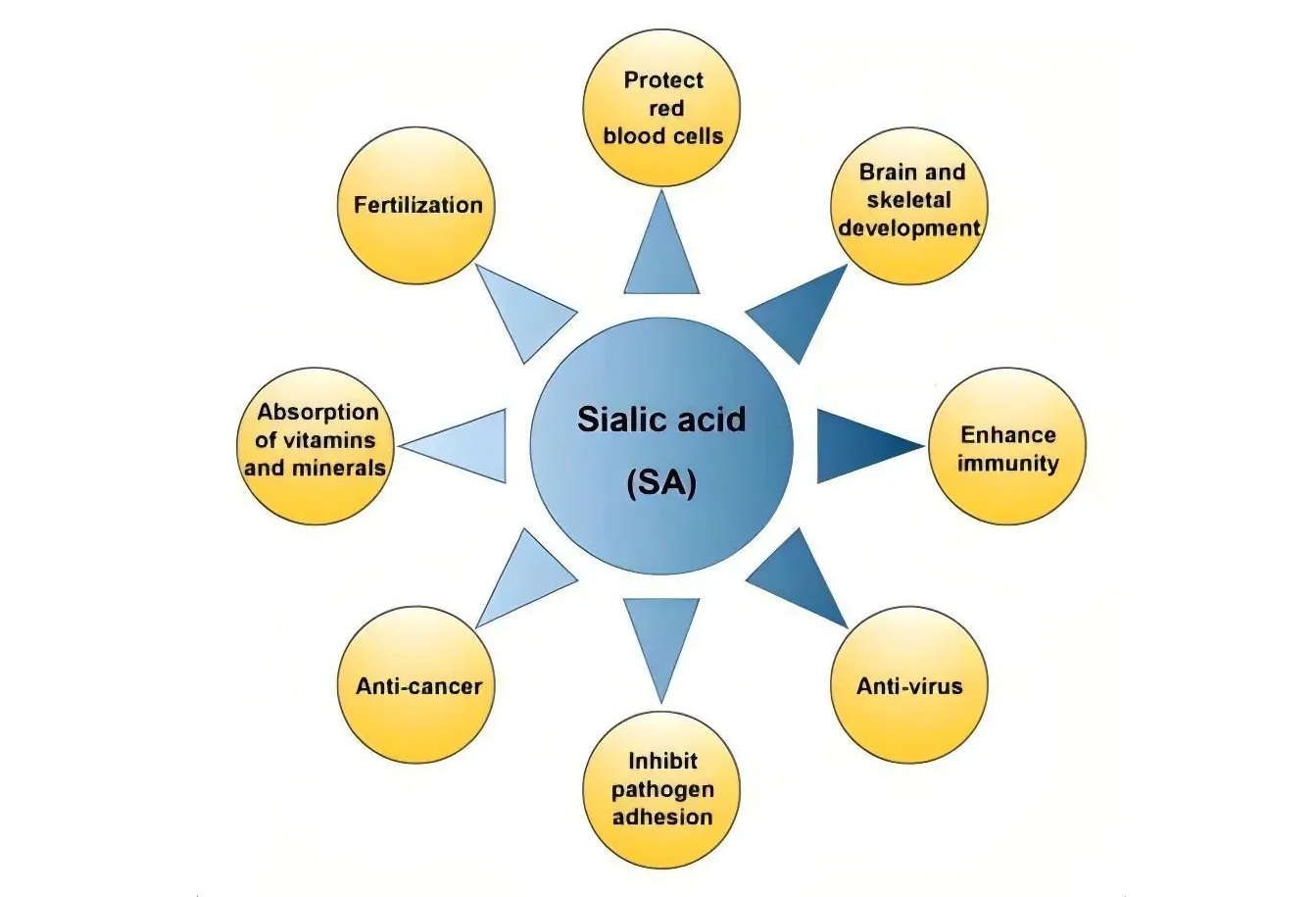
| Area | Main use |
| Medicine | Drug and therapeutic research |
| Antiviral research | Studying viral attachment to host cells |
| Nutrition | Functional/nutritional ingredient research |
| Infant nutrition | Mimicking components of human milk |
| Cosmetics | Skin-conditioning and anti-aging research |
| Biotechnology | Glycoprotein and glycan engineering |
| Immunology | Studying immune recognition and inflammation |
| Cancer research | Biomarkers, metastasis, and immune evasion |
| Glycobiology | Studying cell recognition and signaling |
In short: N-acetylneuraminic acid is valuable primarily as a biological building block and research molecule, with applications spanning glycobiology, biotechnology, nutrition, pharmaceuticals, and cosmetics.