
Sodium Gualenate promotes mucosal repair primarily through enhancing the natural protective and regenerative mechanisms of mucous membranes. Here’s a detailed explanation of how it works:
1. Mucosal Barrier Protection
- Sodium Gualenate is a salts derivative of gualenic acid, which can form a protective layer over damaged mucosa.
- This layer physically shields the epithelial cells from irritants like stomach acid, digestive enzymes, or pathogens.
- By reducing direct injury, the mucosa has a better environment to heal.
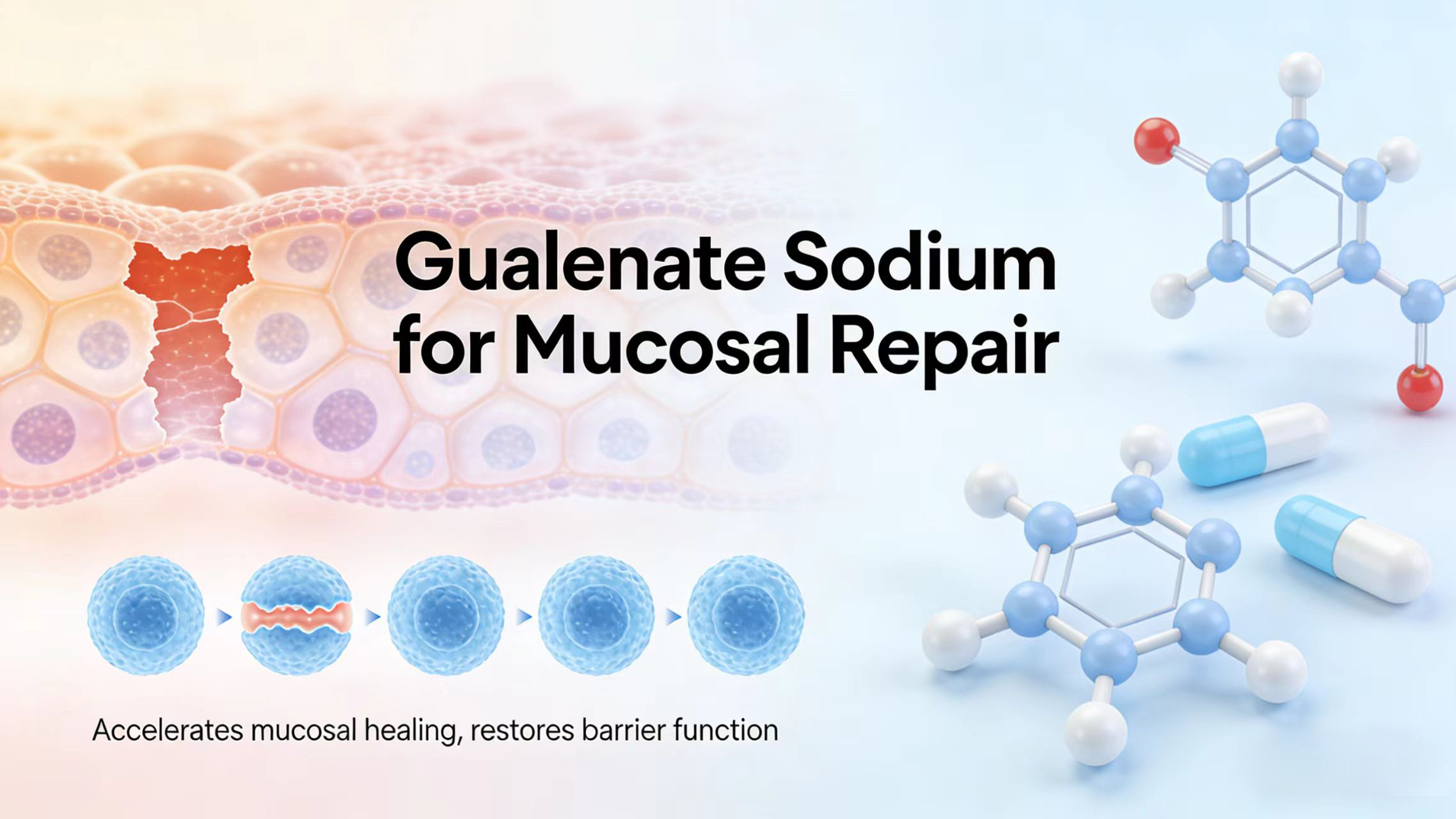
2. Stimulation of Epithelial Cell Regeneration
- It promotes proliferation and migration of epithelial cells at the site of injury.
- This accelerates re-epithelialization, which is the process of restoring the mucosal lining.
3. Modulation of Local Inflammation
- Sodium Gualenate has mild anti-inflammatory properties, reducing excessive inflammation that can hinder repair.
- It helps balance cytokine signaling, preventing prolonged tissue damage while allowing normal healing.
4. Enhancement of Mucus Secretion
- It can stimulate mucin-producing cells to increase mucus secretion.
- Thicker mucus provides a lubricating and protective barrier, which facilitates healing and reduces pain or irritation.
5. Promotion of Angiogenesis
- Some studies suggest it can enhance microvascular blood flow in the mucosa.
- Improved blood flow brings oxygen and nutrients, which are essential for tissue repair and regeneration.
Summary
Sodium Gualenate works by creating a protective barrier, reducing inflammation, promoting epithelial cell growth, enhancing mucus secretion, and improving blood supply—all of which contribute to faster and more effective mucosal repair.
If you want, I can draw a step-by-step diagram of how Sodium Gualenate acts on damaged mucosa, which makes the mechanism visually intuitive. Do you want me to do that?