
1. Chemical Structure
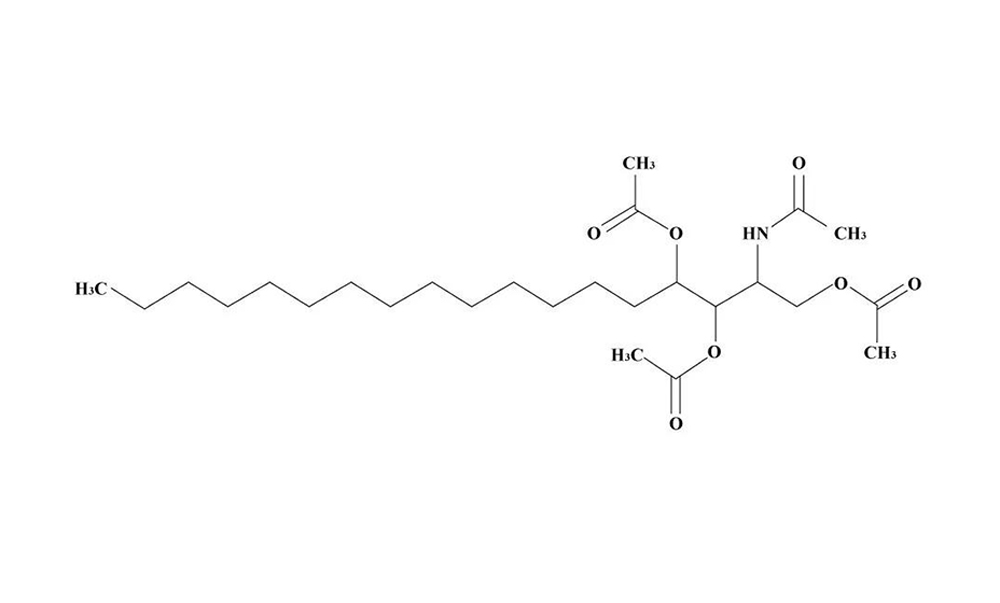
Tetraacetylphytosphingosine (TAPS) is an acetylated derivative of phytosphingosine, a naturally occurring sphingoid base belonging to the sphingolipid family. Its molecular structure consists of a long-chain aliphatic hydrocarbon backbone, an amide group, and four acetyl-derived modifications.
The acetylation modifies the hydroxyl and amino functionalities of phytosphingosine, changing its polarity, hydrogen-bonding characteristics, and physicochemical behavior.
Basic chemical information
| Property | Description |
| Chemical name | Tetraacetylphytosphingosine |
| Abbreviation | TAPS |
| CAS number | 13018-48-9 |
| Molecular formula | C₂₆H₄₇NO₇ |
| Molecular weight | 485.65–485.70 g/mol |
| IUPAC name | [(2S,3S,4R)-2-acetamido-3,4-diacetyloxyoctadecyl] acetate |
| Chemical family | Sphingolipid derivative |
| Structural classification | Acetylated sphingoid base |
| InChIKey | SGTYQWGEVAMVKB-NXCFDTQHSA-N |
Source: PubChem and LIPID MAPS.
2. Main Structural Features
Tetraacetylphytosphingosine contains several important structural components:
A. Long-chain hydrocarbon backbone
- Contains an 18-carbon sphingoid backbone.
- Has a predominantly linear, saturated hydrocarbon chain.
- Provides a hydrophobic region that contributes to lipid affinity.
- Influences its compatibility with oil-based and lipid-containing formulations.
B. Acetyl groups
Tetraacetylphytosphingosine contains four acetyl-derived modifications:
- Three O-acetyl groups associated with the original hydroxyl groups.
- One N-acetyl group associated with the amino group.
These modifications reduce the number of free hydroxyl and amino groups, altering hydrogen bonding and molecular polarity.
C. Amide group
The molecule contains an amide linkage (–NHCOCH₃), which contributes to its chemical identity and intermolecular interactions.
D. Stereochemical configuration
Tetraacetylphytosphingosine has three defined stereogenic centers, designated (2S, 3S, 4R).
Its stereochemical arrangement is important because the spatial configuration of sphingoid molecules can influence their biological recognition and interactions.
3. Physical Properties
The following table summarizes reported and calculated physicochemical properties.
| Property | Value |
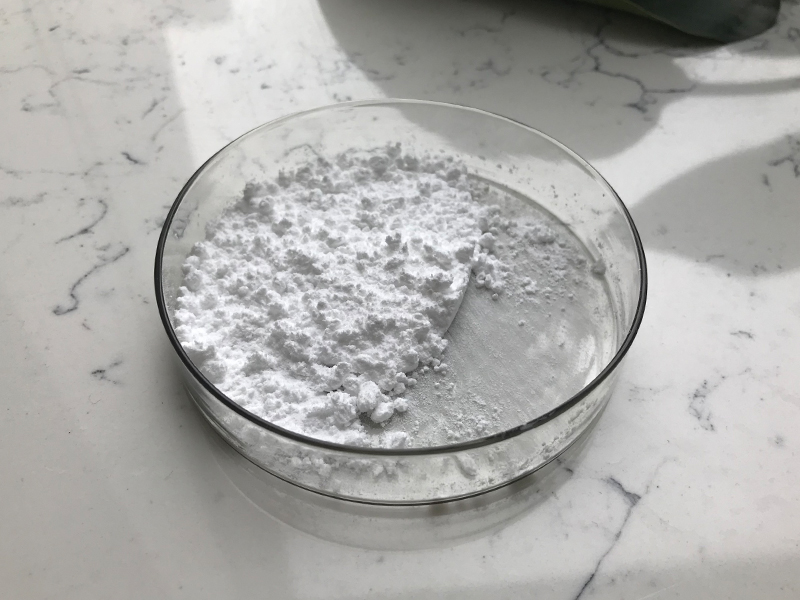
| Appearance | White to off-white solid |
| Molecular weight | 485.65 g/mol |
| Molecular formula | C₂₆H₄₇NO₇ |
| Melting point | Approximately 46°C (reported by a chemical supplier) |
| Boiling point | Approximately 594.3°C (predicted) |
| Density | Approximately 1.021 g/cm³ (predicted) |
| XLogP3 | 6.6 (calculated) |
| Hydrogen-bond donors | 1 |
| Hydrogen-bond acceptors | 7 |
| Rotatable bonds | 23 |
| Topological polar surface area | 108 Ų |
| Exact mass | 485.3353 Da |
Note: These values include computational predictions and supplier-reported data. They should not all be interpreted as experimentally measured constants.
4. Solubility and Chemical Behavior
(1) Solubility
Tetraacetylphytosphingosine has a long hydrophobic carbon chain and multiple acetyl groups, giving it relatively high calculated lipophilicity.
Its solubility depends on the solvent, temperature, purity, and physical form.
- Water: Expected to have poor water solubility.
- Ethanol: Supplier-reported solubility of up to approximately 25 mg/mL.
- DMSO: Reported solubility of approximately 25 mg/mL under specified laboratory conditions.
- Oil-based systems: Its lipophilic structure may favor compatibility with certain lipid-containing formulations, although actual solubility requires testing.
(2) Chemical Stability
The four acetyl-derived groups influence the chemical stability of Tetraacetylphytosphingosine.
Important considerations include:
- Hydrolysis: Ester groups may undergo hydrolysis under strongly acidic or alkaline conditions.
- Moisture sensitivity: Exposure to moisture may affect long-term stability.
- Temperature: Excessive heat may promote chemical degradation.
- Light exposure: Appropriate protection from light is recommended during storage.
For laboratory materials, one supplier recommends sealed storage at 4°C, protected from moisture and light.
5. Relationship Between Structure and Physicochemical Properties
The molecular structure of Tetraacetylphytosphingosine determines several important characteristics:
| Structural feature | Resulting property |
| Long saturated carbon chain | High hydrophobic character |
| Three O-acetyl groups | Reduced free hydroxyl functionality |
| One N-acetyl group | Modified amino-group chemistry |
| Amide bond | Provides hydrogen-bonding capacity |
| Three stereogenic centers | Defined three-dimensional configuration |
| Multiple oxygen atoms | Contributes to molecular polarity |
One particularly important feature is its relatively high lipophilicity. Its calculated XLogP3 value of 6.6 suggests a strong preference for lipid-like environments over water.
6. Significance in Cosmetic Formulations
The chemical structure of Tetraacetylphytosphingosine is relevant to its potential cosmetic applications.
(1) Skin-conditioning formulations: Its sphingoid-based structure makes it relevant to research into skin lipid biology.
(2) Skin barrier research: It is studied as an acetylated sphingoid precursor related to phytosphingosine.
(3) Lipid compatibility: Its long hydrocarbon chain may facilitate interactions with lipid-rich formulation systems.
(4) Formulation development: Its limited water solubility makes solvent selection and dispersion important considerations.
(5) Active ingredient research: Its acetylated structure provides a basis for investigating its conversion and biological activity.
Importantly, Tetraacetylphytosphingosine should not automatically be considered biologically equivalent to free phytosphingosine. Its acetyl groups alter the molecule’s chemical properties, and biological conversion or activity needs experimental verification.
7. Summary
Tetraacetylphytosphingosine is a lipophilic, acetylated sphingoid-base derivative with the molecular formula C₂₆H₄₇NO₇ and molecular weight of approximately 485.65 g/mol.
Its most distinctive chemical characteristics are:
- A long, saturated 18-carbon sphingoid backbone.
- Three O-acetyl groups and one N-acetyl group.
- Three defined stereogenic centers.
- Relatively high calculated lipophilicity.
- Limited expected water solubility.
- Potential relevance to skin lipid and barrier-related cosmetic research.
Overall, the molecular structure of Tetraacetylphytosphingosine makes it an interesting lipid-related cosmetic ingredient and research compound, particularly for investigations into sphingolipid chemistry and skin barrier biology.