
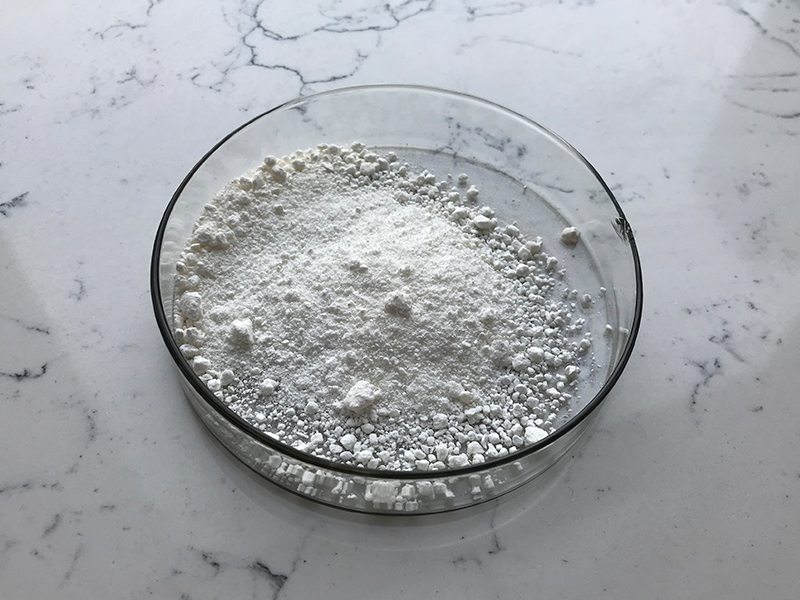
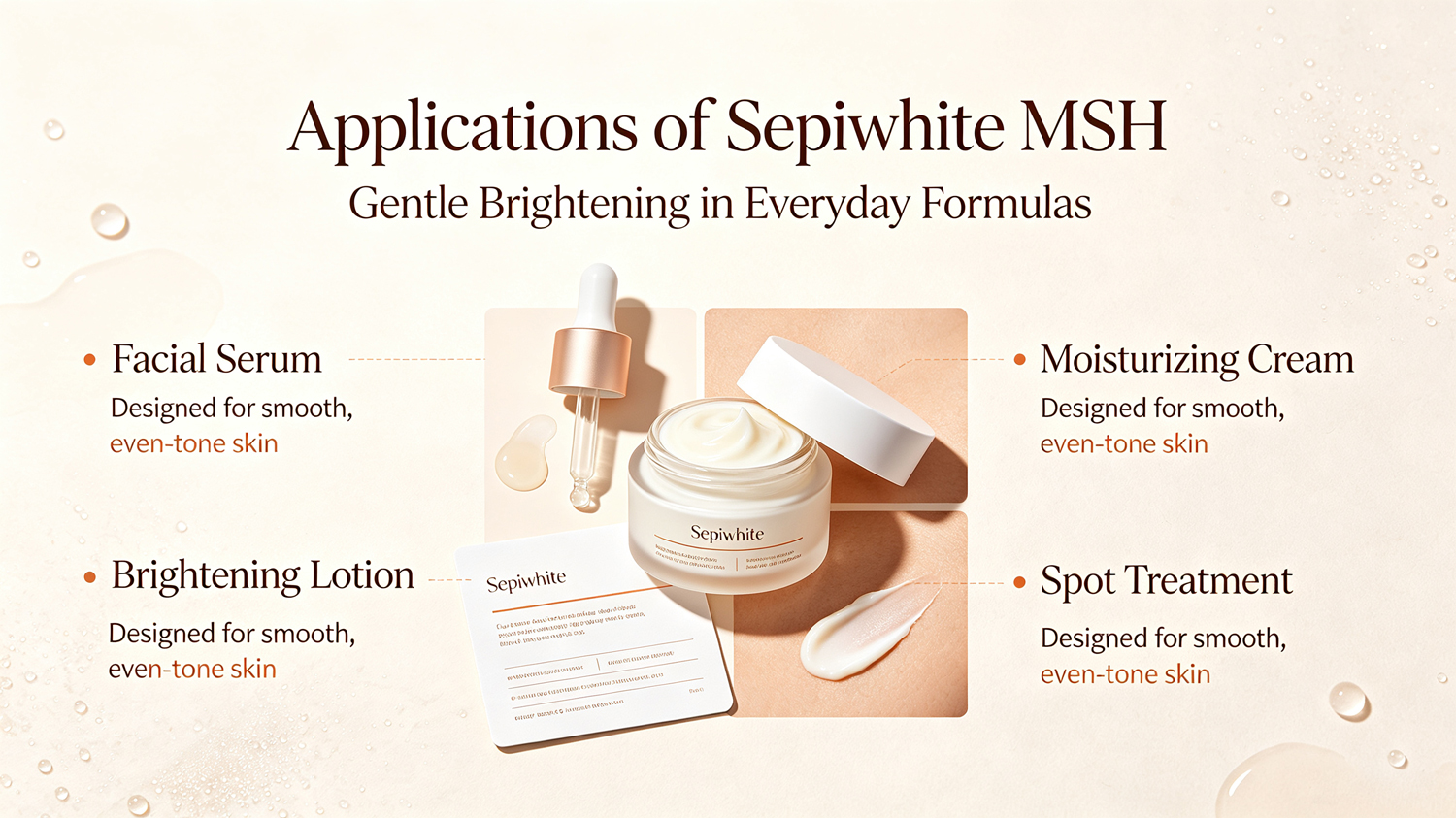
Sepiwhite MSH is the trade name for undecylenoyl phenylalanine, a cosmetic lipoamino-acid used primarily to reduce the appearance of hyperpigmentation. It works by modulating the α-melanocyte-stimulating hormone (α-MSH) pathway, thereby reducing activation of tyrosinase and melanin production. Seppic lists 2% as the recommended use level for its standard Sepiwhite MSH ingredient.
Effectiveness
Main benefits include:
- Reduces hyperpigmentation: It can decrease the appearance of dark spots, uneven pigmentation, and melasma.
- Brightens overall complexion: By reducing melanogenesis, it can produce a more even and radiant skin tone.
- Useful for melasma: A randomized, double-blind, vehicle-controlled study using 2% undecylenoyl phenylalanine twice daily for 12 weeks found that 17 of 20 treated participants who completed the study had a partial response; 11 showed moderate improvement and 6 marked improvement.
- Relatively gradual action: In the clinical trial, visible lightening was observed by approximately 4 weeks, with continued improvement through the 12-week treatment period.
- Can complement other brightening agents: Clinical research found that a formulation containing 1% undecylenoyl phenylalanine + 5% niacinamide reduced facial hyperpigmentation more effectively than niacinamide alone after 8 weeks.
- Suitable for multiple skin tones: Seppic reports efficacy across several skin phototypes and ethnic groups, although these are primarily supplier claims rather than evidence that every individual will respond equally.
Important: Sepiwhite MSH should not be considered equivalent to prescription-strength depigmenting treatments. The available clinical evidence is relatively limited, and the strongest study involved only 40 women initially, with 37 completing the trial.
Side Effects
Sepiwhite MSH is generally considered well tolerated when appropriately formulated, but irritation can occur.
Reported or possible effects include:
| Side effect | Likelihood/importance |
| Mild redness (erythema) | Reported in clinical use |
| Itching | Reported |
| Burning/stinging | Reported |
| Skin irritation | Possible, particularly with sensitive skin |
| Eye irritation | Important if the raw ingredient enters the eyes |
| Respiratory irritation | Mainly a concern when handling powdered raw material |
In the 12-week melasma study, the reported adverse effects were minor and consisted primarily of erythema, itching, and burning at the application site.
The Cosmetic Ingredient Review has concluded that undecylenoyl phenylalanine is safe for cosmetic use under specified conditions and when formulated to be non-irritating.
Special Precautions
1. Use sunscreen consistently.
This is particularly important when treating pigmentation. UV exposure can stimulate melanogenesis and counteract the benefits of Sepiwhite MSH. A broad-spectrum sunscreen, ideally SPF 30–50+, is an important part of a pigmentation-control routine.
2. Introduce it gradually if you have sensitive skin.
Although Sepiwhite MSH itself is generally mild, a finished brightening product may contain acids, retinoids, vitamin C derivatives, or other actives that increase irritation.
3. Avoid the eye area.
The raw material’s safety documentation identifies eye irritation as a hazard, so avoid direct contact with eyes.
4. Patch-test new formulations.
Apply a small amount to a limited area before widespread facial application, particularly if you have reactive or sensitive skin.
5. Be careful when combining multiple exfoliating agents.
Sepiwhite MSH can be incorporated into formulations alongside other brightening ingredients, but combining it with strong AHAs/BHAs, retinoids, or other potentially irritating actives can increase irritation. Seppic specifically describes enhanced rapid lightening when Sepiwhite MSH is combined with AHAs, but that does not mean every skin type will tolerate such combinations.
6. Raw powder requires additional handling precautions.
If working with pure Sepiwhite MSH powder rather than a finished cosmetic, avoid inhaling dust and avoid direct eye contact. Safety documentation identifies skin/eye and respiratory irritation hazards associated with handling the raw material.
7. Don’t expect immediate permanent results.
Pigmentation can return when UV exposure, inflammation, hormones, or other underlying triggers persist. Sepiwhite MSH controls melanogenesis; it does not eliminate the causes of all hyperpigmentation.
Overall assessment
Effectiveness: ★★★★☆
Tolerability: ★★★★☆
Evidence strength: ★★★☆☆
Best suited for: dark spots, uneven pigmentation, melasma-support routines, and overall complexion brightening.
Overall, Sepiwhite MSH is a relatively gentle cosmetic brightening active with clinical evidence supporting reduction of hyperpigmentation, particularly at around 1–2% concentrations. Its principal advantage is its distinct mechanism through the α-MSH/melanogenesis pathway, while its main limitation is that the clinical evidence base is considerably smaller than that for established depigmenting agents such as hydroquinone.