
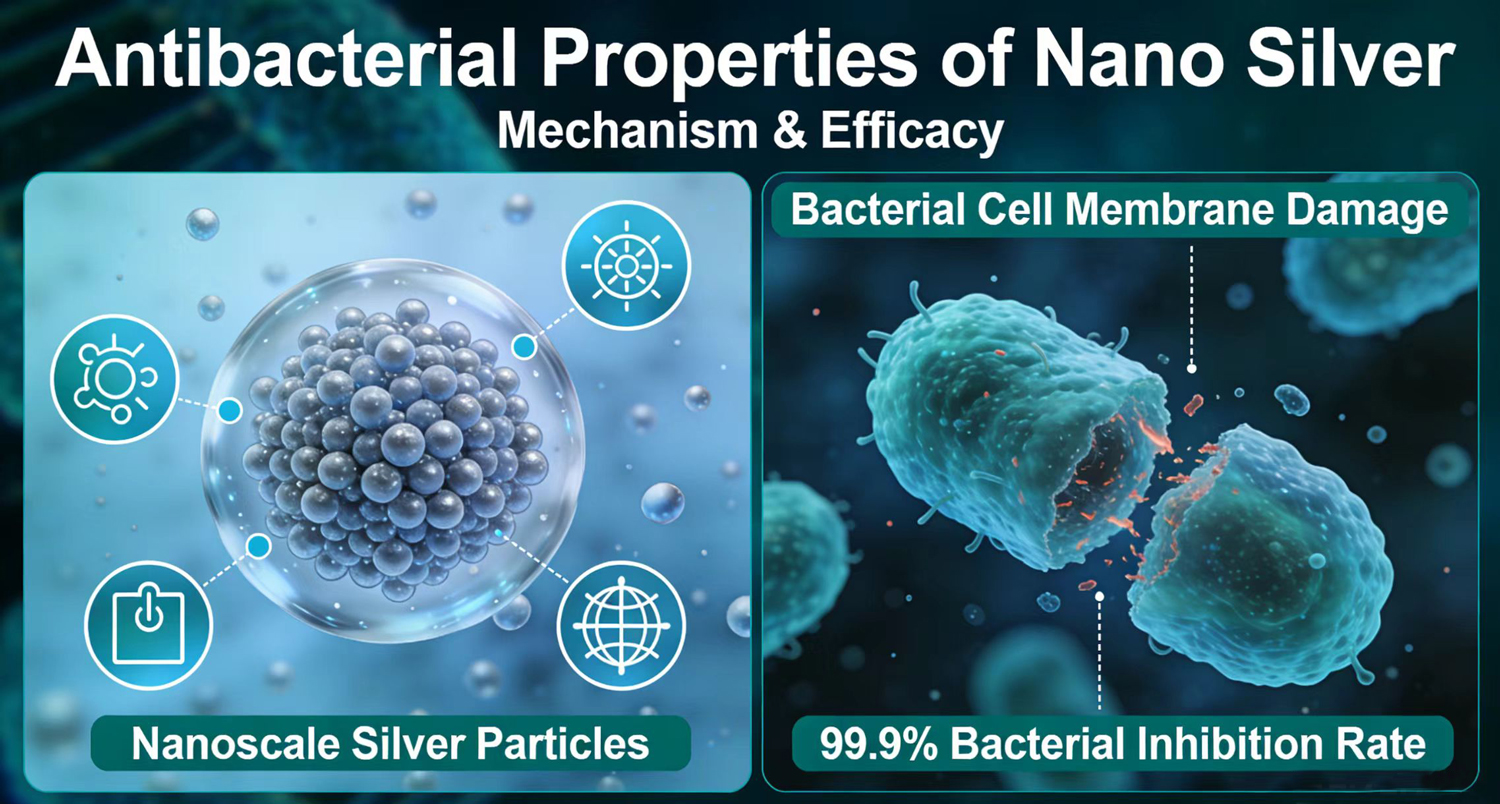
Nano Silver, or silver nanoparticles (AgNPs), is widely recognized for its strong antibacterial properties. Here’s a detailed breakdown of how it works and why it’s effective:
Mechanisms of Antibacterial Action
Nano Silver attacks bacteria in multiple ways, making it difficult for them to develop resistance:
1. Disruption of Cell Membranes
- Nano Silver can attach to bacterial cell walls and membranes.
- This alters the membrane’s structure, increasing permeability and causing leakage of cellular contents, which kills the bacteria.
2. Generation of Reactive Oxygen Species (ROS)
- Nano Silver can catalyze the formation of reactive oxygen species, such as superoxide radicals.
- ROS damage proteins, DNA, and other cellular components, leading to bacterial death.
3. Interaction with DNA and Proteins
- Silver ions released from nanoparticles can bind to bacterial DNA and proteins.
- This inhibits replication and enzyme activity, halting bacterial growth.
4. Biofilm Inhibition
- Many bacteria form biofilms, which protect them from antibiotics.
- Nano Silver prevents biofilm formation and can even disrupt existing biofilms, enhancing antibacterial effectiveness.
Spectrum of Activity
Nano Silver is effective against a broad range of bacteria, including:
- Gram-positive bacteria (e.g., Staphylococcus aureus)
- Gram-negative bacteria (e.g., Escherichia coli)
It is also effective against some fungi and viruses, though its primary use is antibacterial.
3. Advantages Over Traditional Antibiotics
- Low risk of resistance: Because Nano Silver attack multiple targets simultaneously.
- Effective in small doses: Even low concentrations can kill bacteria.
- Long-lasting activity: Silver can provide sustained antimicrobial action when embedded in surfaces or coatings.
4. Applications
- Wound dressings and medical devices (catheters, implants)
- Coatings for textiles and water purification
- Food packaging materials
- Consumer products like sanitizers and sprays
5. Considerations
- Excessive use can be toxic to human cells and aquatic life.
- Size, shape, and surface coating of nanoparticles affect efficacy: smaller particles (<20 nm) generally have stronger antibacterial effects.
If you want, I can make a diagram showing exactly how Nano Silver attacks bacterial cells, which makes it much easier to visualize. Do you want me to do that?