
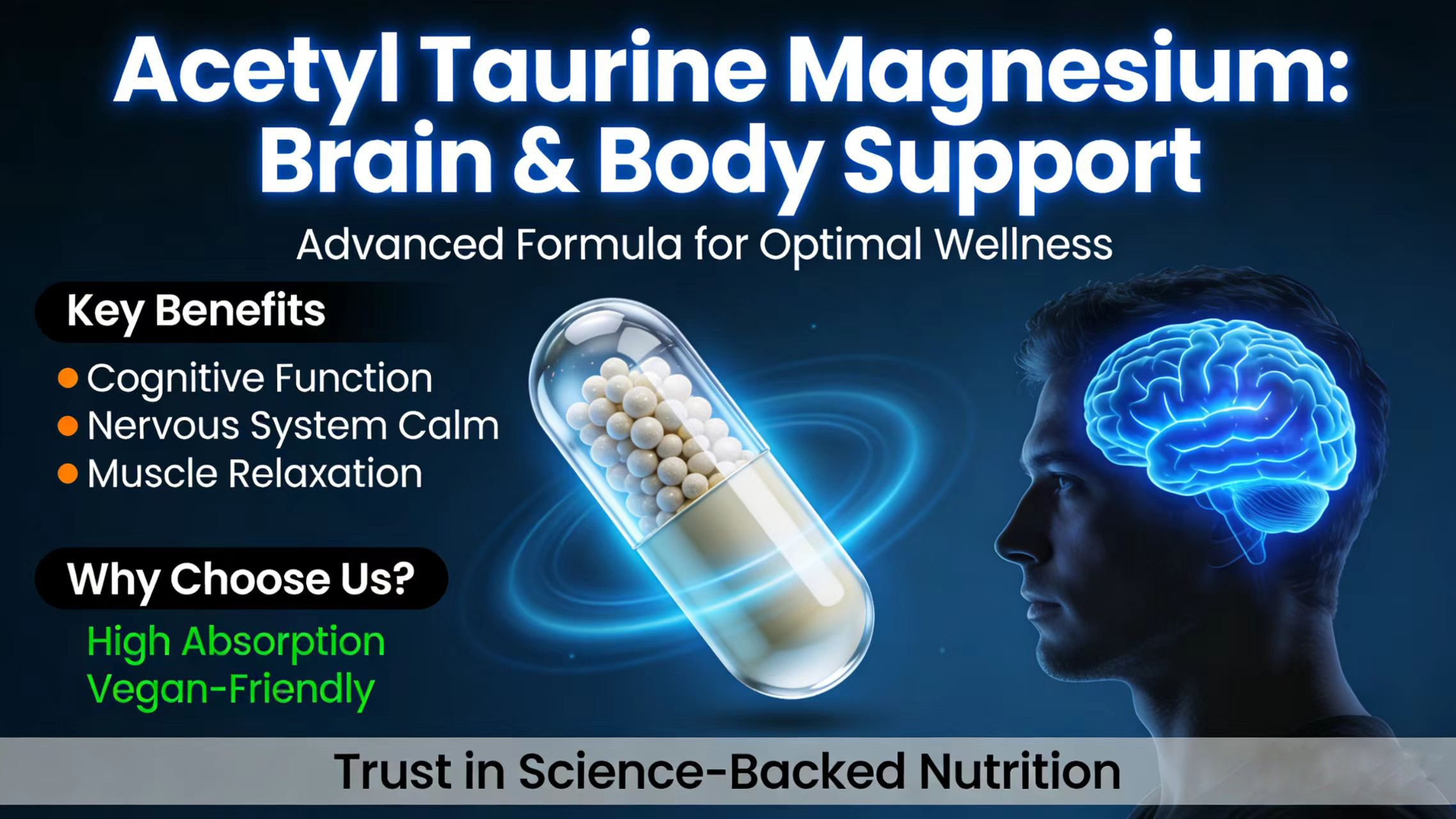
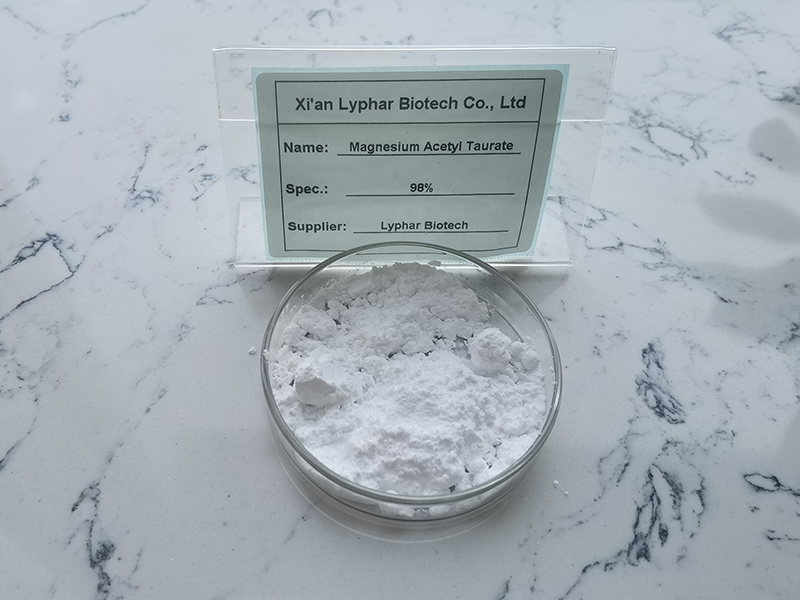
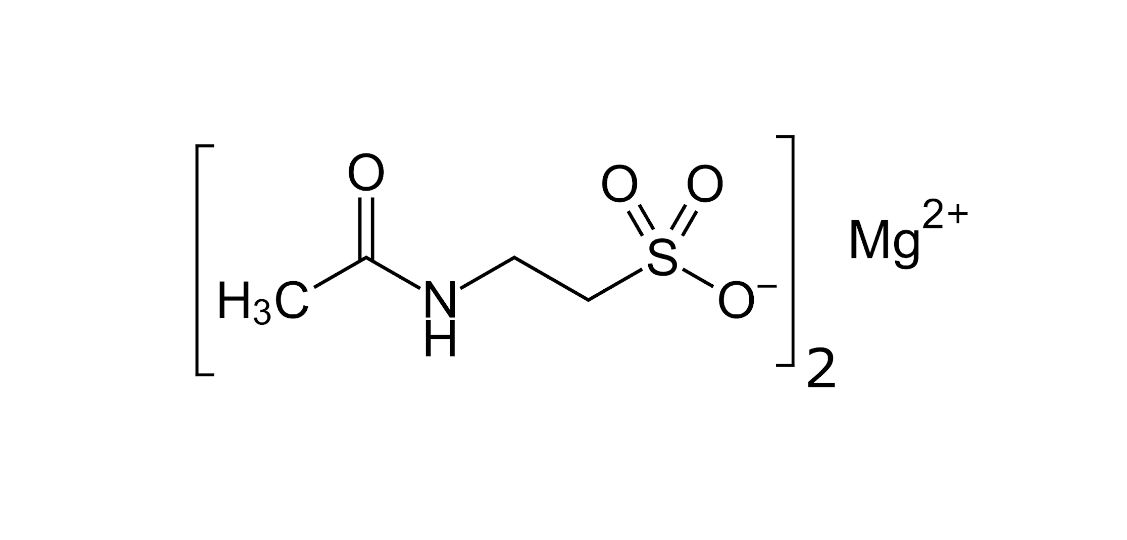
Magnesium Acetyl Taurate (MgAT) is often discussed for its potential central nervous system (CNS) benefits because it combines magnesium, taurine, and an acetyl group, all of which are relevant to brain physiology. Below is a focused, mechanism-based overview of its effects on the CNS.
1. Neurotransmission Regulation & Neuronal Stability
Magnesium component
- Acts as a natural NMDA receptor antagonist, reducing excessive glutamate signaling.
- Helps prevent neuronal overexcitation, which is linked to anxiety, insomnia, migraines, and excitotoxicity.
CNS impact
- Stabilizes synaptic transmission
- Supports calm, balanced neuronal firing
2. Anxiolytic and Stress-Modulating Effects
Taurine component
- Functions as a neuromodulator, enhancing GABAergic and glycinergic inhibition.
- Reduces stress-induced neuronal excitability.
Observed CNS effects
- Reduction in anxiety-like symptoms
- Improved stress tolerance
- Potential calming effect without sedation
3. Cognitive Support & Mental Clarity
Acetylated structure
- Acetyl groups may improve cellular uptake and mitochondrial energy metabolism.
Magnesium’s role
- Essential for ATP synthesis, synaptic plasticity, and memory formation.
Potential outcomes
- Improved attention and mental clarity
- Support for learning and working memory
- Reduced “brain fog” in magnesium-deficient individuals
4. Neuroprotective Effects
Combined mechanisms
- Magnesium reduces calcium overload in neurons
- Taurine acts as an osmoprotectant and antioxidant
CNS protection
- May protect neurons from oxidative stress and excitotoxic damage
- Potential supportive role in aging brains and neurodegenerative risk contexts
5. Sleep Quality Improvement
CNS mechanisms
- Modulation of GABA signaling
- Reduction of sympathetic nervous system overactivity
Observed benefits
- Faster sleep onset
- Deeper, more restorative sleep
- Improved circadian nervous system balance
6. Mood Regulation
Magnesium deficiency is associated with depressive symptoms.
Taurine has been shown to influence dopaminergic and serotonergic pathways indirectly.
Potential effects
- Mood stabilization
- Reduction in irritability and emotional volatility
7. Autonomic Nervous System Balance
Supports a shift toward parasympathetic dominance.
May reduce CNS-driven symptoms such as:
- Palpitations related to anxiety
- Stress-induced headaches
- Functional neurological tension
8. Blood–Brain Barrier (BBB) Relevance
Taurine has recognized CNS transport mechanisms.
While direct human data are limited, Magnesium Acetyl Taurate is theorized to have better CNS bioavailability than inorganic magnesium salts.
Summary Table
| CNS Aspect | Effect of Magnesium Acetyl Taurate |
| Neuronal excitability | ↓ Overexcitation |
| Anxiety & stress | ↓ Anxiety, calming effect |
| Cognition | ↑ Focus, clarity, memory support |
| Neuroprotection | ↓ Oxidative and excitotoxic damage |
| Sleep | ↑ Sleep quality |
| Mood | Stabilizing effect |
| Autonomic balance | Parasympathetic support |
Important Notes
- Human clinical data specific to Magnesium Acetyl Taurate are still limited; many conclusions are extrapolated from magnesium and taurine research.
- Effects are most noticeable in individuals with magnesium deficiency or high stress load.
- Generally considered well tolerated, with fewer gastrointestinal side effects than some other magnesium salts.
If you want, I can also:
- Compare Magnesium Acetyl Taurate vs magnesium L-threonate for brain effects
- Discuss dosage ranges for CNS support
- Explain mechanistic pathways with diagrams
- Evaluate use in anxiety, insomnia, or neurodegenerative contexts
Just tell me how deep you’d like to go.