
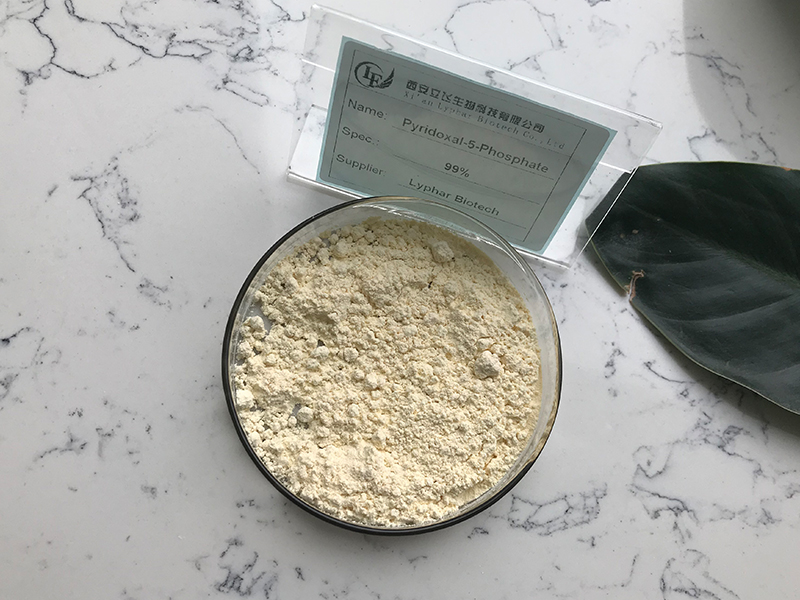
Pyridoxal-5-Phosphate (PLP, ≥98% purity) was obtained from a certified chemical supplier and used without further purification.
Materials of Pyridoxal-5-Phosphate
Pyridoxal-5-phosphate (PLP)
- ≥98% purity, analytical grade (commercial supplier or synthesized in-house)
Vitamin B6 precursors (if synthesizing Pyridoxal-5-Phosphate)
- Pyridoxal (PL)
- Pyridoxine or Pyridoxamine (optional, depending on pathway)
Phosphorylation reagents (chemical synthesis route)
- Phosphorus oxychloride (POCl₃) or
- Phosphoric acid / polyphosphate system
Enzymes (enzymatic synthesis route)
- Pyridoxal kinase
- ATP (disodium salt)
- MgCl₂
Buffers and solvents
- Tris-HCl buffer
- Phosphate buffer (pH 6.0–8.0)
- Methanol (HPLC grade)
- Distilled or deionized water
Analytical reagents
- HCl and NaOH for pH adjustment
- Standards for HPLC or UV calibration
Equipment
- Magnetic stirrer
- pH meter
- UV–Vis spectrophotometer
- High-performance liquid chromatography (HPLC) system
- Centrifuge
- Lyophilizer or vacuum dryer
Methods of Pyridoxal-5-Phosphate
1. Chemical Synthesis of Pyridoxal-5-Phosphate (if applicable)
Pyridoxal was phosphorylated using phosphorus oxychloride under controlled temperature conditions. Briefly, pyridoxal was dissolved in anhydrous solvent and cooled to 0–5 °C. Phosphorylation reagent was added dropwise with continuous stirring. The reaction mixture was maintained at low temperature for 1–2 h and then quenched with ice-cold water.
The crude product was neutralized to pH 6.5–7.0 and purified by ion-exchange chromatography. Fractions containing Pyridoxal-5-Phosphate were identified by UV absorbance and pooled. The final product was lyophilized and stored at −20 °C, protected from light.
2. Enzymatic Synthesis of Pyridoxal-5-Phosphate (alternative method)
Pyridoxal-5-Phosphate was produced enzymatically using pyridoxal kinase. Pyridoxal (5–10 mM) was incubated with ATP (10–20 mM), MgCl₂ (5 mM), and pyridoxal kinase in Tris-HCl buffer (50 mM, pH 7.4). The reaction was carried out at 37 °C for 1–3 h.
The reaction was terminated by heat inactivation of the enzyme, followed by centrifugation to remove precipitated protein. Pyridoxal-5-Phosphate was purified by HPLC and quantified against authentic standards.
3. Purification and Identification
Purification of Pyridoxal-5-Phosphate was performed using reverse-phase or ion-exchange HPLC. Detection was carried out at 388 nm, corresponding to the characteristic absorbance of Pyridoxal-5-Phosphate.
Identity and purity were confirmed by:
- UV–Vis spectroscopy
- HPLC retention time comparison with reference standard
- Optional mass spectrometry or NMR analysis
4. Stability and Storage Conditions
Pyridoxal-5-Phosphate solutions were prepared fresh or stored at −20 °C in amber containers to minimize photodegradation. All experiments were conducted under reduced light conditions. Stability was monitored by periodic HPLC analysis.
5. Statistical Analysis (if biological assays were included)
All experiments were performed in triplicate. Results were expressed as mean ± standard deviation (SD). Statistical analysis was conducted using appropriate software, with significance defined as p < 0.05.