
Pyridoxal-5-Phosphate is synthesized, starting from vitamin B6 derivatives. I’ll keep it conceptual and reaction-pathway level, the way it’s usually presented in textbooks, patents, and review articles.
1. What Pyridoxal-5-Phosphate actually is (quick grounding)
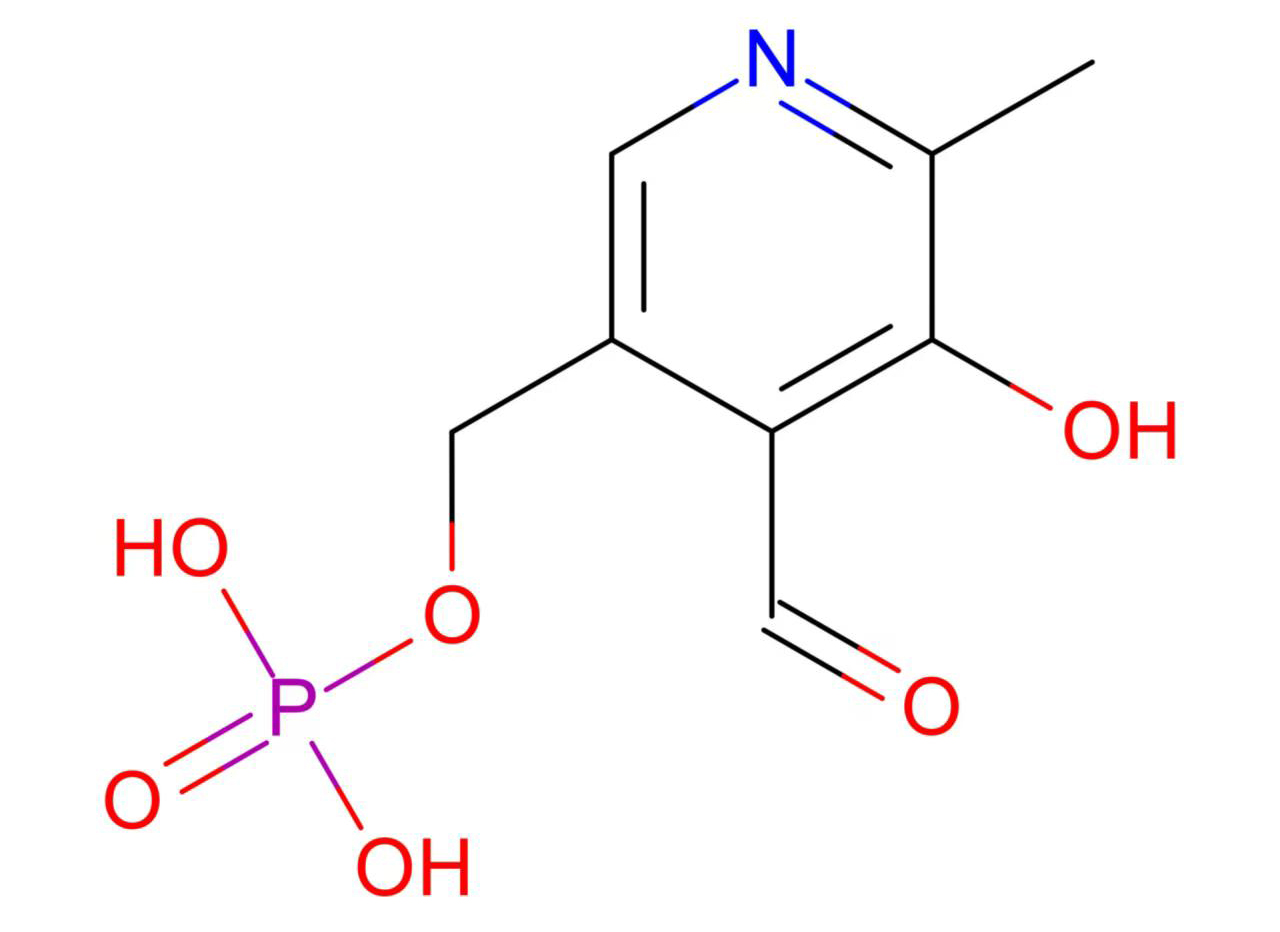
Pyridoxal-5-Phosphate is the biologically active coenzyme form of vitamin B₆. Structurally, it’s:
- A pyridine ring (vitamin B₆ core)
- An aldehyde group at the 4-position (pyridoxal)
- A phosphate ester at the 5-hydroxymethyl group
That phosphate is crucial—it’s what lets PLP bind tightly to enzymes.
2. Biological (enzymatic) synthesis of Pyridoxal-5-Phosphate
In living systems, Pyridoxal-5-Phosphate is not synthesized directly from scratch in one step. Instead, it’s produced via vitamin B₆ biosynthesis and activation pathways.
A. De novo biosynthesis (plants, bacteria, fungi)
Two precursor pathways converge to form Pyridoxal-5-Phosphate:
- A sugar-derived fragment (from pentose phosphate metabolism)
- An amino-acid–derived fragment (from glutamine or related sources)
Key points:
- Ring formation occurs enzymatically
- The phosphate group is introduced during or immediately after ring assembly
- The final product is Pyridoxal-5-Phosphate itself, not pyridoxine
This route is absent in animals.
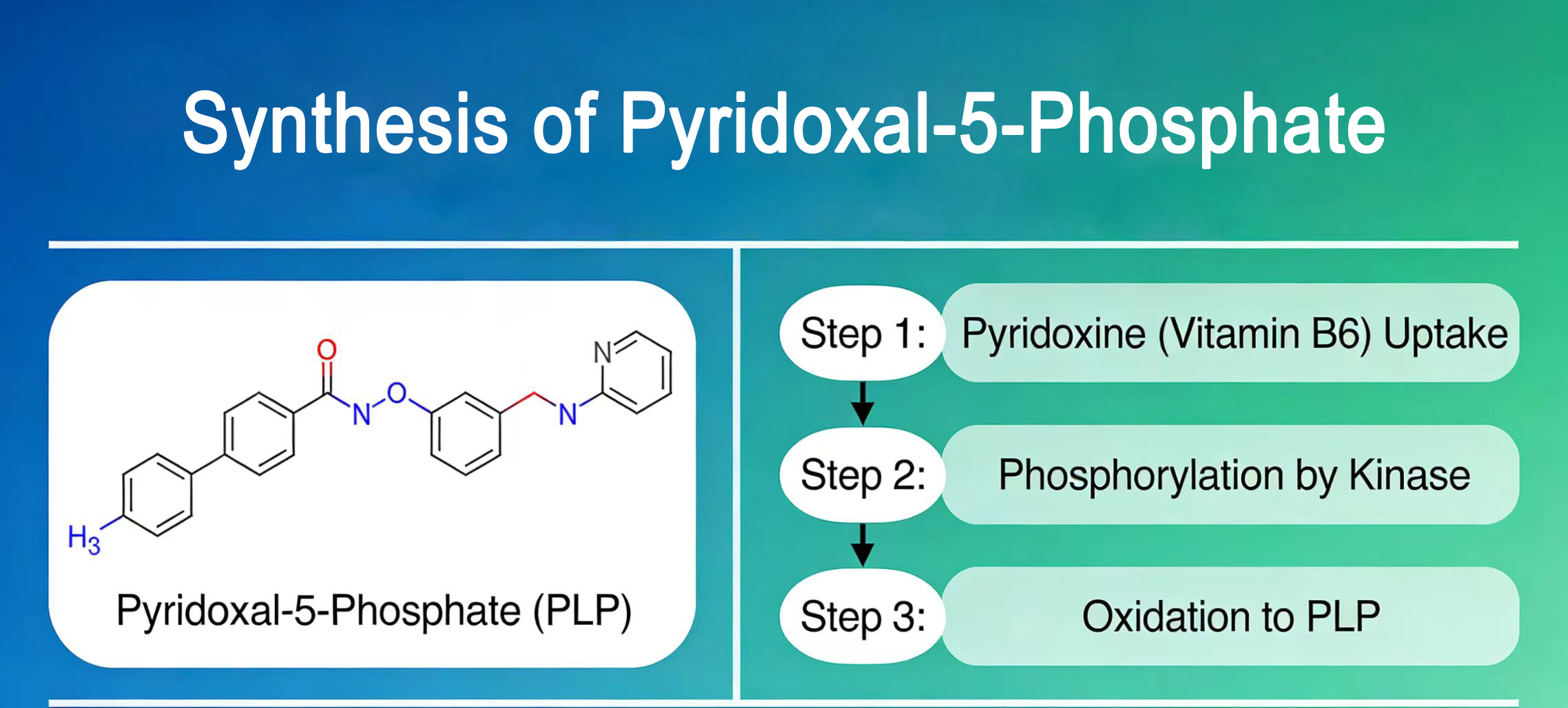
B. Salvage pathway (animals, humans)
Humans rely on dietary vitamin B₆ forms:
- Pyridoxine (PN)
- Pyridoxal (PL)
- Pyridoxamine (PM)
These are converted into Pyridoxal-5-Phosphate in two conceptual steps:
Phosphorylation
- The 5′-hydroxymethyl group is phosphorylated
Oxidation
- Pyridoxal-5-Phosphate or pyridoxamine-5-phosphate is oxidized to Pyridoxal-5-Phosphate
This is the physiologically dominant route in mammals.
3. Chemical synthesis (conceptual, non-procedural)
From a synthetic chemistry perspective, Pyridoxal-5-Phosphate production follows this logical sequence:
Step 1: Construction of the pyridoxine/pyridoxal core
- Build a substituted pyridine ring
- Introduce hydroxymethyl and methyl substituents
- Control regioselectivity to match the vitamin B₆ scaffold
Step 2: Oxidation to pyridoxal
- Convert the 4-hydroxymethyl group to an aldehyde
- This step is critical for biological activity
Step 3: Phosphorylation at the 5′-position
- Formation of a phosphate ester
- Must preserve aldehyde integrity
- Final product is typically isolated as a salt for stability
Industrially, biocatalytic phosphorylation is often favored because it:
- Improves regioselectivity
- Avoids harsh chemical phosphorylation reagents
- Produces higher-purity Pyridoxal-5-Phosphate
4. Industrial production strategies (overview)
Modern manufacturing typically uses a hybrid approach:
- Chemical synthesis → vitamin B₆ intermediates
- Enzymatic steps → selective phosphorylation and oxidation
- Careful stabilization → Pyridoxal-5-Phosphate is moisture- and light-sensitive
This balances:
- Cost
- Yield
- Optical purity
- Regulatory acceptability (especially for pharmaceutical and supplement use)
5. Why Pyridoxal-5-Phosphate synthesis is non-trivial
Pyridoxal-5-Phosphate is tricky because:
- The aldehyde group is reactive
- The phosphate ester is hydrolytically sensitive
- Multiple tautomers exist in solution
- It readily forms Schiff bases (which is great in enzymes, bad in storage)
That’s why Pyridoxal-5-Phosphate is usually handled and sold as stabilized salts.
If you want, I can:
- Walk through a reaction-mechanism map (arrow-pushing level, still non-procedural)
- Compare chemical vs enzymatic synthesis pros & cons
- Explain why Pyridoxal-5-Phosphate is harder to formulate than pyridoxine
- Tie synthesis choices to bioavailability and supplement stability
Just tell me which angle you’re after