
Polydeoxyribonucleotide (PDRN) is a biologically active DNA-derived compound widely studied for its tissue-repair and regenerative properties, especially in dermatology and wound healing.
Introduction of Polydeoxyribonucleotide
Polydeoxyribonucleotide (PDRN) refers to a mixture of deoxyribonucleotide polymers (DNA fragments) typically ranging from about 50 to 2000 base pairs in length. These fragments are usually extracted from natural sources and processed for medical or cosmetic use.
In modern biomedical applications, Polydeoxyribonucleotide is valued primarily for its ability to promote tissue regeneration, enhance wound healing, and modulate inflammation.
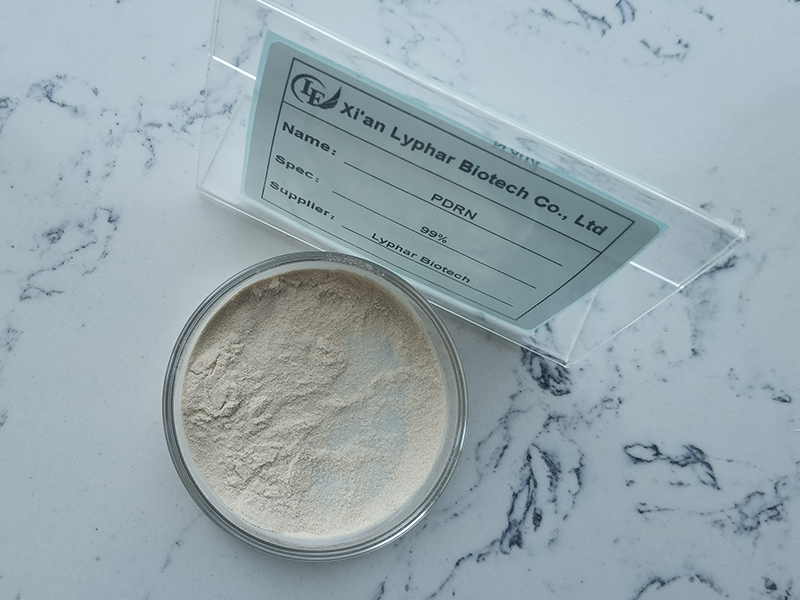
It is commonly used in:
- Aesthetic medicine (skin rejuvenation, anti-aging injections)
- Wound healing therapies
- Tissue repair treatments (burns, ulcers, surgical recovery support)
Origin of Polydeoxyribonucleotide
Polydeoxyribonucleotide is typically obtained from purified DNA sources, most commonly:
- Salmon sperm DNA (Oncorhynchus species) – the most widely used industrial source
- Sometimes other fish-derived or marine DNA sources
The production process involves:
- Extraction of DNA from biological tissue
- Controlled enzymatic degradation into smaller fragments
- Purification to remove proteins, lipids, and impurities
- Sterilization for medical-grade use
Salmon DNA is preferred because it is:
- Highly similar in structure to human DNA (biocompatible)
- Low in immunogenicity (rarely triggers immune reactions)
- Stable and abundant
Properties of Polydeoxyribonucleotide
Polydeoxyribonucleotide has several important biochemical and pharmacological properties:
a. Molecular properties
- Composed of short-chain DNA fragments
- Water-soluble
- Biodegradable in the body via nucleases
b. Biological activity
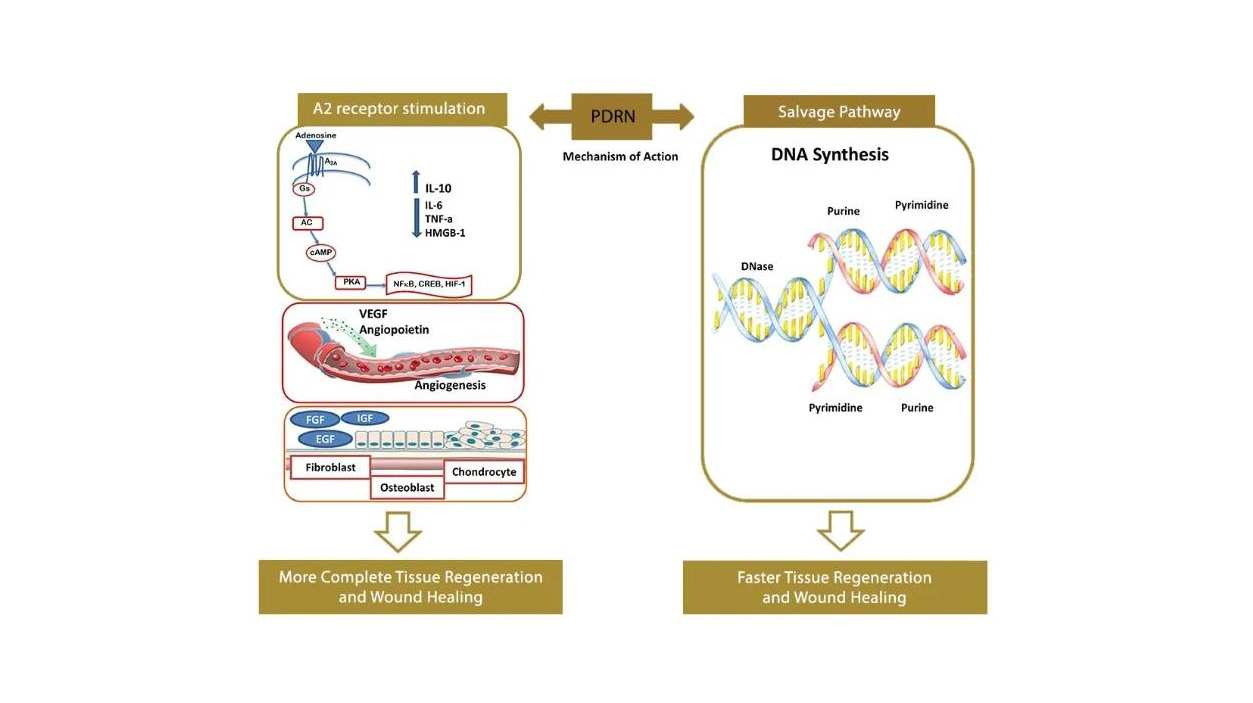
- Activates adenosine A2A receptors
- Stimulates cell proliferation and tissue repair pathways
- Promotes angiogenesis (formation of new blood vessels)
- Enhances fibroblast activity and collagen synthesis indirectly
c. Anti-inflammatory effects
- Reduces inflammatory cytokines
- Helps shift tissue environment toward healing and regeneration
d. Safety profile
- Generally well tolerated
- Low immunogenicity due to natural DNA origin
- Minimal systemic toxicity when used appropriately
Summary
Polydeoxyribonucleotide is a purified DNA fragment mixture derived mainly from salmon sources, used in regenerative medicine. Its main value lies in its ability to activate cellular repair pathways, improve tissue regeneration, and reduce inflammation, making it popular in wound healing and aesthetic treatments.