
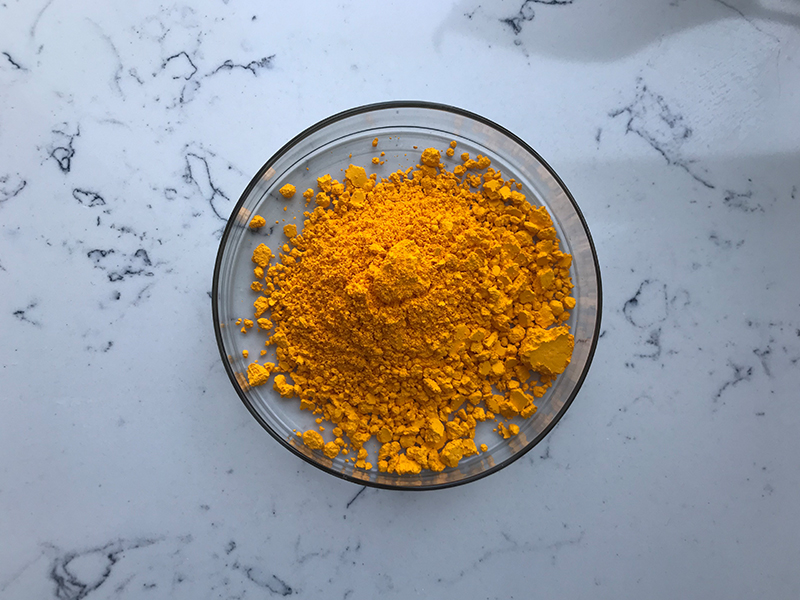
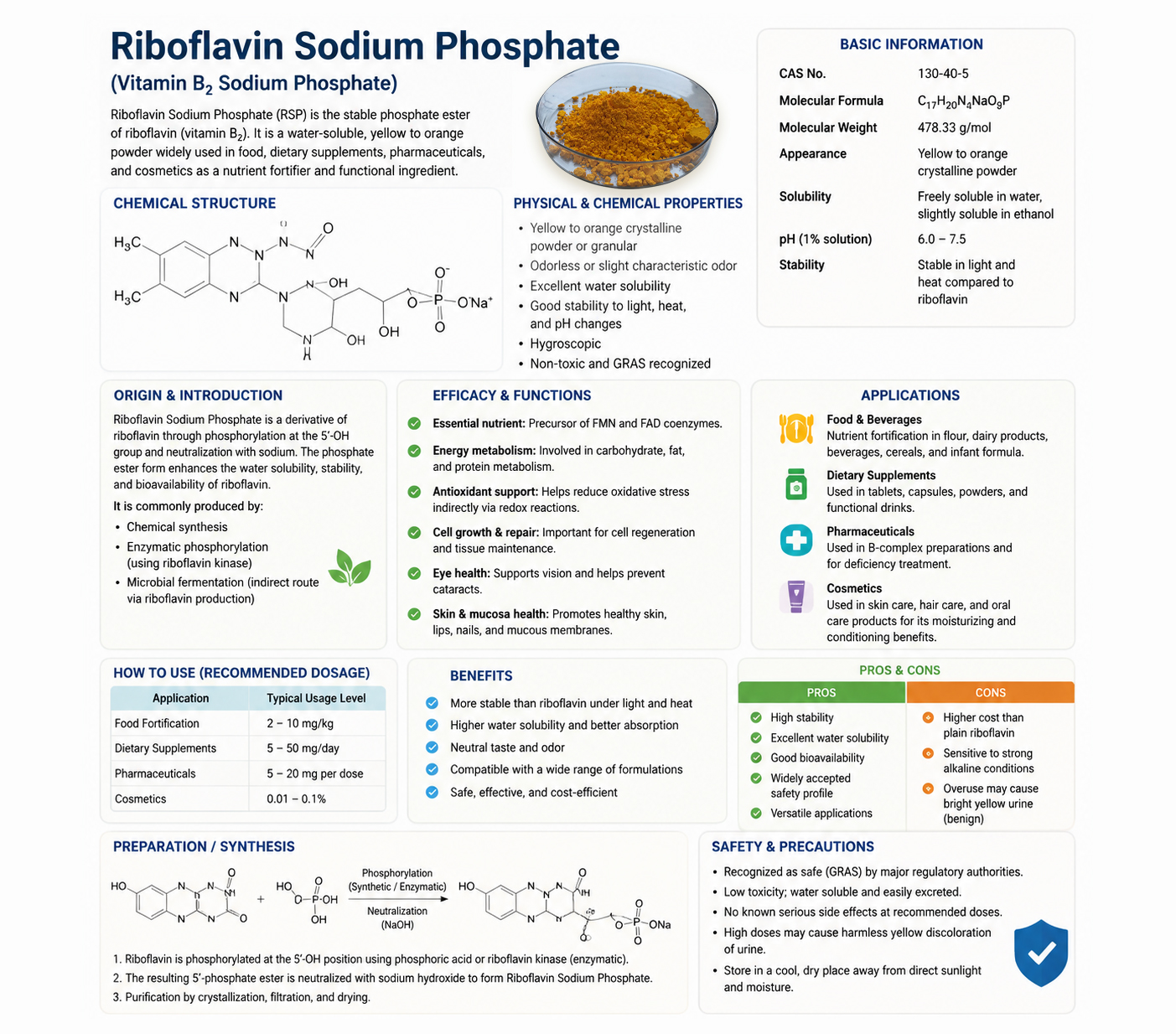
Riboflavin Sodium Phosphate (also called riboflavin-5′-phosphate sodium, FMN sodium salt) is the water-soluble phosphorylated form of riboflavin (vitamin B2). It is the biologically active coenzyme precursor that forms flavin mononucleotide (FMN) and flavin adenine dinucleotide (FAD), two essential cofactors involved in cellular energy production and redox reactions.
- Chemical formula: C₁₇H₂₀N₄NaO₉P
- CAS number: 130-40-5
- Vitamin class: Water-soluble B vitamin derivative
- Primary roles: Energy metabolism, antioxidant defense, mitochondrial function, skin and mucosal health, enzyme activation
Compared with ordinary riboflavin, Riboflavin Sodium Phosphate has higher water solubility and better formulation stability, making it widely used in pharmaceuticals, dietary supplements, cosmetics, and nutritional fortification.
1. Effectiveness and Biological Functions
1.1 Supports Energy Metabolism
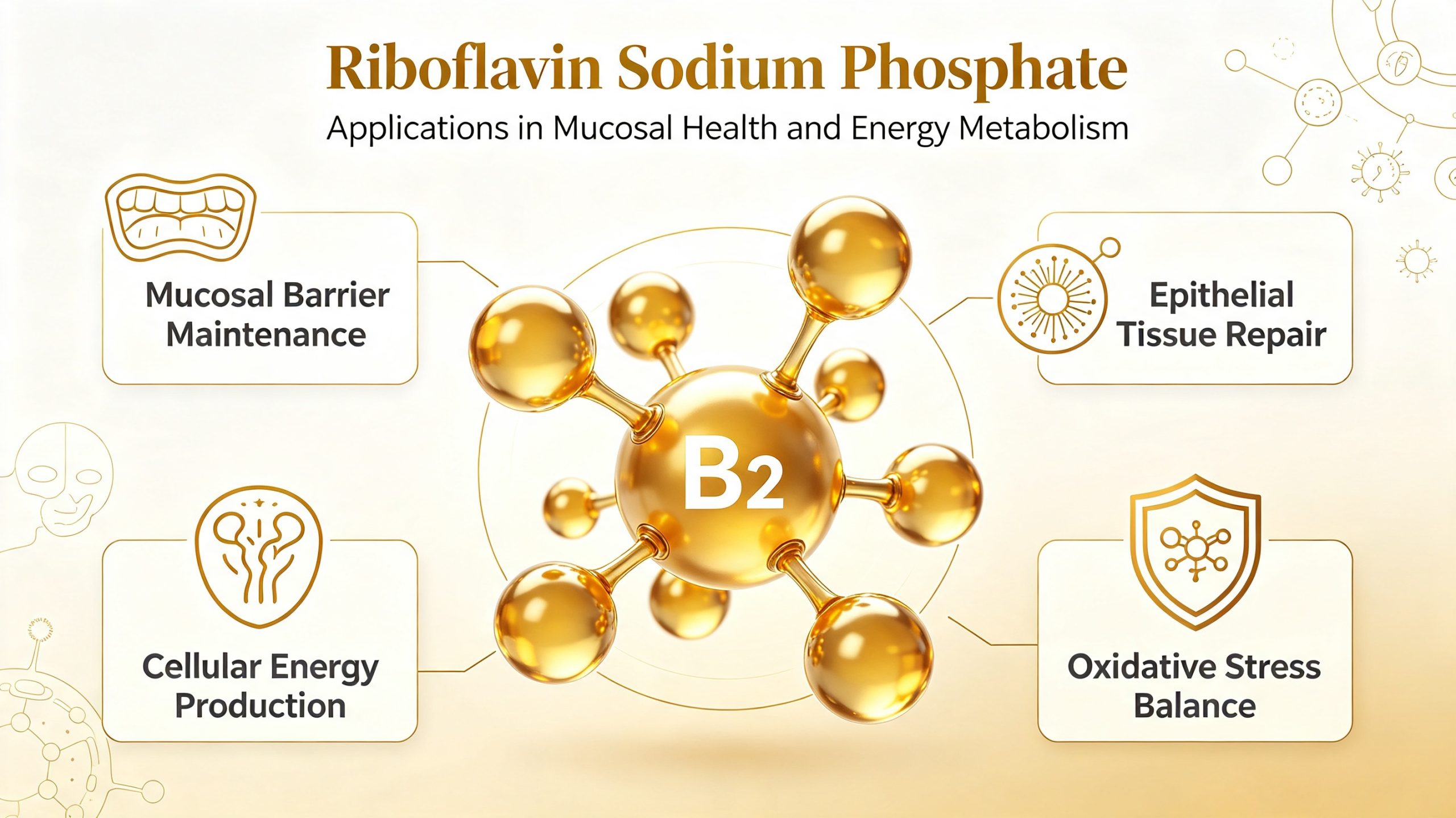
Riboflavin Sodium Phosphate is converted into FMN and FAD, which are required cofactors for many mitochondrial enzymes.
It supports:
- Electron transport chain activity
- ATP production
- Fatty acid oxidation
- Carbohydrate metabolism
- Amino acid metabolism
Potential benefits:
- Helps reduce fatigue caused by vitamin B2 deficiency
- Supports normal cellular energy production
- Maintains mitochondrial function
1.2 Antioxidant Protection
FMN and FAD participate in antioxidant enzyme systems, especially:
- Glutathione reductase
- Thioredoxin reductase
These enzymes help maintain reduced glutathione (GSH), which protects cells from oxidative stress.
Potential effects:
- Reduces oxidative damage
- Supports cellular repair processes
- Helps protect skin cells from environmental stress
1.3 Supports Skin Health
Riboflavin is important for healthy skin because it contributes to:
- Normal cell turnover
- Collagen metabolism
- Maintenance of epithelial tissues
- Wound repair processes
In cosmetic formulations, Riboflavin Sodium Phosphate is investigated for:
- Improving dull-looking skin
- Supporting skin barrier function
- Protecting against oxidative stress
- Promoting healthier skin appearance
However, it is not considered a strong standalone anti-aging ingredient compared with retinoids, peptides, or growth-factor-related ingredients.
1.4 Eye Health Support
Riboflavin plays an important role in maintaining ocular tissues.
Potential benefits include:
- Supporting corneal metabolism
- Protecting eye cells from oxidative stress
- Maintaining normal vision
A specialized medical application is corneal collagen cross-linking, where riboflavin solutions are used with ultraviolet A (UVA) light to strengthen corneal collagen in conditions such as keratoconus.
1.5 Nervous System Support
Vitamin B2 contributes to normal nervous system function by supporting:
- Neurotransmitter metabolism
- Myelin maintenance
- Cellular energy supply in neurons
Adequate riboflavin status may help maintain neurological health.
1.6 Migraine Prevention Support
Some clinical studies suggest high-dose riboflavin supplementation may reduce migraine frequency in certain individuals.
Possible mechanisms:
- Improved mitochondrial energy metabolism
- Reduced oxidative stress
- Enhanced mitochondrial efficiency
Evidence is stronger for riboflavin supplementation generally rather than specifically Riboflavin Sodium Phosphate.
1.7 Nutritional Fortification
Riboflavin Sodium Phosphate is commonly used as a nutrient additive because of:
- Better water solubility than riboflavin
- Easier incorporation into liquid formulations
- Improved bioavailability in some applications
Uses include:
- Infant nutrition products
- Functional beverages
- Vitamin preparations
- Medical nutrition products
2. Side Effects
Riboflavin Sodium Phosphate is generally considered safe because vitamin B2 is water-soluble and excess amounts are usually eliminated through urine.
2.1 Common Side Effects
Usually mild and temporary:
Bright Yellow Urine
The most common effect.
Cause:
- Excess riboflavin is excreted in urine
- Riboflavin naturally has a strong yellow fluorescence
This is harmless.
Mild Digestive Symptoms
Occasionally:
- Nausea
- Stomach discomfort
- Diarrhea
- Abdominal bloating
More likely with high-dose supplementation.
2.2 Rare Side Effects
Uncommon reactions may include:
Allergic Reactions
Possible symptoms:
- Skin rash
- Itching
- Swelling
- Difficulty breathing (very rare)
People with known sensitivity should discontinue use and seek medical advice.
Photosensitivity (Rare)
Because riboflavin interacts with light, very high concentrations may theoretically increase photosensitivity.
This is uncommon with normal oral use.
3. Special Precautions
3.1 Special Precautions Pregnancy and Breastfeeding
Riboflavin is an essential nutrient required during pregnancy and lactation.
However:
- Avoid unnecessary high-dose supplementation
- Use therapeutic doses only under healthcare guidance
Normal nutritional amounts are generally considered safe.
3.2 Kidney Disease
Because riboflavin metabolites are eliminated through the kidneys:
People with:
- Severe kidney impairment
- Reduced renal clearance
should consult healthcare professionals before high-dose supplementation.
3.3 Drug Interactions
Certain medications may affect riboflavin metabolism.
Examples:
Tricyclic Antidepressants
Some drugs may interfere with riboflavin utilization.
Phenothiazines
Long-term use may increase riboflavin requirements.
Certain Antimalarial Drugs
May interfere with riboflavin-related metabolic pathways.
Patients taking long-term medication should discuss supplementation with a healthcare provider.
3.4 Light Sensitivity and Storage
Riboflavin derivatives are light-sensitive.
Precautions:
- Store in dark containers
- Avoid prolonged exposure to sunlight
- Protect formulations from UV radiation
This is particularly important in cosmetic and pharmaceutical formulations.
3.5 Dosage Considerations
Excessive intake is generally well tolerated, but high doses should have a clear purpose.
Typical nutritional requirements:
| Population | Approximate daily requirement |
| Adult men | ~1.3 mg/day riboflavin equivalent |
| Adult women | ~1.1 mg/day |
| Pregnancy | ~1.4 mg/day |
| Lactation | ~1.6 mg/day |
Higher doses used for migraine support or medical purposes should be supervised.
4. Riboflavin Sodium Phosphate in Cosmetics
Potential Advantages
✅ Water-soluble vitamin B2 derivative
✅ Better formulation compatibility than riboflavin
✅ Supports antioxidant defense
✅ Helps maintain healthy skin metabolism
✅ Suitable for aqueous serums and formulations
Limitations
❌ Poor light stability
❌ Limited penetration through intact skin
❌ Less powerful anti-aging activity than retinoids or peptides
❌ Requires stabilization technology for long-term cosmetic use
Common formulation strategies:
- Encapsulation systems
- Antioxidant combinations
- Light-protective packaging
- Combination with niacinamide, vitamin C derivatives, or peptides
5. Riboflavin Sodium Phosphate vs Riboflavin (Summary)
| Feature | Riboflavin | Riboflavin Sodium Phosphate |
| Chemical form | Vitamin B2 | Phosphorylated vitamin B2 |
| Solubility | Low water solubility | Higher water solubility |
| Stability | Moderate | Better in aqueous systems |
| Biological activity | Requires conversion | Direct FMN precursor |
| Pharmaceutical use | Limited solubility | Widely used |
| Cosmetic formulation | More difficult | Easier incorporation |
6. Overall Evaluation
Effectiveness: ★★★★☆
- Excellent nutritional value
- Essential for mitochondrial energy metabolism
- Useful in vitamin B2 deficiency and some clinical applications
- Moderate cosmetic benefits
Safety: ★★★★★
- Very safe at nutritional doses
- Low toxicity profile
Main Concerns:
- Light sensitivity
- Possible mild digestive effects
- Need for dosage control in high-dose applications
Best applications:
- Vitamin supplementation
- Nutritional fortification
- Pharmaceutical formulations
- Antioxidant-support skincare products
- Eye-health-related medical formulations
Riboflavin Sodium Phosphate is therefore a highly safe and biologically important vitamin derivative, particularly valuable where improved water solubility and formulation stability are needed.