
Polydeoxyribonucleotide (PDRN) is a biologically active substance made up of short chains of DNA fragments (deoxyribonucleotides), typically extracted from salmon or trout sperm cells.
What it is
- A mixture of DNA polymers (usually 50–1500 base pairs long)
- Classified as a nucleic acid–derived regenerative compound
- Biologically compatible with human tissues after purification
How it works
Polydeoxyribonucleotide mainly works through activation of the adenosine A2A receptor pathway, which leads to:
- ↑ tissue repair and cell growth
- ↑ angiogenesis (formation of new blood vessels)
- ↓ inflammation
- ↑ collagen production and wound healing
It also provides salvage nucleotides, which cells can reuse for DNA repair and regeneration.
Medical and cosmetic uses
Polydeoxyribonucleotide is used in several fields:
1. Regenerative medicine
- Chronic wound healing (e.g., diabetic ulcers)
- Tissue repair after injury
- Orthopedic injections for tendon or joint repair
2. Dermatology / aesthetics
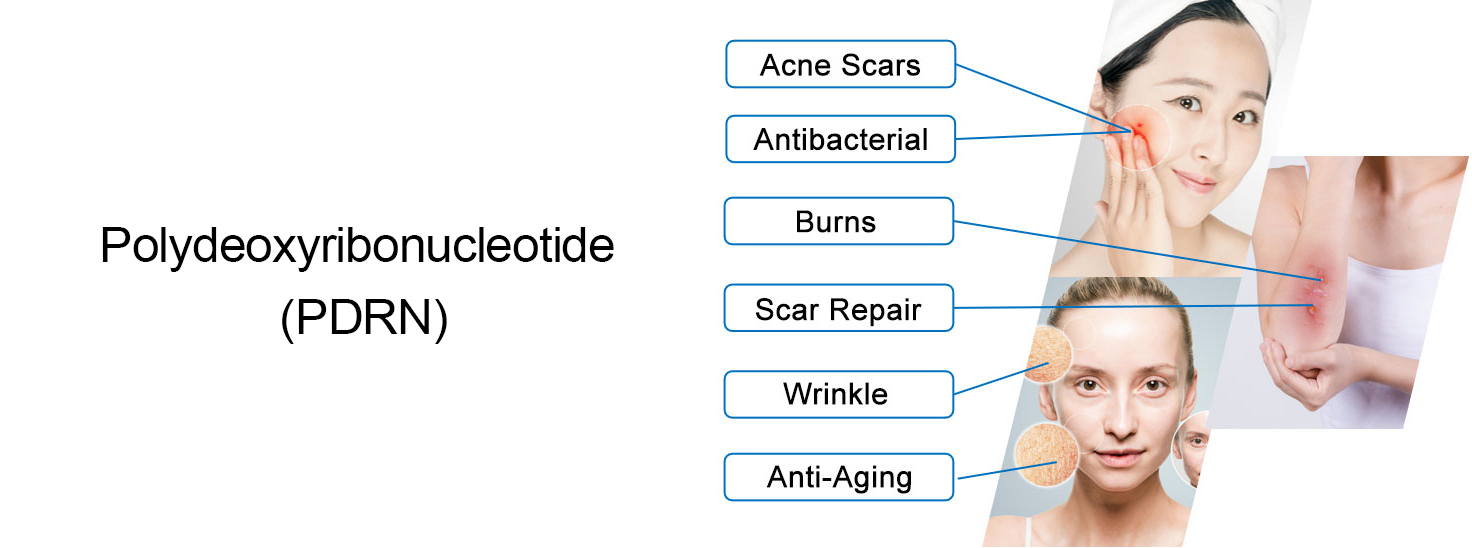
- Skin rejuvenation (improves elasticity and hydration)
- Acne scar improvement
- Anti-aging treatments (often injected or microneedled)
3. Ophthalmology
- Corneal healing and eye surface repair in some formulations
Key effects
- Accelerates tissue regeneration
- Reduces inflammation
- Improves microcirculation
- Enhances skin repair and hydration
Notes
- Generally considered safe in clinical use, but it is usually administered via injection or professional procedures, not typical oral supplements.
- Most cosmetic Polydeoxyribonucleotide products are used in mesotherapy or skin boosters, not creams alone (topical penetration is limited).