
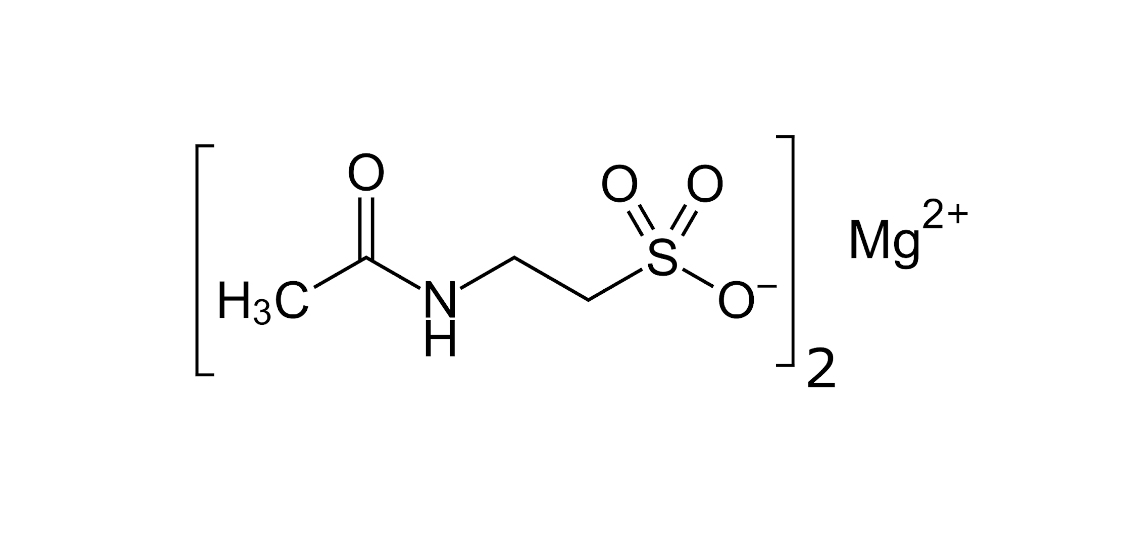
Magnesium Acetyl Taurate (Mg-Acetyl-Taurate) — a specialized form of magnesium chelated to acetylated taurine that’s being used in supplements for stress, brain, and cardiovascular support.
Pros of Magnesium Acetyl Taurate
1. Enhanced Absorption & Bioavailability
- The acetylated taurine component may improve how magnesium is absorbed and transported into cells compared with some traditional forms (e.g., oxide) and may even enhance uptake into brain tissue.
2. Nervous System & Stress Support
- Magnesium plays a key role in regulating neural excitability and calcium channels. Coupled with taurine’s calming effects on inhibitory neurotransmission (e.g., GABA pathways), this form may help reduce stress and support a balanced nervous system.
3. Cognitive & Brain Health Potential
- Preclinical research suggests this form raises magnesium levels in the brain more effectively than certain other forms, potentially supporting memory, cognition, and stress resilience.
4. Better Gastrointestinal Tolerance
- Chelated forms like Magnesium Acetyl Taurate are generally better tolerated than magnesium oxide or sulfate, with a lower likelihood of causing diarrhea or stomach cramping.
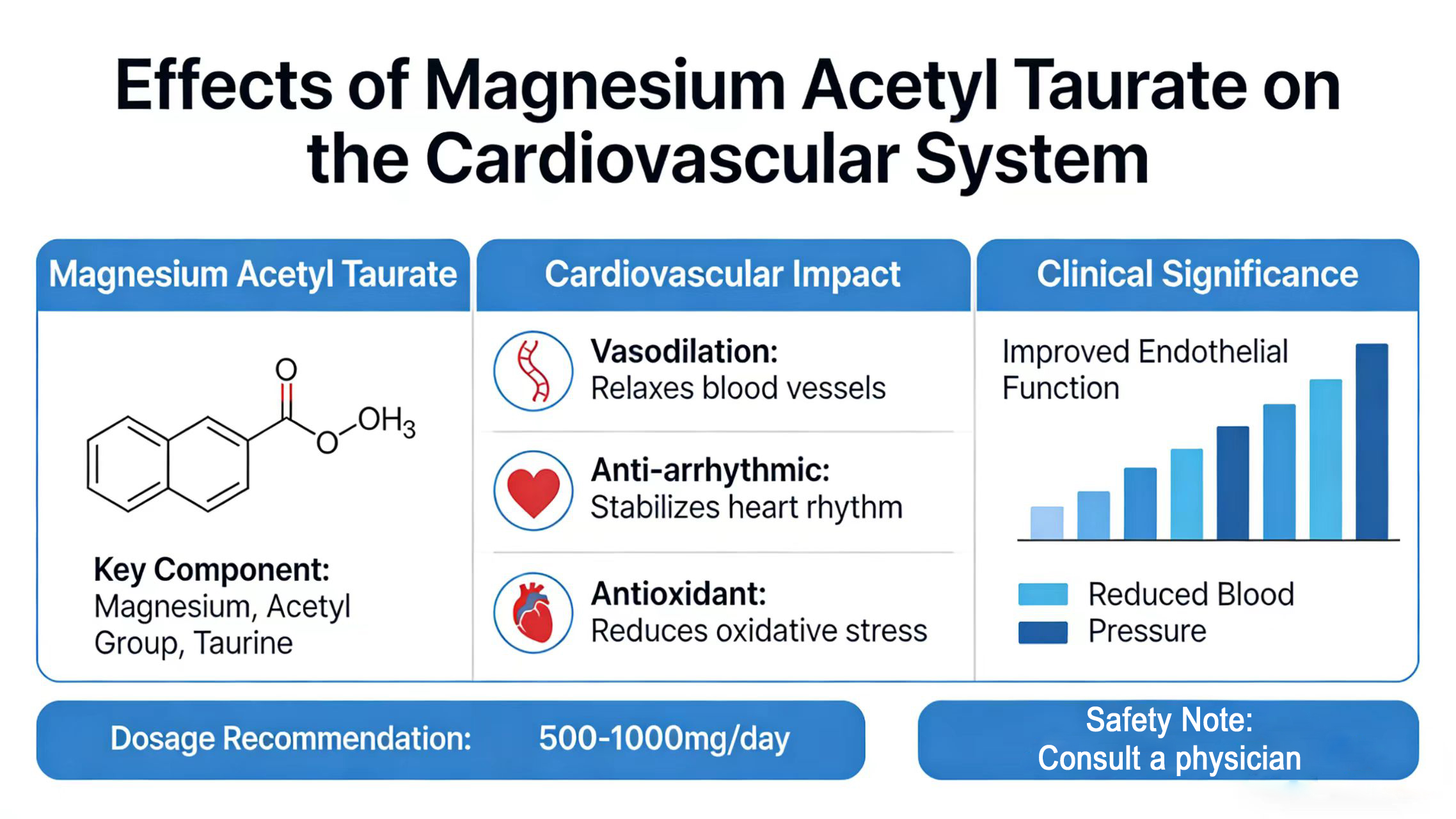
5. Cardiovascular & Muscle Benefits
- Taurine supports cardiovascular health and ion balance in heart tissue, while magnesium supports muscle relaxation. This combination could benefit heart rhythm and blood pressure regulation, though direct clinical evidence for this specific compound is limited.
6. Mood & Sleep Support
- Many people take magnesium to help with sleep quality and relaxation. The taurine component may enhance these effects without causing heavy sedation.
Cons of Magnesium Acetyl Taurate
1. Limited Clinical Evidence
- While rat studies and some small human data suggest improved brain uptake and mood benefit, robust human clinical trials on Magnesium Acetyl Taurate specifically remain limited. Most evidence comes from preclinical research or extrapolated from taurine and magnesium effects separately.
2. Possible Side Effects
Even well-tolerated magnesium forms can cause issues if taken in excess:
- Gastrointestinal discomfort (e.g., loose stools, nausea) — especially at high doses.
- Low blood pressure or dizziness in some individuals.
- Drowsiness or fatigue if the calming effects are too strong.
These are more general magnesium/taurine supplement side effects but could apply here too.
3. Magnesium Overdose & Interactions
- Excess magnesium intake can lead to hypermagnesemia, particularly in people with kidney impairment. Symptoms include low blood pressure, muscle weakness, and cardiac irregularities. This risk isn’t unique to acetyl taurate but applies to all supplemental magnesium if doses exceed tolerable limits.
4. Cost and Availability
- Magnesium Acetyl Taurate is a less common and often premium-priced supplement ingredient compared to more established forms like glycinate or citrate.
Who Might Benefit Most
This form may be worth trying for people who:
- Want stress, mood, or nervous system support
- Have had trouble tolerating other magnesium forms
- Are interested in magnesium with a potential brain-focused effect
However, due to limited direct clinical data, benefits are not guaranteed, and individual responses vary. Always start with a lower dose and talk with a healthcare provider before adding new supplements — especially if you have kidney issues, are on medications (e.g., blood pressure meds), or have other health conditions.
General Magnesium Safety Tips
- The recommended upper limit for supplemental magnesium for most adults is 350 mg/day (from supplements only), though higher doses may be used under medical supervision.
- Magnesium supplements can interact with certain medications (e.g., antibiotics, diuretics), so check with your clinician before starting.
If you want, I can also compare Magnesium Acetyl Taurate vs. other magnesium forms (like glycinate, threonate, or citrate) so you can see which might suit your goals best — just let me know!