
Magnesium Acetyl Taurate (MgAT) is a compound combining magnesium and acetyl taurine (a derivative of taurine). Both components bring unique benefits, and together they are often considered more bioavailable and potentially neuroprotective than standard magnesium supplements.
1. Overview of Components
Magnesium Acetyl Taurate is a magnesium salt of acetyl taurine. Its main components are:
- Taurine: 2-aminoethanesulfonic acid, a sulfonic acid amino compound.
- Acetic Anhydride or Acetyl Donor: Used to acetylate taurine.
- Magnesium Source: Usually magnesium oxide (MgO) or magnesium hydroxide (Mg(OH)₂).
The reaction involves two main stages: acetylation of taurine and formation of magnesium salt.
2. Step 1 — Acetylation of Taurine
Goal: Introduce an acetyl group (-COCH₃) onto the amino group of taurine.
Reaction:
Taurine+Acetic Anhydride→Acetyl Taurine+Acetic Acid
Procedure:
1. Dissolve taurine in a suitable solvent (water, ethanol, or a mixture).
2. Slowly add acetic anhydride while controlling the temperature (usually 0–5°C initially, then allow it to rise to room temperature).
3. Maintain stirring for 1–2 hours to ensure full acetylation.
4. Monitor reaction progress by pH or TLC (thin-layer chromatography).
5. Remove excess acetic anhydride and by-products (like acetic acid) by evaporation or neutralization.
Notes:
- The amino group reacts preferentially over the sulfonic acid group.
- Reaction temperature control is crucial to prevent degradation of taurine.
3. Step 2 — Formation of Magnesium Salt
Goal: Convert acetyl taurine into its magnesium salt.
Reaction:
2Acetyl Taurine+Mg(OH)₂→(Magnesium Acetyl Taurate)+2H₂O
Procedure:
1. Dissolve acetyl taurine in water.
2. Slowly add magnesium hydroxide or magnesium oxide while stirring.
3. Maintain a slightly basic pH (~8) to facilitate complete salt formation.
4. Continue stirring until the reaction is complete (monitored by pH stabilization).
5. Filter the solution to remove any undissolved solids.
6. Dry the product under vacuum or in a controlled temperature oven to obtain magnesium acetyl taurate powder.

4. Step 3 — Purification
Recrystallization may be used to improve purity.
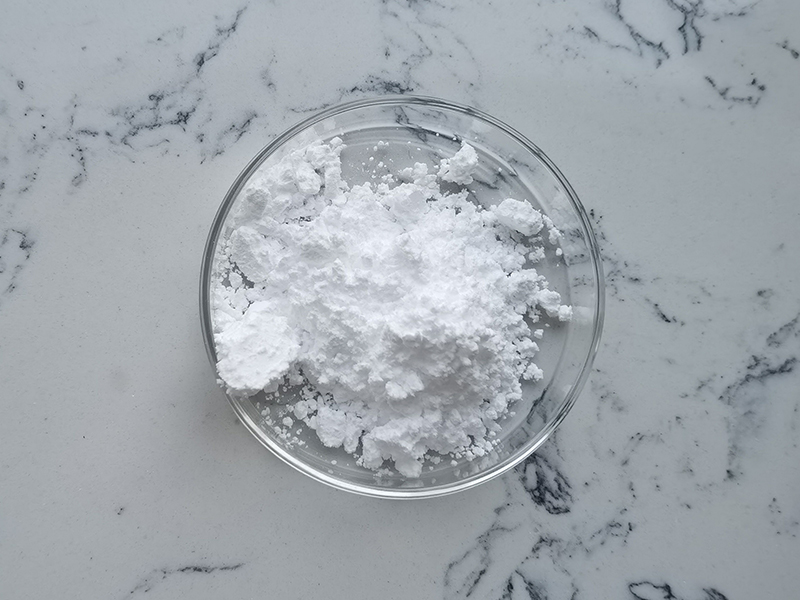
The final product is typically white, water-soluble, and stable under standard storage conditions.
5. Important Considerations
- Stoichiometry: Ensure correct molar ratios (2 moles of acetyl taurine per 1 mole of magnesium).
- Temperature control: Prevent decomposition of taurine and acetyl taurine.
- Solvent choice: Water is common, but some processes may use ethanol or isopropanol for solubility control.
- Quality control: Use NMR, IR spectroscopy, or elemental analysis to confirm acetylation and magnesium complexation.
If you want, I can also draw a clear reaction scheme showing taurine → acetyl taurine → magnesium acetyl taurate, which makes the synthesis much easier to visualize.
Do you want me to do that?