
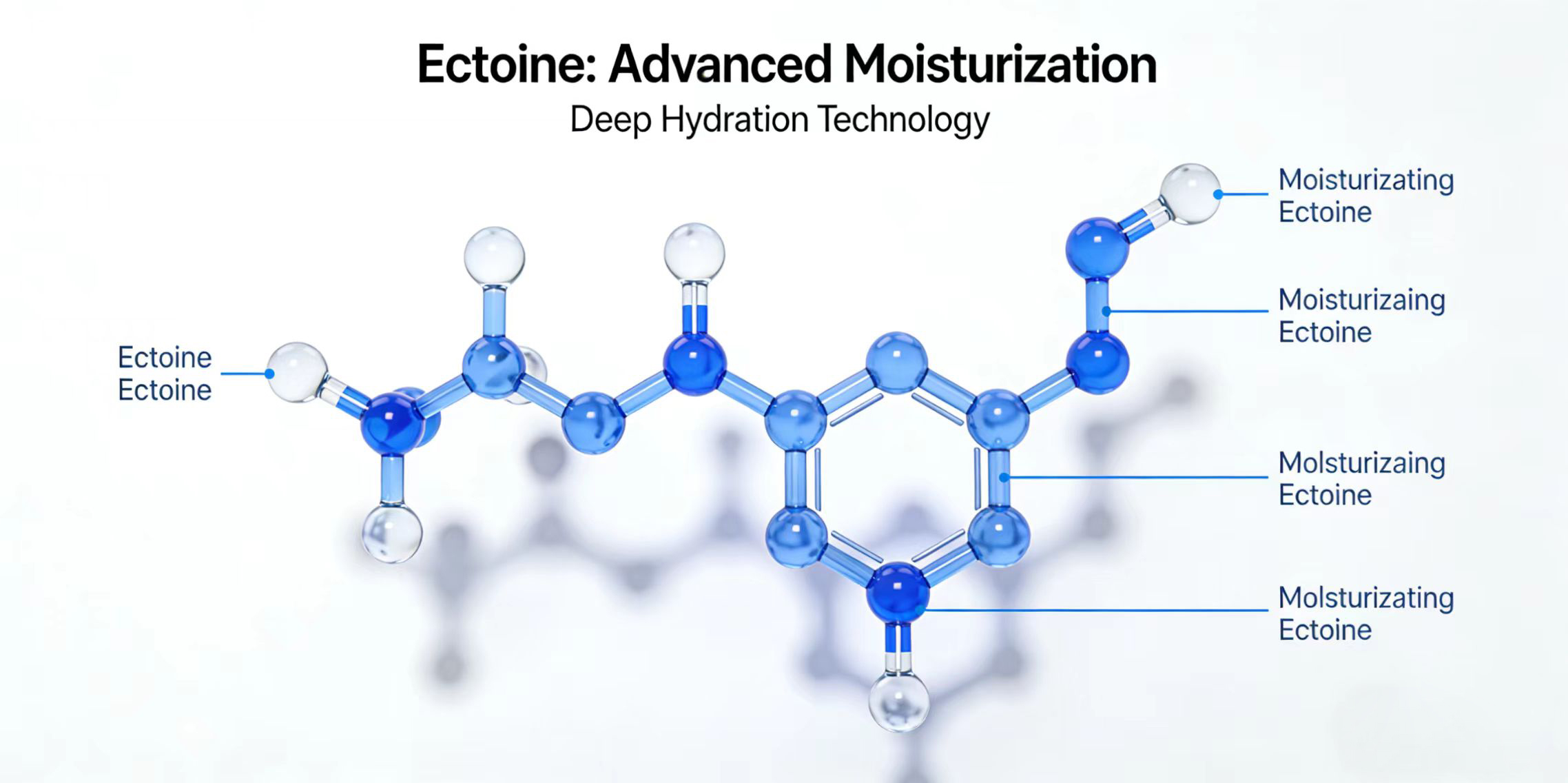
Ectoine is a natural compound, primarily known for its ability to protect cells from environmental stress, and it has applications in cosmetics, medicine, and biotechnology. It is an amino acid derivative produced by certain extremophilic microorganisms, such as halophilic (salt-loving) bacteria. Here’s an overview of its quality and production:
Quality of Ectoine:
The quality of ectoine depends on several factors, including purity, stability, and efficacy. Here are key considerations:
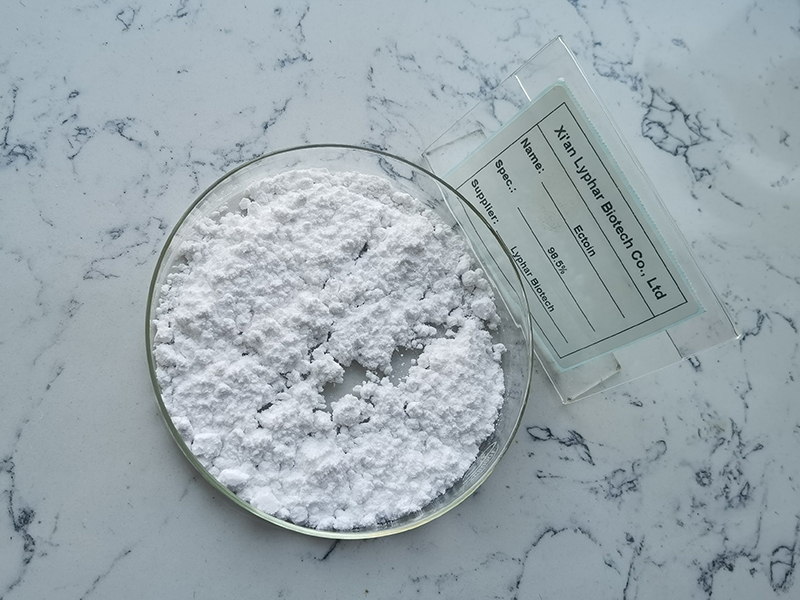
- Purity: High-purity ectoine is essential for most applications, especially in the pharmaceutical and cosmetic industries. To ensure purity, ectoine is often extracted and purified through methods like liquid chromatography or crystallization.
- Stability: Ectoine is known for its ability to stabilize proteins and cellular structures, even under extreme environmental conditions. Its stability is one of its primary attributes in applications like skin care, where it helps protect skin cells from dehydration and UV damage.
- Biocompatibility: It is important that Ectoine is biocompatible, especially for medical or cosmetic use. Its safety profile is one of the reasons it’s often used in products for sensitive skin or as a treatment for dry skin conditions.
- Source: The quality of ectoine is often linked to the microorganism from which it is derived. Since ectoine is produced by extremophiles, the microbial strain and its cultivation conditions impact the compound’s quality.
Production of Ectoine:
Ectoine is typically produced using one of the following methods:
- Microbial Fermentation: The most common method for producing ectoine involves fermenting halophilic microorganisms, such as Halomonas species. These bacteria naturally produce ectoine as a protective mechanism against high salt concentrations. The process typically involves:
- Cultivation of the microorganism in a controlled environment with high salinity.
- Harvesting the ectoine through cell lysis or filtration.
- Purification of the compound from the fermentation broth through processes like precipitation, filtration, or chromatography.
- Synthetic Methods: Although less common, Ectoine can also be synthetically produced through chemical processes. This involves the synthesis of its precursor compounds and subsequent chemical reactions to form ectoine. However, this method is generally less efficient and more expensive than microbial fermentation.
- Biotechnological Advances: With advancements in synthetic biology and genetic engineering, microorganisms can be optimized to produce ectoine in higher yields or to modify the production process for better efficiency and cost-effectiveness.
Challenges in Production:
- Yield Optimization: One of the main challenges in Ectoine production is optimizing microbial strains to achieve high yields of ectoine. This often requires careful selection and genetic optimization of bacterial strains.
- Cost: Although ectoine has many valuable applications, the production cost can be high, particularly when using fermentation-based methods. This has led to ongoing research into more cost-efficient production methods.
- Regulatory Compliance: For pharmaceutical or cosmetic applications, ectoine production must meet strict regulatory standards regarding safety, quality control, and traceability of the production process.
Overall, the production of Ectoine is a growing field, with continued improvements in both the microbial strains used and the processes to ensure high-quality and cost-effective production.