
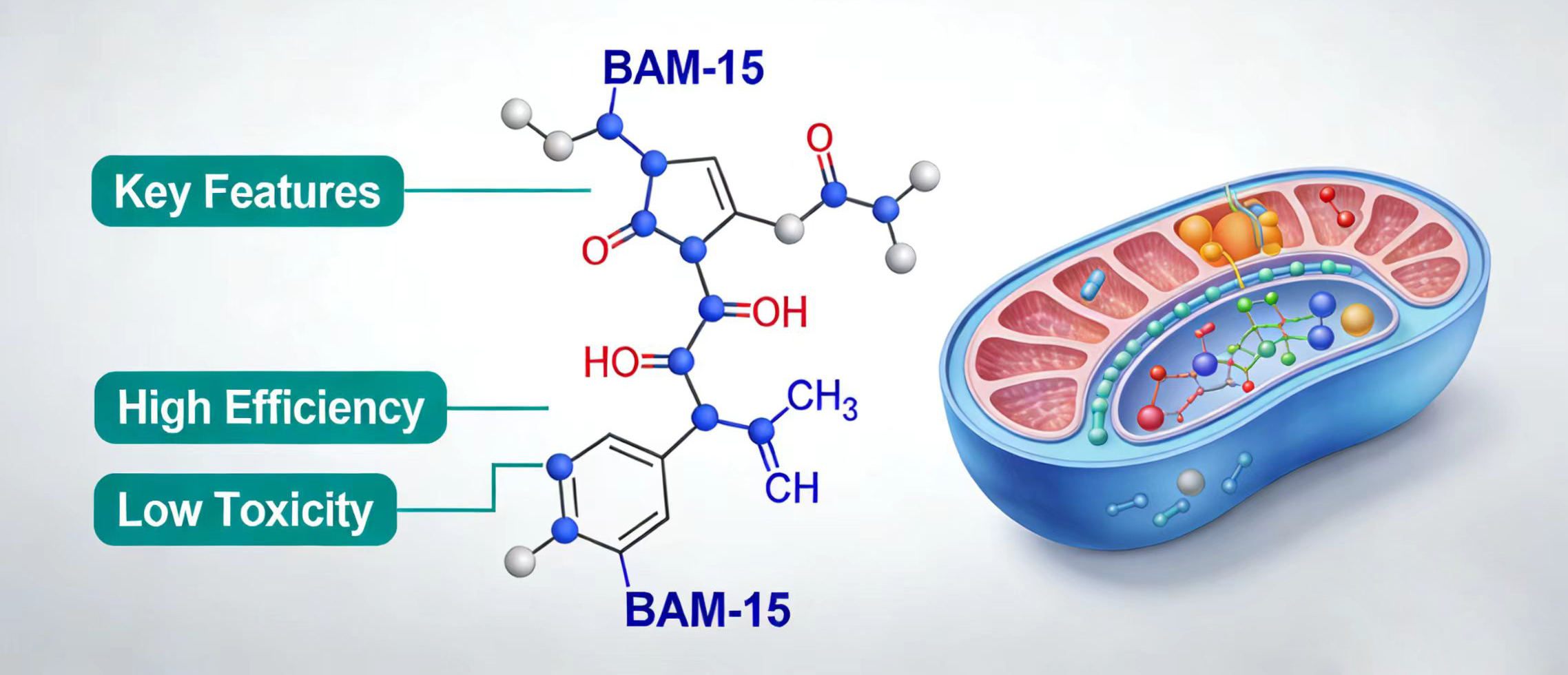
BAM-15 is an experimental mitochondrial uncoupler that has gained attention in metabolic research for its potential advantages over older compounds. Here’s a clear, research-based overview of BAM-15 covering its effectiveness, side effects, and special precautions.
Effectiveness of BAM-15
A. Metabolic & weight-related effects
- Increases energy expenditure by uncoupling mitochondria (burns more calories at rest)
- Reduces fat mass and prevents weight gain in animal models
- Improves body composition without loss of lean mass
Key point: Unlike older uncouplers, it may improve metabolism without severe toxicity (in animals).
B. Glucose & insulin regulation
- Improves insulin sensitivity and glycemic control
- Enhances glucose uptake and lipid metabolism via AMPK activation
C. Cellular & mitochondrial benefits
- Activates AMPK and mitochondrial biogenesis pathways
- Increases oxygen consumption and fat oxidation
- Reduces oxidative stress and inflammation (preclinical)
D. Disease-related potential (preclinical only)
Protects against:
- Obesity & insulin resistance
- Kidney injury & sepsis mortality
- Neurodegeneration & aging decline
Important limitation
- All strong evidence comes from animals or cell studies
- No established clinical (human) efficacy yet
Side Effects of BAM-15
A. Observed in scientific studies
- Lower cytotoxicity vs older uncouplers like DNP or FCCP
- No major organ damage seen in some mouse studies
But this does NOT mean “safe” in humans.
B. Mechanism-related risks (theoretical + experimental)
Because BAM-15 is a mitochondrial uncoupler, risks are inherent:
- Increased heat production (thermogenesis)
- Elevated oxygen consumption
- Potential mitochondrial stress at high doses
C. Reported / discussed side effects (research & community observations)
From experimental and anecdotal reports:
- Fatigue / lethargy (especially high doses)
- Increased heart rate
- Heat intolerance or sweating
- Dehydration risk
- Possible cardiovascular strain
Example (community summary): “Hyperthermia risk… tachycardia… fatigue… dehydration”
These are consistent with all mitochondrial uncouplers, even if BAM-15 is milder.
D. Unknown risks
- Long-term toxicity in humans ❌ unknown
- Safe dosage in humans ❌ not established
- Drug interactions ❌ poorly studied
Special Precautions of BAM-15
A. Not approved for human use
- BAM-15 is a research chemical only
- No FDA approval or clinical dosing guidelines
B. Dose sensitivity
Effects are dose-dependent
High doses may:
- Overload mitochondria
- Increase ROS (oxidative stress)
- Cause systemic stress
C. Avoid dangerous combinations
Particularly risky when combined with:
- Other uncouplers (e.g., DNP-like compounds)
- Stimulants (increase heart rate/temperature)
- Thyroid hormones
- Dehydrating conditions
D. Environmental & physiological risks
- Heat exposure (exercise, hot climate) ↑ risk
- Poor hydration ↑ risk
- Cardiovascular conditions → higher danger
E. Special populations (avoid)
Pregnant or breastfeeding individuals
People with:
- Heart disease
- Metabolic disorders
- Mitochondrial diseases
Bottom Line
What BAM-15 does well (in research):
- Strong metabolic enhancer
- Promotes fat loss and glucose control
- Lower toxicity than older uncouplers (in animals)
❌ Major concerns:
- No human clinical data
- Uncertain safety profile
- Mechanism inherently risky (uncoupling = stress on metabolism)
Simple takeaway
BAM-15 is promising scientifically but experimental and potentially risky. It is not a safe or approved weight-loss compound for humans at this stage.
If you want, I can compare BAM-15 vs DNP vs other uncouplers in terms of safety and effectiveness—that’s where the differences become really clear.