
Magnesium Acetyl Taurate (MgAT) is a compound combining magnesium (Mg) with acetyl-taurine — a form of taurine — designed to leverage both minerals’ properties.
Mechanisms That Could Benefit the Eye
Magnesium Acetyl Taurate is a combined form of magnesium and taurine. Both components have biological roles relevant to eye tissues:
Magnesium (Mg):
- Blocks NMDA receptors, which helps reduce glutamate-mediated excitotoxicity, a process that can damage retinal ganglion cells (RGCs).
- Helps regulate ion balance (Ca²⁺, Na⁺, K⁺) in eye tissues — important for neuronal health and cell survival.
Taurine (part of MgAT):
- Naturally abundant in the retina and important for retinal health, oxidative stress defense, and cell membrane stability.
- Supports antioxidant defenses and may help protect against retinal cell damage.
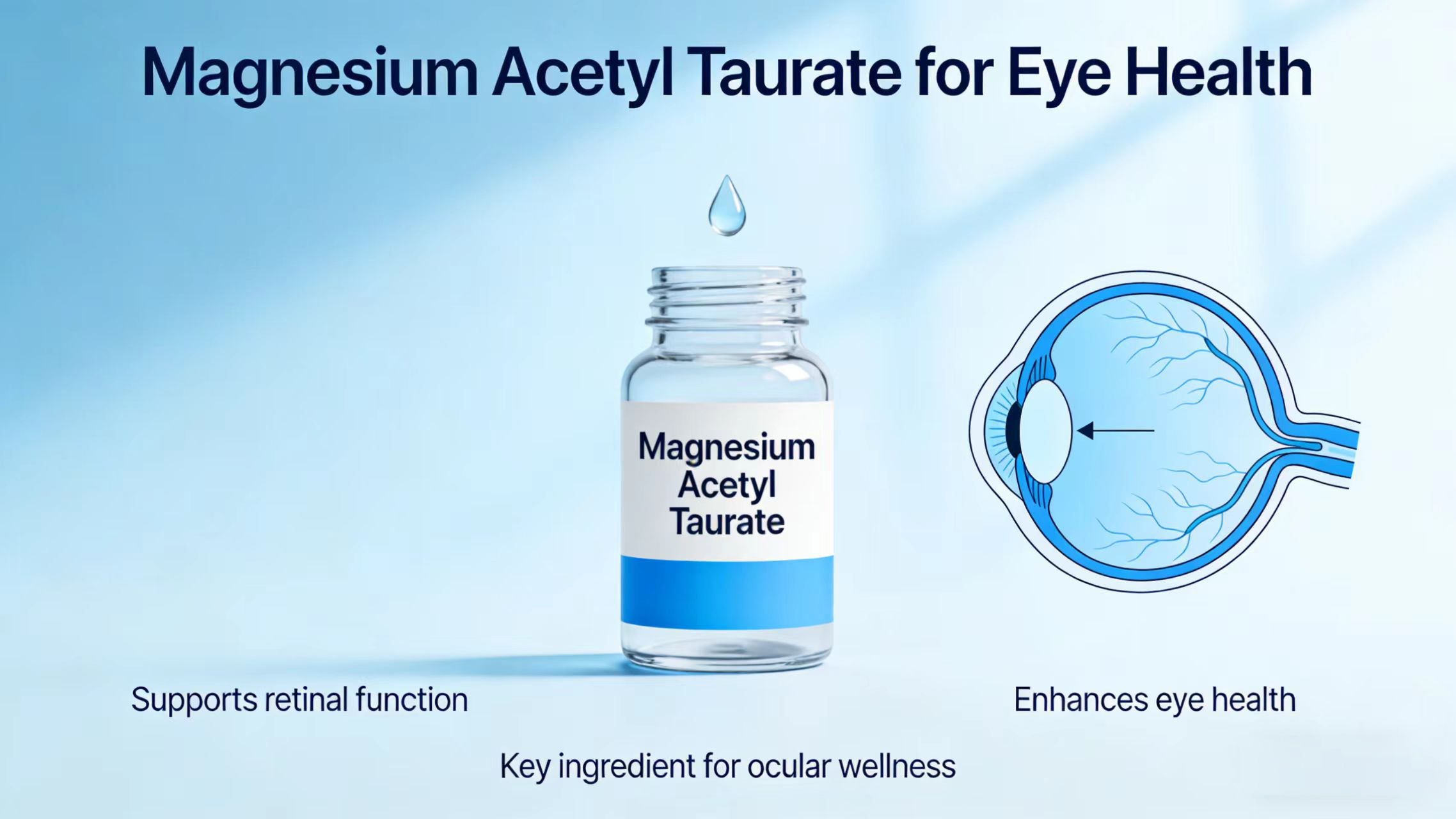
Magnesium Acetyl Taurate combines these actions, potentially providing neuroprotective and oxidative-stress-reducing effects in the retina.
Eye-Specific Research Findings (Mostly Animal Studies)
1. Protection Against Retinal Cell Damage
Multiple rodent studies show that Magnesium Acetyl Taurate protects retinal cells and the optic nerve from damage in experimental models:
Reduces retinal cell apoptosis (death):
- In rat models with retinal injury induced by toxins (like NMDA or endothelin-1), pretreatment with Magnesium Acetyl Taurate decreased cell apoptosis and preserved retinal structure compared to untreated controls.
Preserves retinal ganglion cells (RGCs):
- RGCs are crucial for transmitting visual signals to the brain. Magnesium Acetyl Taurate helped maintain RGC survival and reduce neuroinflammation markers (e.g., TNF-α, IL-1β, IL-6) in retinal injury models.
Reduces oxidative and nitrosative stress:
- Studies show Magnesium Acetyl Taurate decreases markers of oxidative damage (reactive oxygen/nitrogen species) in the retina, which is important because oxidative stress contributes to many eye diseases like glaucoma and diabetic retinopathy.
Functional Benefits in Experimental Models
In addition to cellular protection, some animal studies have reported that Magnesium Acetyl Taurate :
- Preserves retinal function: In models of chemically-induced retinal damage, Magnesium Acetyl Taurate treatment helped maintain visual function (tested with electroretinography and visual behavior tests).
- Reduces neuroinflammatory signaling: Suppression of NF-κB and pro-apoptotic proteins (p53/AP-1) was observed, which can be important in chronic neurodegenerative conditions.
Important Caveats
- Human evidence is extremely limited: Most of the studies conducted so far are in animal models (rats) with experimentally induced retinal injury. There’s not yet direct clinical evidence in humans showing Magnesium Acetyl Taurate improves eye health conditions like glaucoma, macular degeneration, or diabetic retinopathy.
- Not a proven treatment: Findings so far suggest potential protective effects, not established clinical benefits. Magnesium Acetyl Taurate is being studied as a neuroprotective agent and its benefits for human eye diseases remain uncertain.
- Dosing and safety in humans: Appropriate dosing for eye benefits isn’t established. Always consult a healthcare provider before starting supplements, especially if you have eye conditions or are on medications.
Summary
Potential benefits (based on preclinical research):
- May reduce retinal cell death and oxidative stress.
- May help preserve retinal ganglion cells and visual function in injury models.
- Combines magnesium’s NMDA antagonism with taurine’s antioxidant properties.
Limitations:
- Evidence is mainly from animal research.
- Human clinical results are limited; effects in normal or diseased human eyes are not yet confirmed.
If you’re considering magnesium acetyl taurate specifically for eye health, it’s especially important to talk with an ophthalmologist or healthcare provider to align decisions with your eye condition, other supplements or medications you’re taking, and individual risk factors.