
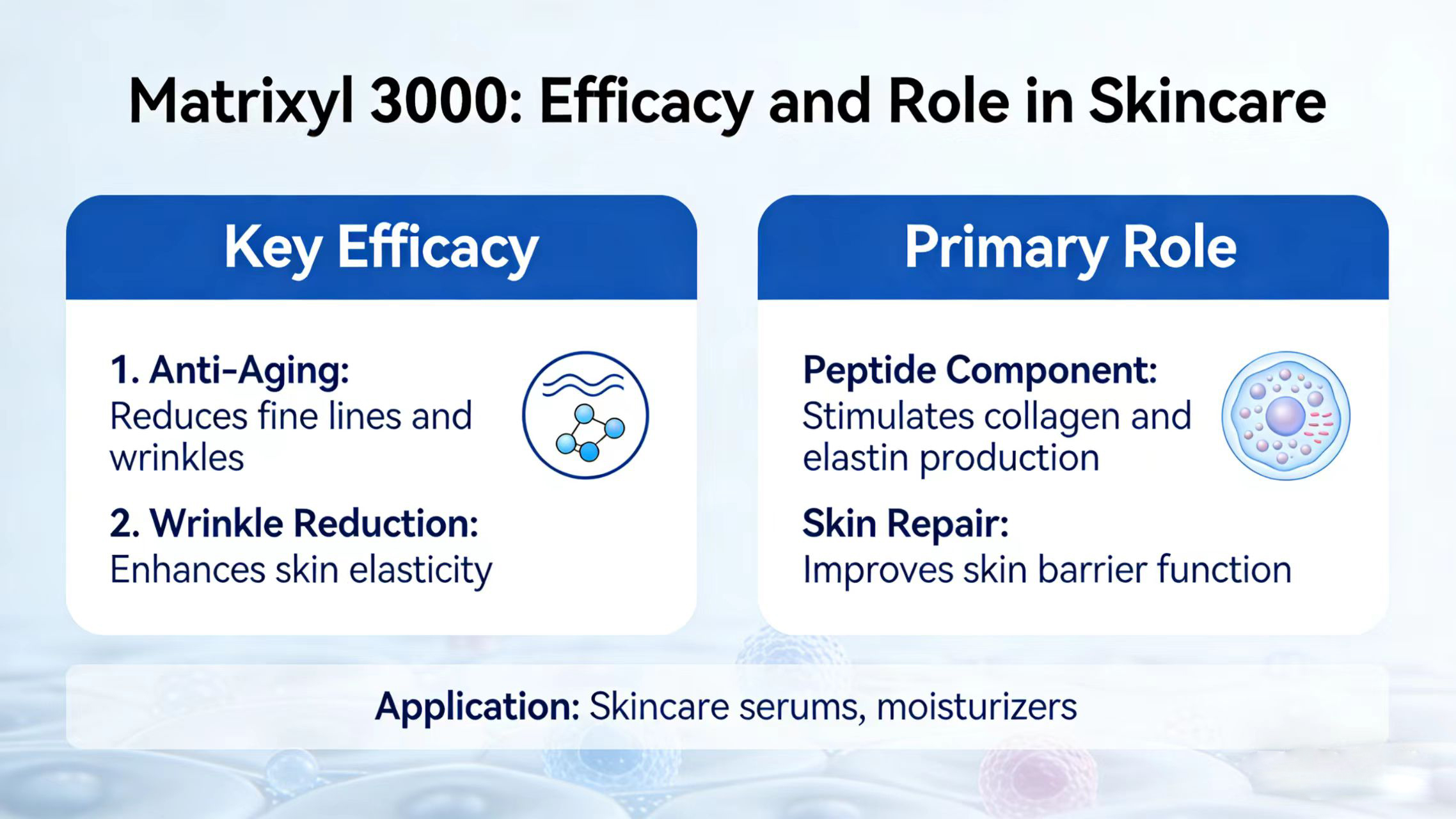
Matrixyl 3000 is a popular peptide-based ingredient in skincare, primarily known for its anti-aging and skin-repairing properties. Let’s break down its efficacy and functions clearly:
1. Composition
Matrixyl 3000 is a combination of two peptides:
- Palmitoyl Oligopeptide
- Palmitoyl Tetrapeptide-7
These are synthetic peptides that mimic fragments of collagen and other skin proteins.
2. Mechanism of Action
Stimulates collagen production:
- The peptides signal the skin to produce collagen types I, III, and IV, which helps reduce wrinkles and increase skin firmness.
Supports extracellular matrix (ECM) repair:
- Matrixyl 3000 enhances the production of hyaluronic acid, fibronectin, and laminin, which are crucial for maintaining skin structure and elasticity.
Reduces inflammation and skin stress:
- The peptides, especially palmitoyl tetrapeptide-7, help reduce pro-inflammatory cytokines, which can decrease skin irritation and prevent aging caused by inflammation.
3. Efficacy
Clinical and in vitro studies have shown that Matrixyl 3000 can:
- Reduce the appearance of fine lines and wrinkles with consistent use over 2–8 weeks.
- Improve skin elasticity and firmness.
- Promote a more even skin tone and texture.
- Enhance overall skin regeneration, making skin look younger and healthier.
4. Functions in Skincare
- Anti-aging: Reduces wrinkles, sagging, and loss of firmness.
- Moisturizing & skin repair: Supports natural skin barrier recovery.
- Preventive care: Helps counteract photoaging and environmental damage.
- Complementary use: Often combined with antioxidants, hyaluronic acid, or retinoids for enhanced anti-aging effects.
Summary:
Matrixyl 3000 is essentially a “collagen-boosting signal peptide” that tricks the skin into repairing itself, leading to firmer, smoother, and younger-looking skin over time.
If you want, I can also make a diagram showing exactly how Matrixyl 3000 acts on the skin layers, which makes its mechanism super easy to visualize. Do you want me to do that?