
Polydeoxyribonucleotide (PDRN) is a naturally derived polymer composed of deoxyribonucleotide chains extracted primarily from the sperm DNA of salmon species such as Oncorhynchus mykiss (rainbow trout) and Oncorhynchus keta (chum salmon). It consists of fragments of DNA with molecular weights typically ranging from 50 to 1,500 kDa. Due to its high biocompatibility and regenerative properties, PDRN is widely used in wound healing, tissue repair, dermatology, aesthetic medicine, and regenerative therapies.
Chemical Structure of Polydeoxyribonucleotide
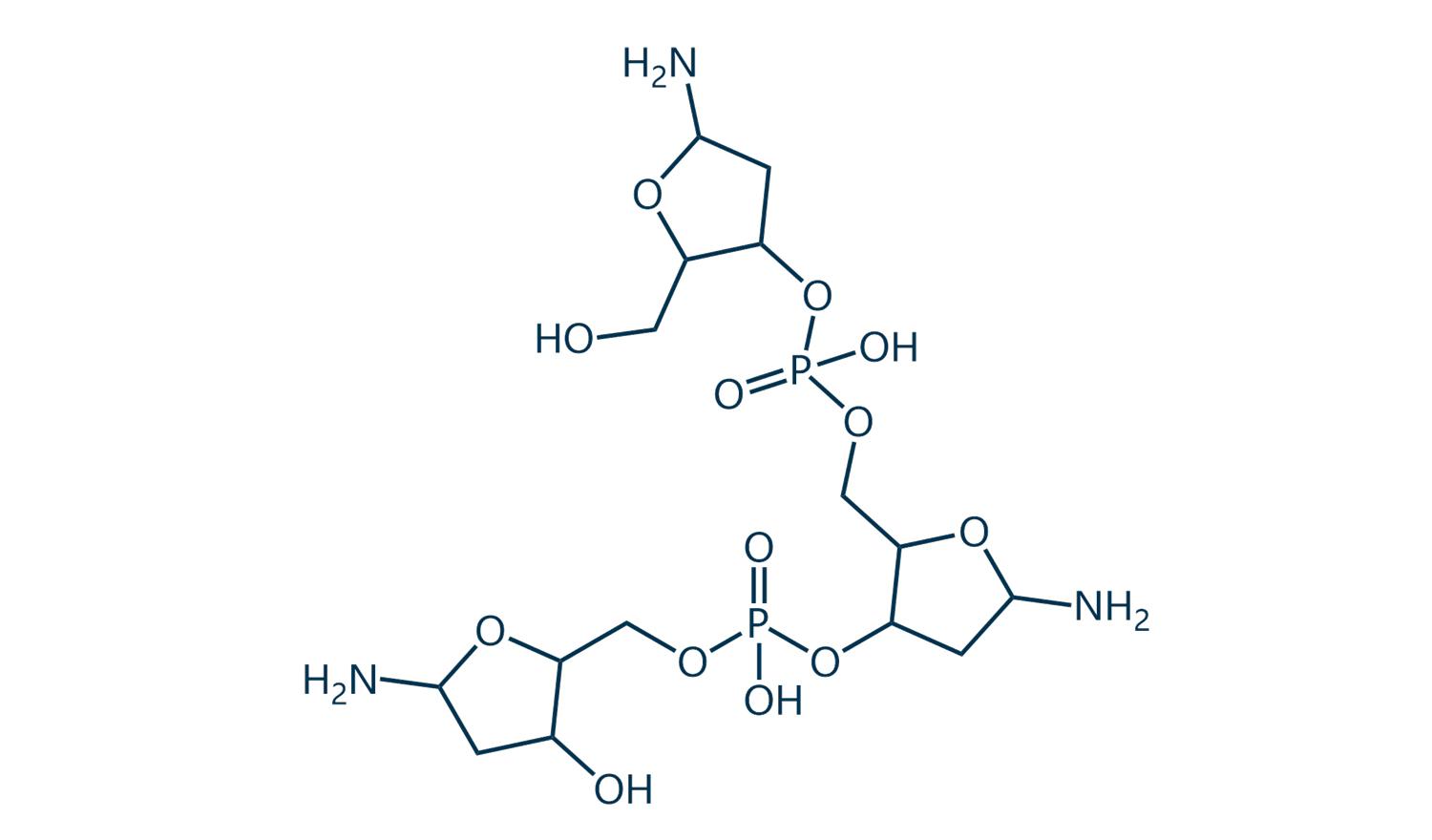
1. Basic Molecular Composition
Polydeoxyribonucleotide is a mixture of DNA fragments composed of repeating deoxyribonucleotides, each containing:
- A deoxyribose sugar
- A phosphate group
- One nitrogenous base
The four natural DNA bases include:
- Adenine (A)
- Thymine (T)
- Cytosine (C)
- Guanine (G)
These nucleotides are connected by 3′→5′ phosphodiester bonds, forming linear DNA chains.
General repeating unit:
-(Deoxyribose–Phosphate–Base)-n
2. Molecular Architecture
Unlike synthetic oligonucleotides, Polydeoxyribonucleotide is:
- Double-stranded DNA fragments
- Naturally occurring
- Random nucleotide sequences
- Non-coding DNA
- Variable chain lengths
The extracted DNA fragments retain their native phosphodiester backbone.
Simplified structure:
5’—P—Sugar—Base
|
P
|
Sugar—Base
|
P
|
3′
3. Chemical Formula
Because Polydeoxyribonucleotide is a heterogeneous mixture of DNA fragments, it does not possess a single molecular formula.
Instead, each fragment contains repeating units of:
- Carbon (C)
- Hydrogen (H)
- Nitrogen (N)
- Oxygen (O)
- Phosphorus (P)
Approximate elemental composition:
- Carbon
- Hydrogen
- Nitrogen
- Oxygen
- Phosphorus
4. Bonding Characteristics
Polydeoxyribonucleotide contains:
- Phosphodiester bonds
- Hydrogen bonds between complementary bases
- Glycosidic bonds connecting sugars and bases
- Covalent sugar-phosphate backbone
These bonds contribute to structural stability while allowing enzymatic degradation into nucleotides.
Physical Properties of Polydeoxyribonucleotide
| Property | Description |
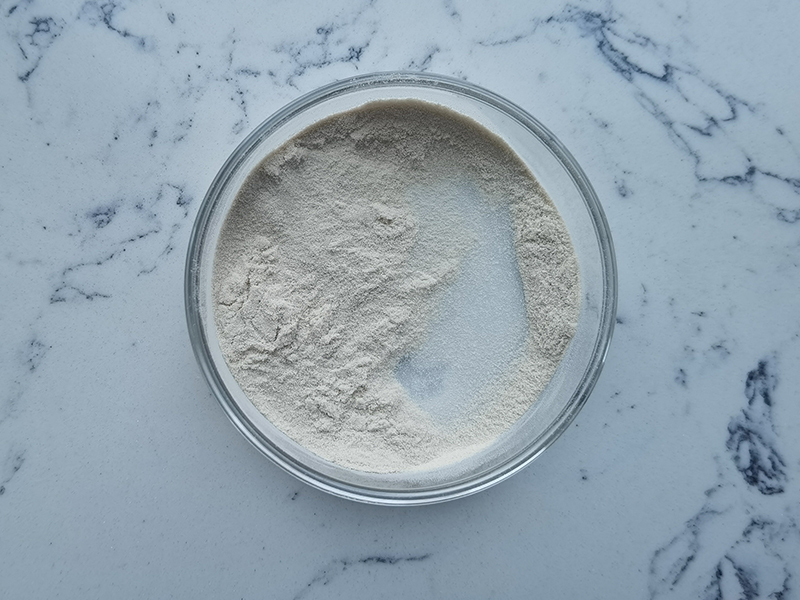
| Appearance | White to off-white powder or clear aqueous solution |
| Molecular Type | DNA polymer fragments |
| Molecular Weight | Approximately 50–1,500 kDa (depending on purification) |
| Structure | Double-stranded DNA fragments |
| Solubility | Highly soluble in water and physiological saline |
| pH Stability | Stable near physiological pH (≈7.0–7.4) |
| Charge | Negatively charged due to phosphate groups |
| Density | Depends on formulation |
| Melting Behavior | No distinct melting point; denatures at elevated temperatures |
| Hygroscopicity | Slightly hygroscopic |
| Odor | Odorless |
| Color | Colorless solution or white powder |
Solubility Characteristics
Polydeoxyribonucleotide dissolves readily in:
- Sterile water
- Normal saline
- Phosphate-buffered saline (PBS)
Poorly soluble or insoluble in:
- Ethanol
- Methanol
- Acetone
- Chloroform
- Non-polar organic solvents
Its hydrophilicity is due to the negatively charged phosphate backbone.
Molecular Weight Distribution
Unlike synthetic DNA molecules with a defined size, PDRN exhibits a distribution of fragment lengths.
Typical range:
- 50 kDa
- 100 kDa
- 300 kDa
- 500 kDa
- Up to approximately 1,500 kDa
This distribution is considered important for its biological activity and tissue repair properties.
Structural Stability
Polydeoxyribonucleotide is generally stable under:
- Physiological temperatures (around 37°C)
- Neutral pH
- Sterile aqueous formulations
It is susceptible to degradation by:
- DNase enzymes
- Strong acids
- Strong alkalis
- Prolonged exposure to high temperatures
- Oxidizing agents
Spectroscopic Characteristics
Typical analytical methods include:
UV Absorption
DNA strongly absorbs ultraviolet light at:
- 260 nm
The A260/A280 ratio is commonly used to assess purity.
- Infrared (FTIR)
Characteristic absorption bands include:
- Phosphate stretching vibrations
- Sugar ring vibrations
- Nitrogenous base functional groups
- Hydroxyl (–OH) stretching
Circular Dichroism (CD)
CD spectroscopy can confirm the preservation of DNA secondary structure and duplex conformation.
Rheological Properties
In aqueous solution, Polydeoxyribonucleotide:
- Forms low- to moderate-viscosity solutions depending on concentration and molecular weight
- Exhibits pseudoplastic (shear-thinning) behavior at higher concentrations
- Mixes well with injectable and hydrogel formulations
These properties support its use in injectable regenerative therapies and topical biomaterials.
Biodegradability
Polydeoxyribonucleotide is biodegradable.
After administration:
- DNases cleave DNA fragments into shorter oligonucleotides.
- These are further degraded into individual deoxyribonucleotides.
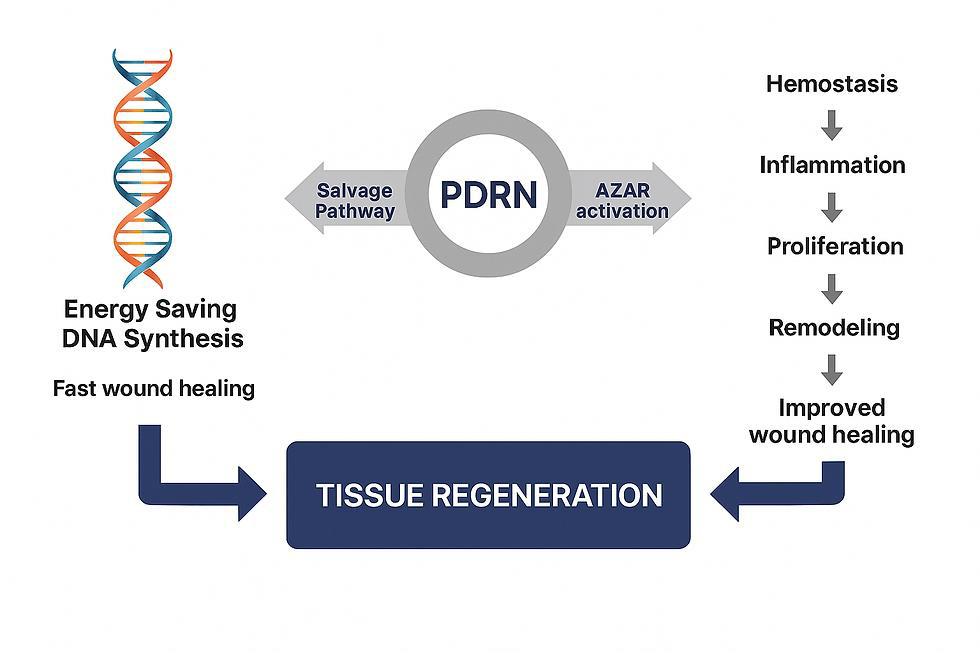
- Nucleotides are metabolized via the salvage pathway or broken down into nucleosides, bases, and phosphate, which can be reused or eliminated through normal cellular metabolism.
Formulation Characteristics
Polydeoxyribonucleotide is commonly formulated as:
- Sterile injectable aqueous solutions
- Lyophilized powders for reconstitution
- Topical creams and gels
- Hydrogel wound dressings
- Microneedle formulations
- Tissue engineering scaffolds
Formulations typically include isotonic buffers and stabilizers to preserve DNA integrity.
Key Physicochemical Advantages
- Naturally derived double-stranded DNA fragments
- High water solubility and excellent biocompatibility
- Biodegradable into physiologically useful nucleotides
- Negative charge promotes stability in aqueous environments
- Compatible with injectable, topical, and biomaterial formulations
- Stable under physiological conditions but readily degraded by nucleases, reducing long-term tissue accumulation
These structural and physical characteristics underpin Polydeoxyribonucleotide’s widespread use in regenerative medicine, wound healing, and aesthetic dermatology.