
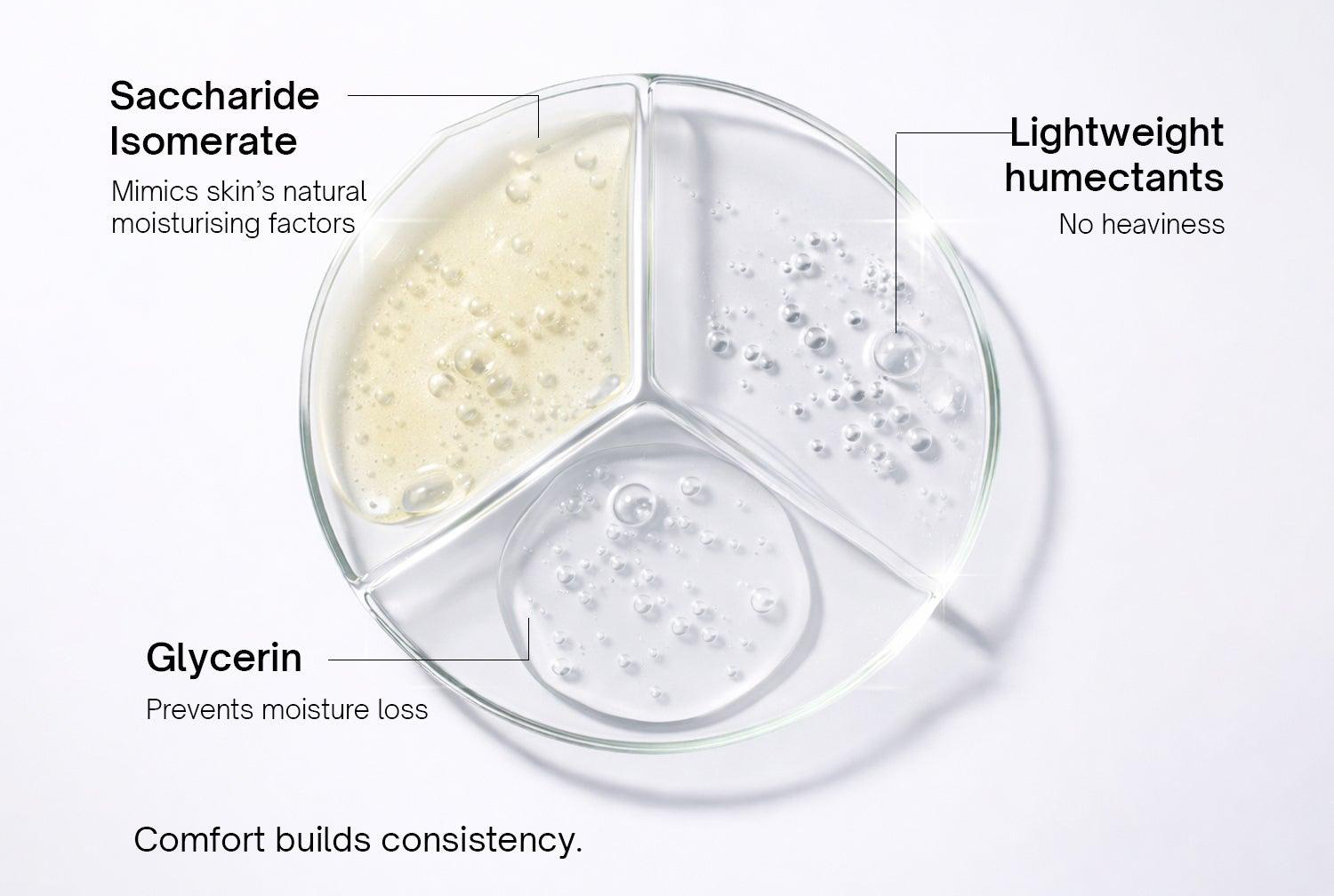
Saccharide Isomerate is primarily a humectant and skin-conditioning ingredient used in cosmetics. For best results, it should generally be used consistently in a well-formulated moisturizing routine rather than treated as a stand-alone treatment.
How to use Saccharide Isomerate effectively
1. Use it in a hydrating product
- Look for it in a serum, essence, toner, moisturizer, or facial mask.
- It works particularly well in formulations containing other humectants such as glycerin, hyaluronic acid, betaine, or panthenol.
- Because Saccharide Isomerate can bind to the skin and provide prolonged hydration, regular use is more important than applying a large amount at once.
2. Apply to slightly damp skin
After cleansing:
- Cleanse gently.
- Leave the skin slightly damp.
- Apply your Saccharide Isomerate-containing serum/essence.
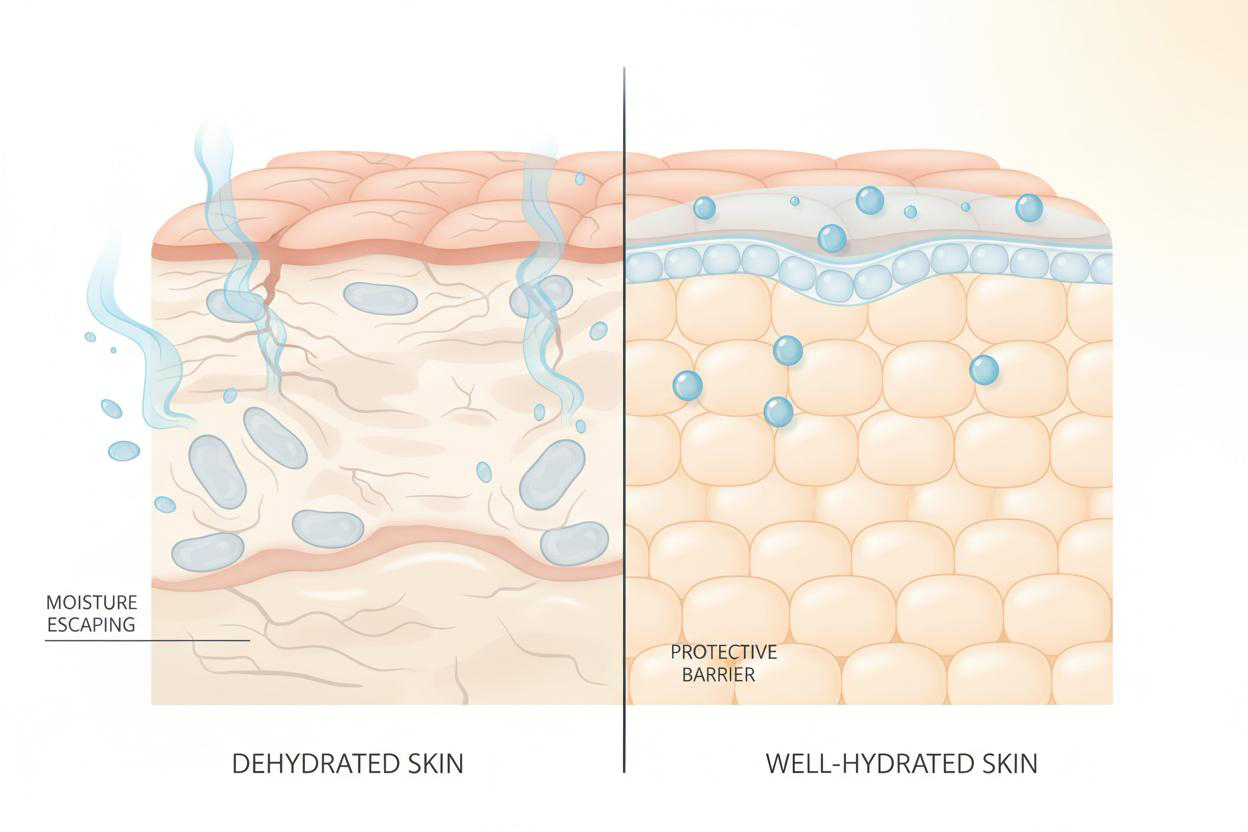
- Follow with a moisturizer to help reduce water loss.
- In the morning, finish with broad-spectrum sunscreen.
Applying humectants to slightly damp skin can help support hydration, while the moisturizer helps retain that water.
3. Use consistently
For dryness, roughness, or dehydration, use the product once or twice daily, according to the product’s instructions. Visible improvements in skin hydration and softness generally depend on continued use.
4. Combine it with barrier-supporting ingredients
Saccharide Isomerate is especially useful when combined with ingredients such as:
- Ceramides – support the skin barrier
- Glycerin – additional water-binding
- Hyaluronic acid – hydration
- Panthenol – moisturizing and soothing
- Squalane – emollient support
- Niacinamide – barrier and skin-conditioning support
This combination can be more effective for dehydrated skin than relying on Saccharide Isomerate alone.
For different skin concerns
| Goal | Best approach |
| Dry/dehydrated skin | Saccharide Isomerate + glycerin/HA + moisturizer |
| Tight or rough skin | Hydrating serum followed by an emollient moisturizer |
| Compromised skin barrier | Saccharide Isomerate + ceramides + gentle moisturizer |
| Oily/dehydrated skin | Lightweight water-based serum containing Saccharide Isomerate |
| Sensitive skin | Simple, fragrance-free formulation with soothing/barrier ingredients |
| Long-term hydration | Consistent daily use + moisturizer + sunscreen |
If you’re formulating with Saccharide Isomerate
The exact concentration depends on the raw material and supplier specification, because commercial Saccharide Isomerate is often supplied as an aqueous solution rather than as pure active material. Follow the supplier’s recommended use level and account for the active content of the supplied material.
It is generally incorporated into the water phase or during the cool-down stage, depending on the supplier’s processing instructions. Avoid assuming that the percentage on a supplier’s technical sheet refers to 100% pure Saccharide Isomerate.
Important precautions
Saccharide Isomerate is generally considered a well-tolerated cosmetic moisturizing ingredient, but:
- Patch-test a new product if your skin is reactive.
- Avoid applying a formulation containing it to seriously irritated or damaged skin unless appropriate for that product.
- More product does not necessarily mean better hydration.
- For significant dryness, combining a humectant with an occlusive/emollient moisturizer is usually more useful than increasing the humectant alone.
Bottom line: For the best cosmetic results, use Saccharide Isomerate regularly in a well-formulated hydrating product, preferably on slightly damp skin, and seal it with a moisturizer. Its main value is sustained hydration and improved skin softness/barrier comfort—not exfoliation or dramatic anti-aging activity.