
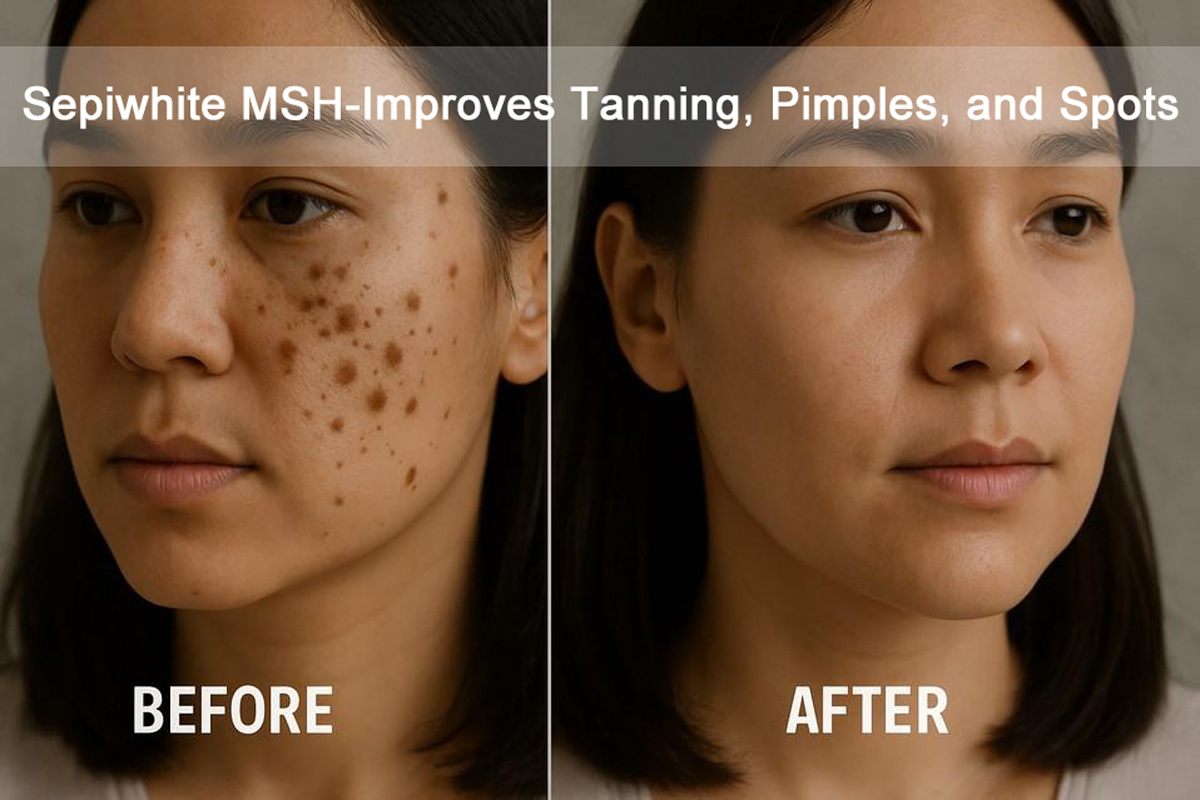
Sepiwhite MSH (INCI: Undecylenoyl Phenylalanine) is primarily a skin-brightening and anti-hyperpigmentation cosmetic active. Its effects on tanning, pimples, and spots are different:
| Concern | Effect of Sepiwhite MSH | How it works |
| Tanning/uneven darkening | Helpful | Reduces melanin production by interfering with α-MSH signaling in melanocytes |
| Dark spots/hyperpigmentation | Helpful | Suppresses melanogenesis, which can gradually reduce the appearance of excess pigmentation |
| Post-acne dark spots (PIH) | Potentially helpful | Can reduce the melanin responsible for brown marks left after pimples |
| Active pimples/acne | Not a primary treatment | It is not an acne medication and does not directly kill acne-causing bacteria or unclog pores |
| Redness/inflammation from pimples | Limited/indirect | Its main activity is pigmentation control rather than anti-inflammatory acne treatment |
Why it helps tanning and spots
Sepiwhite MSH is designed to interfere with the α-melanocyte-stimulating hormone (α-MSH) pathway. Normally, α-MSH activates melanocortin receptors on melanocytes, promoting tyrosinase activity and melanin synthesis. Sepiwhite MSH reduces this signaling, thereby decreasing the production of new melanin.
This makes it particularly relevant for:
- Sun-induced tanning
- Uneven skin tone
- Brown spots
- Post-inflammatory hyperpigmentation after acne
- Other forms of excess pigmentation
Important distinction for pimples
If by “pimples” you mean active acne, Sepiwhite MSH should not be considered an acne treatment. It may be more useful after pimples have healed, when they leave brown or dark marks.
For acne-prone skin, an appropriate formulation may combine a pigmentation active such as Sepiwhite MSH with acne-directed ingredients such as salicylic acid, azelaic acid, or niacinamide, depending on the formulation and skin tolerance.
Bottom line: Sepiwhite MSH is much better described as an anti-tanning/anti-dark-spot ingredient than as an anti-pimple ingredient. Its strongest cosmetic role is helping reduce excess melanin and uneven pigmentation.