
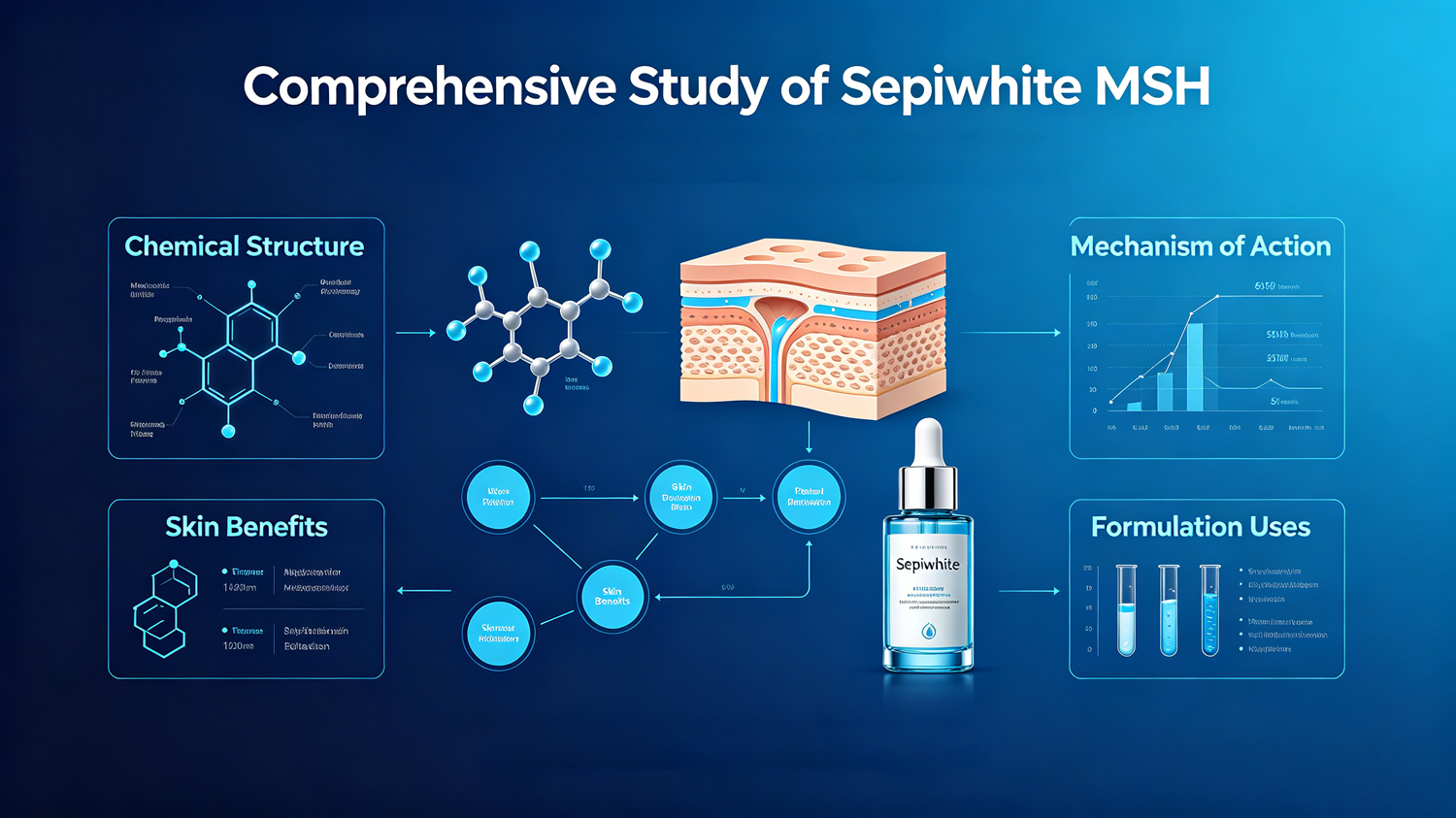
Sepiwhite MSH is a cosmetic skin-brightening active developed by Seppic. Its INCI name is Undecylenoyl Phenylalanine, a lipid-modified amino acid derived from L-phenylalanine and an undecylenoyl lipid chain. It is primarily used to reduce the appearance of hyperpigmentation, dark spots, uneven skin tone, and melasma-related pigmentation.
1. Basic identity
| Property | Information |
| Trade name | Sepiwhite MSH |
| INCI | Undecylenoyl Phenylalanine |
| CAS No. | 175357-18-3 |
| Molecular formula | C₂₀H₂₉NO₃ |
| Molecular weight | ~331.4 g/mol |
| Chemical class | Lipoamino acid |
| Parent amino acid | L-Phenylalanine |
| Primary cosmetic function | Skin brightening / depigmentation |
| Main biological target | α-MSH-related melanogenesis pathway |
| Typical Sepiwhite MSH recommended use level | 2% |
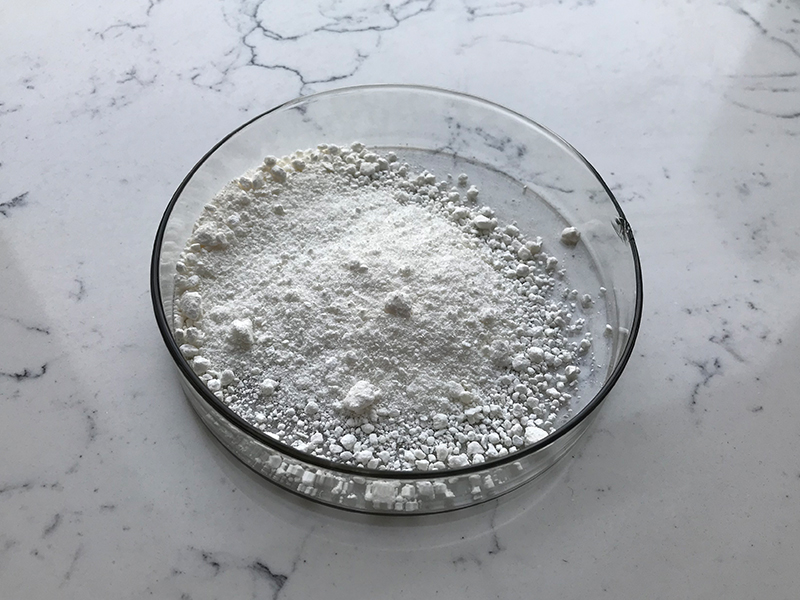
| Appearance | Generally supplied as a powder |
| Preservative status | Preservative-free |
The chemical name is (2S)-3-phenyl-2-(undec-10-enoylamino)propanoic acid.
2. What does Sepiwhite MSH do?
Its principal purpose is to reduce excessive melanin formation and improve the appearance of uneven pigmentation.
Potential cosmetic benefits include:
- Brightening dull-looking skin
- Reducing the appearance of dark spots
- Improving uneven skin tone
- Reducing visible hyperpigmentation
- Supporting treatment of melasma-associated pigmentation
- Improving the appearance of solar lentigines/age spots
- Providing a more uniform complexion
- Supporting long-term complexion-evening programs
Importantly, Sepiwhite does not literally bleach the skin. Its intended cosmetic action is to reduce excessive pigmentation so that the complexion appears more even and brighter.
Seppic reports efficacy across several skin tones and phototypes II–V.
3. Sepiwhite + niacinamide
One particularly interesting aspect is combining Sepiwhite with niacinamide.
These ingredients address pigmentation through different mechanisms:
Sepiwhite MSH
α-MSH signaling modulation → reduced melanogenesis
Niacinamide
reduced melanosome transfer from melanocytes to keratinocytes
Therefore, the combination can potentially influence pigmentation at two different stages.
A double-blind split-face study found that a formulation containing 5% niacinamide + 1% undecylenoyl phenylalanine was significantly more effective at reducing the appearance of facial hyperpigmentation than vehicle or 5% niacinamide alone after 8 weeks.
This is one of the stronger pieces of evidence supporting Sepiwhite as part of a multi-mechanism brightening formulation.
4. Sepiwhite versus conventional tyrosinase inhibitors
| Ingredient | Primary pigmentation strategy |
| Sepiwhite MSH | Modulates α-MSH/melanocyte signaling |
| Kojic acid | Tyrosinase inhibition |
| Alpha-arbutin | Tyrosinase inhibition/modulation |
| Vitamin C derivatives | Antioxidant + effects on melanogenesis |
| Niacinamide | Reduces melanosome transfer |
| Azelaic acid | Antimelanogenic + anti-inflammatory effects |
| Tranexamic acid | Modulates pathways involved in UV/inflammation-associated pigmentation |
| Retinoids | Increase epidermal turnover and influence pigmentation |
| AHA | Promotes exfoliation/epidermal turnover |
The major advantage of Sepiwhite is therefore its different biological target. It can be paired strategically with ingredients acting at other stages of pigmentation.
5. Sepiwhite and UV-induced pigmentation
UV exposure is one of the major triggers for melanogenesis.
UV radiation can stimulate signaling pathways that ultimately increase melanocyte activity and melanin production.
Therefore, even a highly effective pigment inhibitor will generally perform poorly if the skin continues to receive substantial UV exposure.
For pigmentation formulations:
Sepiwhite + broad-spectrum sunscreen is much more rational than Sepiwhite alone.
Sunscreen reduces the stimulus, while Sepiwhite addresses part of the pigmentation response.
6. Overall assessment
Sepiwhite MSH is a scientifically interesting cosmetic brightening active because it approaches hyperpigmentation from a different angle than many conventional ingredients.
Its principal mechanism can be summarized as:
α-MSH pathway modulation
↓
reduced melanogenic signaling
↓
reduced tyrosinase activation
↓
reduced melanin synthesis
↓
less visible hyperpigmentation
Human clinical studies provide evidence for improvement of melasma and solar lentigines, while a separate controlled study supports combining undecylenoyl phenylalanine with niacinamide for facial hyperpigmentation.
Bottom line: Sepiwhite MSH is best viewed as a melanogenesis-regulating, α-MSH-pathway-targeting brightening ingredient, rather than simply a conventional tyrosinase inhibitor. Its strongest formulation rationale is to combine it with complementary pigment-control approaches—especially niacinamide and rigorous photoprotection—while managing irritation and formulation compatibility.