
Sepiwhite MSH is a cosmetic skin-brightening active based on undecylenoyl phenylalanine, a modified amino-acid derivative. Its main action is to reduce melanin production by interfering with melanocyte signaling, making it particularly relevant for uneven pigmentation and dark spots.
How Sepiwhite MSH acts on the skin
1. Reduces melanocyte stimulation
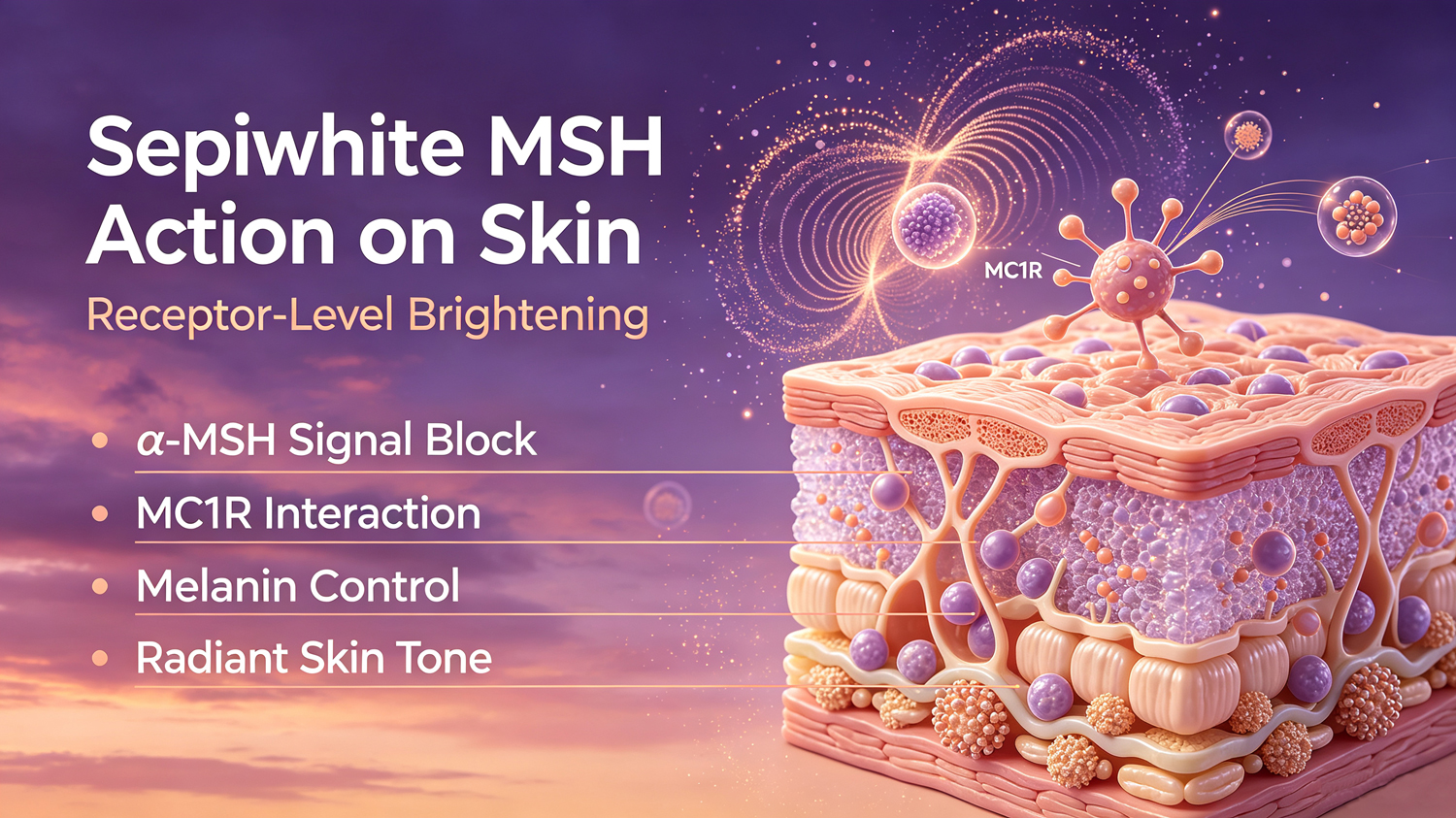
Melanocytes produce melanin in response to signals such as α-MSH (alpha-melanocyte-stimulating hormone).
Sepiwhite MSH is designed to interfere with this signaling pathway, reducing the stimulation that drives melanogenesis.
2. Suppresses melanin synthesis
With less melanogenic signaling, melanocytes produce less pigment.
This can gradually reduce the appearance of excess pigmentation rather than simply bleaching existing melanin.
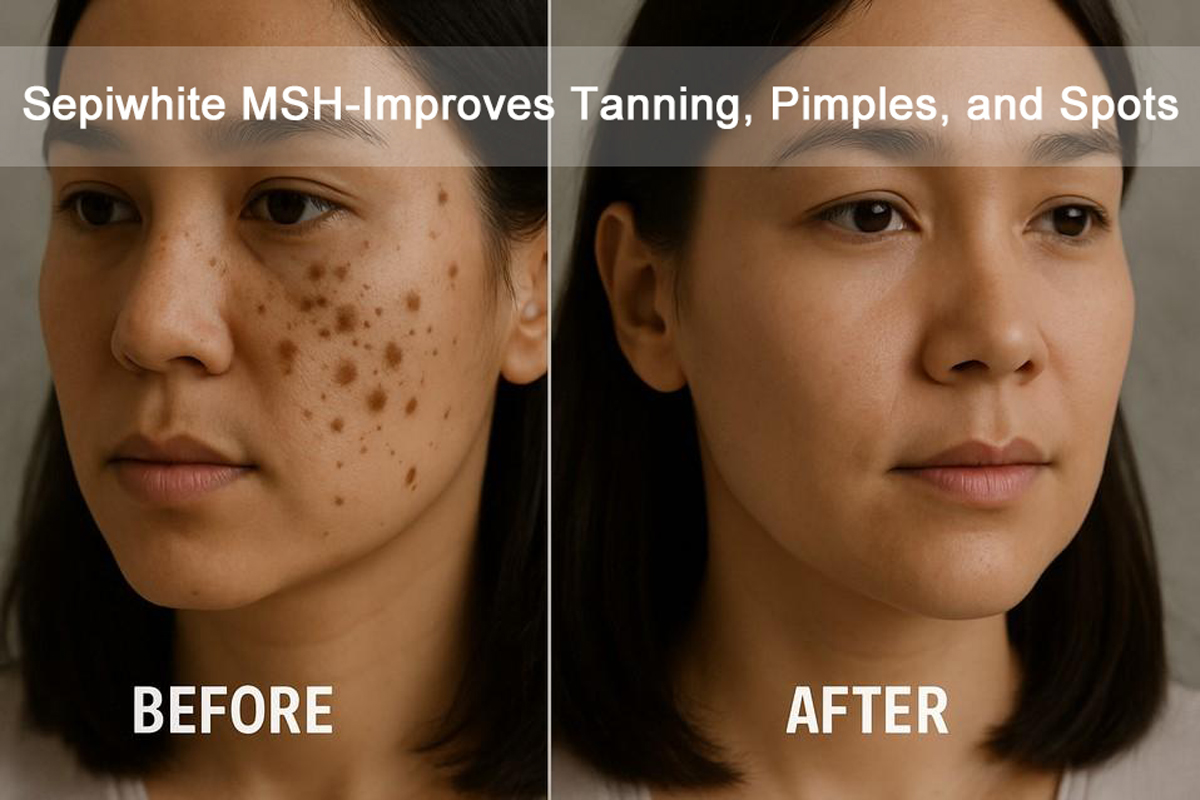
3. Helps reduce dark spots
Continued use may help improve the appearance of:
- Post-inflammatory hyperpigmentation
- Sun-induced dark spots
- Uneven skin tone
- General facial discoloration
4. Produces a more even complexion
As excess pigment is gradually reduced and skin turnover removes pigmented cells, the complexion can appear brighter and more uniform.
Simplified mechanism
α-MSH signaling → melanocyte activation → tyrosinase/melanogenesis → melanin production
Sepiwhite MSH → reduced melanogenic signaling → reduced melanin formation → gradual improvement in pigmentation
Important distinction
Sepiwhite MSH is not primarily a tyrosinase inhibitor like kojic acid or hydroquinone. Its principal proposed action is upstream regulation of melanocyte signaling, which gives it a different mechanism from many conventional depigmenting ingredients.
Practical skin effects
| Action | Expected effect |
| Modulates melanocyte signaling | Less stimulation of pigmentation |
| Reduces melanogenesis | Less new melanin formation |
| Helps control excess pigmentation | Dark spots gradually become less noticeable |
| Promotes more uniform pigmentation | More even-looking skin tone |
Overall: Sepiwhite MSH is best viewed as a melanin-regulating/skin-brightening ingredient, rather than an instant bleaching agent. Its results are generally gradual and are strongly supported by consistent broad-spectrum sunscreen use, because UV exposure can continually stimulate melanogenesis.