
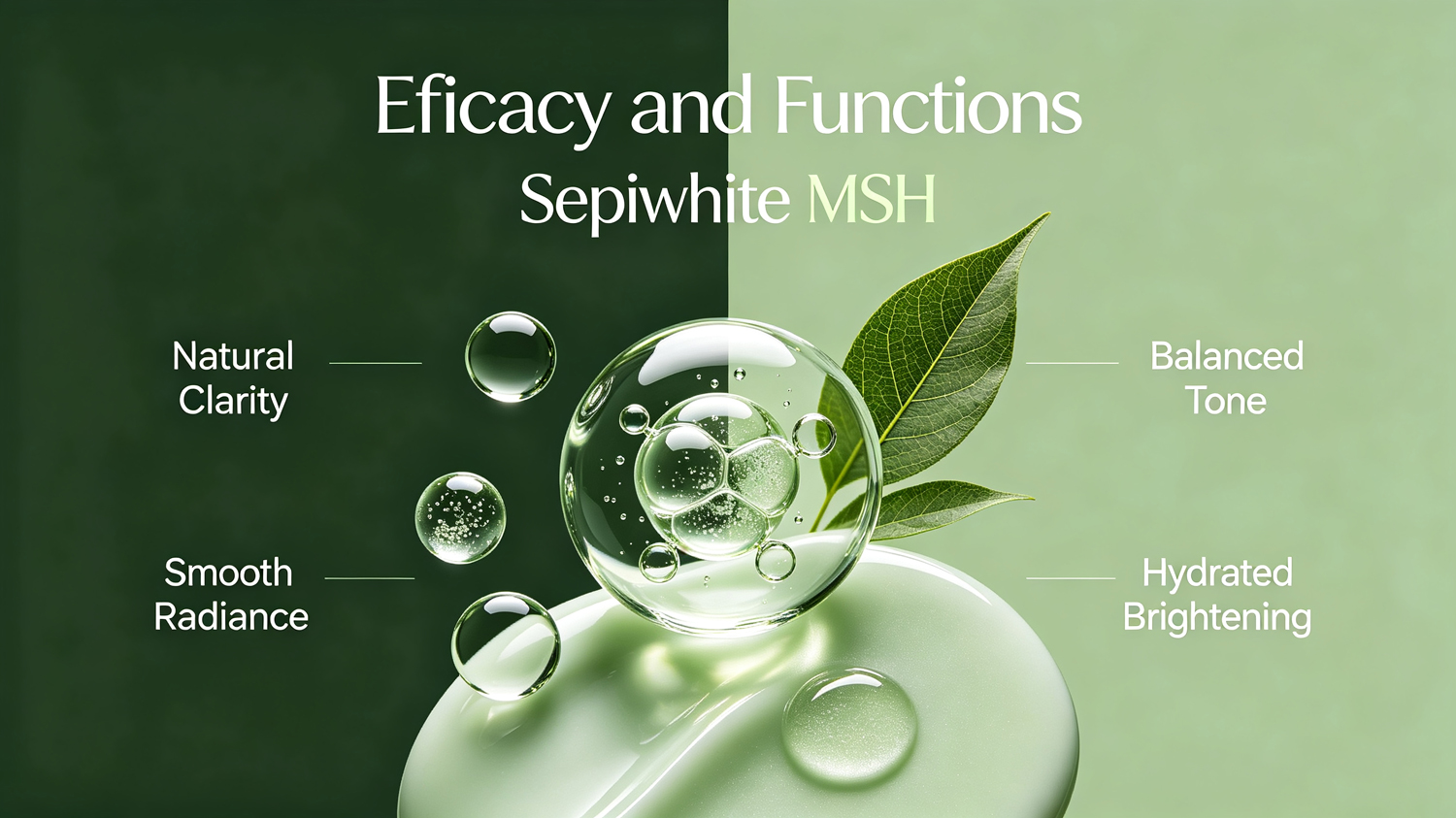
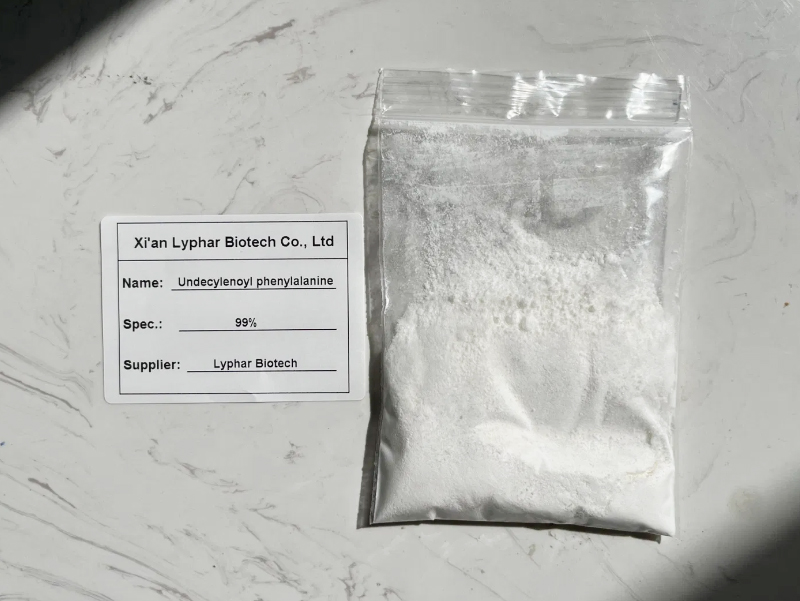
Sepiwhite MSH is the trade name used by Seppic for Undecylenoyl Phenylalanine, a lipophilic phenylalanine derivative used primarily as a skin-brightening and hyperpigmentation-control active. Its distinctive feature is that it acts upstream of melanin synthesis by modulating the α-MSH (alpha-melanocyte-stimulating hormone) pathway, rather than simply inhibiting tyrosinase directly.
Main efficacy
| Function | Effect |
| Brightening | Helps reduce excessive pigmentation and improve overall skin radiance |
| Dark-spot reduction | Can decrease the visible appearance of hyperpigmented spots |
| Melasma support | Clinical evidence shows improvement in melasma with topical 2% undecylenoyl phenylalanine |
| Pigmentation control | Suppresses signaling that promotes melanogenesis |
| Complexion evening | Helps create a more uniform skin tone |
| Anti-aging cosmetic benefit | More even pigmentation can make signs of photoaging less noticeable |
Seppic reports that Sepiwhite MSH can provide a lightening effect across several skin phototypes and describes a rapid brightening effect when combined with AHAs.
1. Inhibits the α-MSH pigmentation signal
UV exposure and other stimuli can increase α-MSH signaling in melanocytes. α-MSH normally activates melanocortin receptors and promotes the biochemical pathway leading to melanin production.
Undecylenoyl phenylalanine is designed to antagonize/modulate this α-MSH pathway, reducing downstream activation of melanogenesis. Seppic specifically describes its action as modulation of the α-MSH pathway and inhibition of the metabolic activation of tyrosinase.
Simplified pathway:
α-MSH → melanocyte receptor signaling → tyrosinase/MITF pathway → melanin synthesis → pigmentation
Sepiwhite MSH → ↓ α-MSH signaling → ↓ melanogenic activity → ↓ excess melanin → brighter, more even skin
2. Helps reduce hyperpigmentation
Its principal cosmetic function is controlling excess melanin production, making it useful in formulations targeting:
- Sun spots
- Post-inflammatory hyperpigmentation
- Uneven skin tone
- Freckles and other pigment irregularities
- Melasma-support formulations
A randomized, double-blind study of a preparation containing 2% undecylenoyl phenylalanine in women with melasma found that 17 of 20 participants receiving the active treatment had a partial response after 12 weeks; improvement was already evident at 4 weeks.
3. Works particularly well as part of a multi-active brightening system
Sepiwhite MSH can complement ingredients that act at different stages of pigmentation.
For example, niacinamide primarily affects melanosome transfer, whereas undecylenoyl phenylalanine acts through the α-MSH-related pigmentation pathway. In two double-blind split-face studies, a formulation containing 5% niacinamide + 1% undecylenoyl phenylalanine reduced the appearance of facial hyperpigmentation more effectively than niacinamide alone after 8 weeks.
This makes Sepiwhite MSH particularly interesting in combination brightening formulas.
4. Evidence for melanin/tyrosinase suppression
Experimental research has also found that undecylenoyl phenylalanine can suppress melanogenesis and inhibit tyrosinase activity. However, it is important to distinguish this from classical direct tyrosinase inhibitors: its proposed primary cosmetic mechanism is modulation of pigmentation signaling rather than simply acting as a conventional enzyme inhibitor.
5. Skin-tone evening and radiance
By reducing excessive pigment formation over time, Sepiwhite MSH can help:
- Make the complexion look more uniform
- Reduce contrast between dark spots and surrounding skin
- Improve perceived luminosity
- Support a more even-looking skin tone
Seppic lists uniform complexion, radiance, pigmentation control, and reduction of dark spots among its cosmetic functions.
Overall assessment
Sepiwhite MSH is best viewed as a signaling-level depigmenting/brightening active. Its major value is its ability to interfere with the α-MSH-driven melanogenic pathway, complementing ingredients such as niacinamide, AHAs, vitamin C derivatives, arbutin, or other pigment-control agents.
The clinical evidence is promising but considerably smaller than the evidence base for established melasma treatments such as hydroquinone and prescription combination therapy. A review of topical melasma treatments specifically notes that evidence for 2% undecylenoyl phenylalanine is more limited.
In short:
Sepiwhite MSH → α-MSH pathway modulation → reduced melanogenic signaling → less excess melanin formation → fewer visible dark spots + more even and radiant complexion.