
BAM-15 is a synthetic small molecule classified as a mitochondrial uncoupler, developed in academic research as a potential treatment for metabolic diseases such as obesity and insulin resistance. Unlike older uncouplers (e.g., 2,4-Dinitrophenol), BAM-15 was designed to reduce toxicity while maintaining metabolic benefits.
Origin and Development
Discovery: BAM-15 was first reported around 2018 by researchers at University of Pennsylvania.
Research context: Developed as part of efforts in metabolic disease research to find safer alternatives to traditional uncouplers.
Goal: Improve energy expenditure and metabolic health without dangerous side effects like hyperthermia seen with older compounds.
Chemical and Physical Properties
Chemical name: BAM-15 (full name often abbreviated in literature)
Class: Protonophore / mitochondrial uncoupler
Molecular type: Small lipophilic organic molecule
Key characteristics:
- Highly membrane-permeable
- Functions independently of fatty acid transport
- Does not significantly depolarize the plasma membrane (important for safety)
- More selective for mitochondria than older uncouplers
Mechanism of Action
BAM-15 works through mitochondrial uncoupling, a process related to Oxidative Phosphorylation:
1. Normally:
- Mitochondria create a proton gradient to produce ATP (energy).
2. BAM-15 action:
- Transports protons across the mitochondrial inner membrane
- Disrupts the proton gradient
- Reduces ATP production efficiency
3. Result:
- Cells burn more fuel (glucose and fat) to compensate
- Energy is released as heat instead of ATP
This increases energy expenditure without increasing physical activity.
Key Biological Effects (Preclinical)
Observed mainly in animal studies:
- Increased fat oxidation
- Reduced body weight and fat mass
- Improved insulin sensitivity
- Decreased liver fat accumulation (relevant to Nonalcoholic Fatty Liver Disease)
- Minimal increase in body temperature compared to older uncouplers
Comparison to Traditional Uncouplers
| Feature | BAM-15 | 2,4-Dinitrophenol |
| Safety margin | Higher (in animals) | Very low (dangerous) |
| Hyperthermia risk | Low | Very high |
| Selectivity | Mitochondria-targeted | Non-specific |
| Clinical use | Experimental | Banned/toxic |
Current Status
- Not FDA-approved (no human clinical approval yet)
- Primarily used in laboratory research
- Long-term safety in humans is unknown
Summary
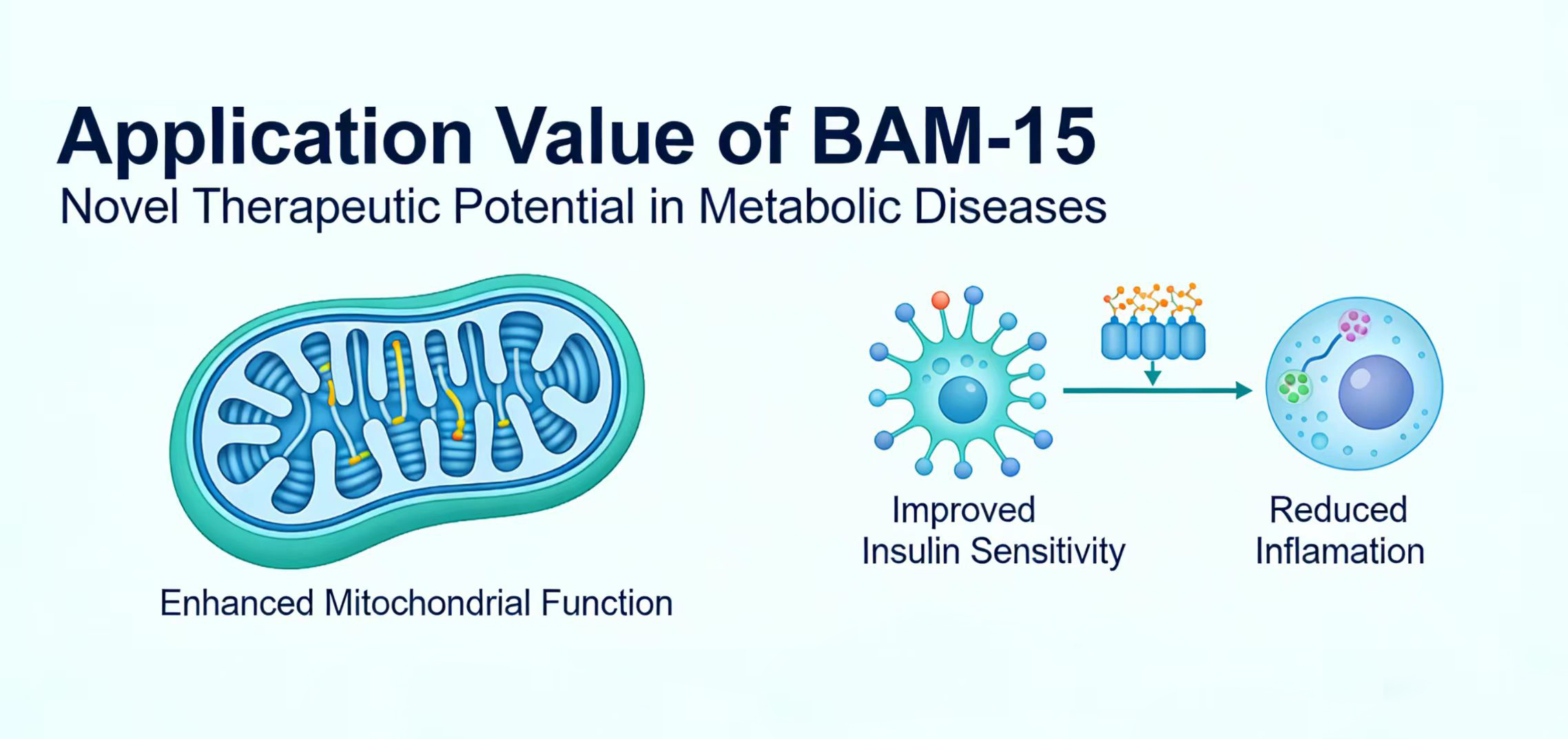
BAM-15 represents a next-generation mitochondrial uncoupler designed to:
- Boost metabolism
- Reduce fat accumulation
- Improve metabolic health
While promising, it remains experimental and is not currently approved for medical or consumer use.
If you want, I can go deeper into:
- Its molecular structure and SAR
- Pharmacokinetics (ADME)
- Or a detailed comparison with DNP and newer uncouplers