
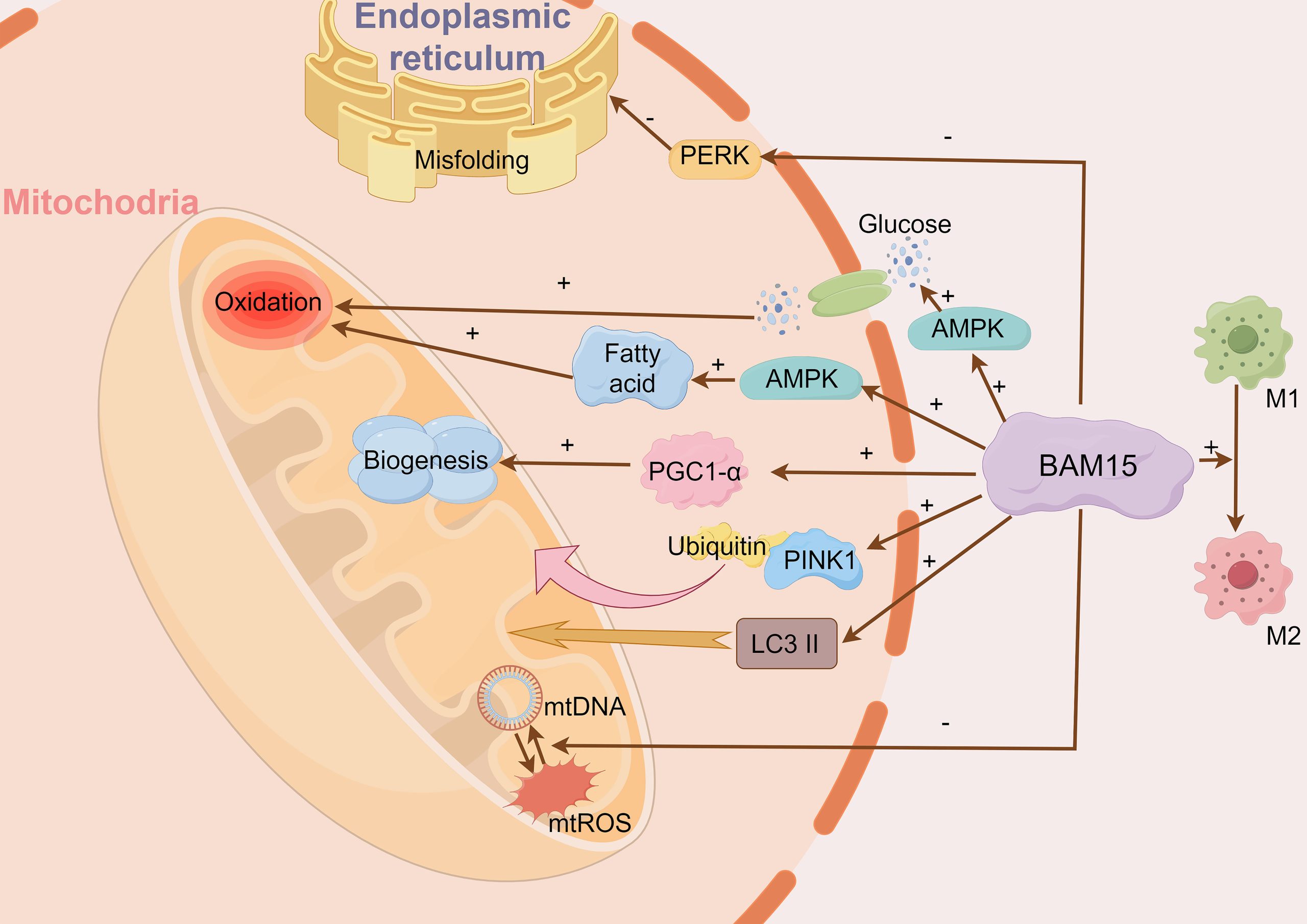
BAM-15 is considered a “next-generation metabolic uncoupler” because it improves on earlier mitochondrial uncouplers in safety, selectivity, and metabolic effects. It works by uncoupling mitochondrial respiration from ATP production, increasing energy expenditure while avoiding many problems seen with older compounds.
1. More Selective Mitochondrial Uncoupling
BAM-15 targets the mitochondrial proton gradient more selectively than traditional uncouplers.
- It acts as a protonophore, transporting protons across the inner mitochondrial membrane.
- This dissipates the proton gradient, so mitochondria burn more substrates (fat, glucose) to maintain ATP levels.
- The result is increased energy expenditure and fat oxidation.
Unlike older uncouplers, BAM-15 shows minimal disruption of other cellular processes.
2. Avoids Hyperthermia (Major Improvement)
A major limitation of earlier uncouplers like 2,4‑Dinitrophenol was dangerous heat production.
BAM-15 is considered next-generation because:
- It increases metabolic rate without significantly raising body temperature in animal studies.
- Heat production is better controlled due to its mitochondrial targeting and pharmacokinetics.
This addresses the primary safety problem of earlier uncouplers.
3. Improved Safety Profile
Preclinical studies show several safety advantages:
- Lower systemic toxicity
- Reduced oxidative stress
- Less membrane damage
These properties make BAM-15 more promising for therapeutic development.
4. Strong Metabolic Benefits
Research shows that BAM-15 can:
- Increase energy expenditure
- Reduce body fat
- Improve insulin sensitivity
- Lower hepatic steatosis (fatty liver)
This makes it potentially useful for metabolic disorders such as:
- Obesity
- Type 2 Diabetes
- Nonalcoholic Fatty Liver Disease
5. Better Pharmacological Properties
BAM-15 also has several drug-development advantages:
- Good mitochondrial targeting
- Favorable bioavailability
- Improved dose control
- Lower risk of accumulation toxicity
These characteristics are why researchers consider it a modern therapeutic candidate rather than just a metabolic research chemical.
Summary
BAM-15 is called a next-generation metabolic uncoupler because it:
- Efficiently uncouples mitochondrial respiration
- Avoids dangerous hyperthermia seen in older uncouplers
- Shows improved safety and metabolic benefits
- Has better pharmacological properties for therapeutic use
If you’d like, I can also explain how BAM-15 mechanistically differs from classical uncouplers like DNP, FCCP, and CCCP, which is where the “next-generation” concept becomes even clearer.