
Calcium Hopantenate Hemihydrate is a chemical compound related to hopantenic acid, which is a derivative of pantothenic acid (Vitamin B5). It is known for its use in various biochemical applications, particularly as a precursor in the synthesis of other compounds.
Chemical Structure of Calcium Hopantenate Hemihydrate:
Calcium hopantenate is a calcium salt of hopantenic acid. The structure of hopantenate involves the following components:
- A pantothenic acid backbone, which includes a β-alanine and a pantoic acid moiety.
- A calcium ion (Ca²⁺) that coordinates with the hopantenate anion to form the salt.
- The “hemihydrate” refers to the presence of half a molecule of water for every molecule of the compound in the crystalline form.
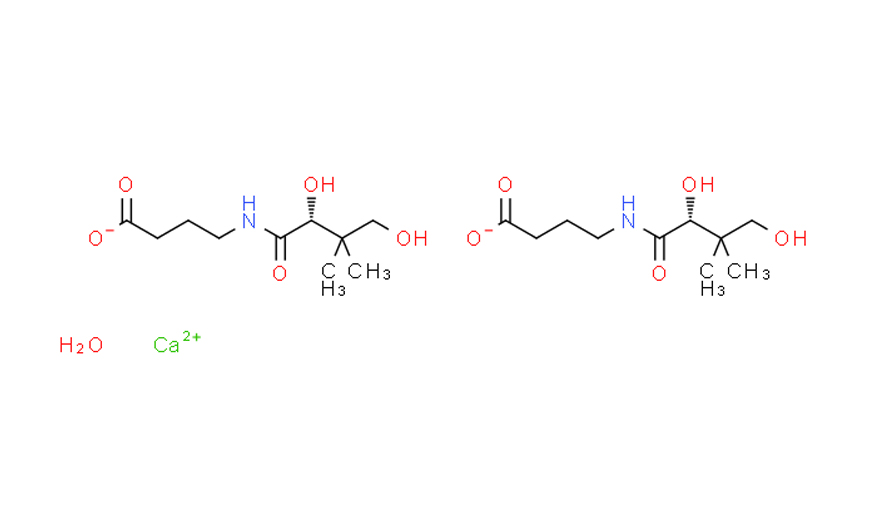
The general formula of Calcium Hopantenate Hemihydrate is:
Ca(C₁₇H₃₃NO₆) · ½H₂O
This formula indicates that the compound consists of one calcium ion, one hopantenate anion, and half a water molecule.
The structural components include:
- A long hydrocarbon chain (C₁₇H₃₃) attached to a carboxyl group (-COOH).
- An amino group (-NH₂) attached to a β-position of the pantoic acid ring.
Physical Properties of Calcium Hopantenate Hemihydrate:
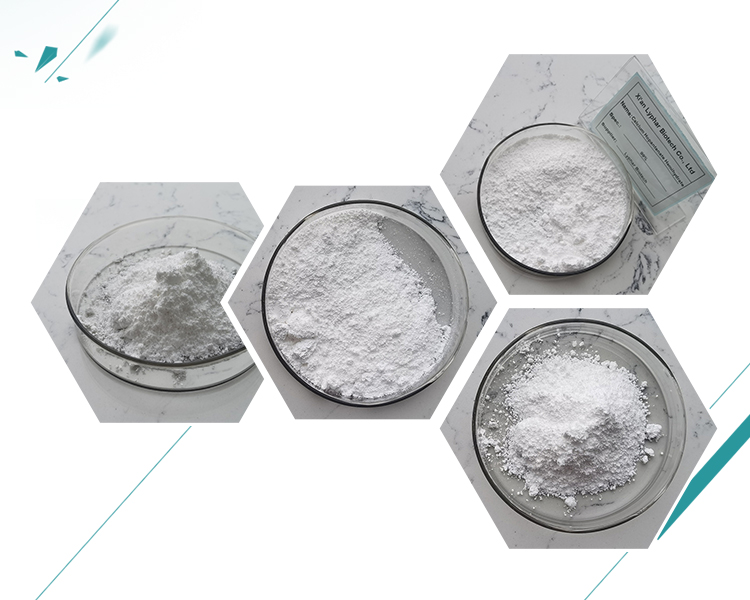
- Appearance: It is typically a white crystalline or powdery solid.
- Molecular Weight: Approximately 439.53 g/mol (without considering the water of crystallization).
- Solubility: It is sparingly soluble in water and may have limited solubility in some organic solvents.
- Melting Point: The exact melting point may vary, but typically compounds like these melt at temperatures higher than 150°C.
- Water Content: The hemihydrate form contains half a molecule of water per calcium hopantenate unit.
Uses and Applications of Calcium Hopantenate Hemihydrate:
Calcium hopantenate is often used as a biochemical reagent or a precursor for various synthetic applications in medicine and other fields. It’s known for its potential neuroprotective properties due to its structural similarity to pantothenic acid, which is essential for the synthesis of coenzyme A.
If you need more specific information on its uses or synthesis, let me know!