
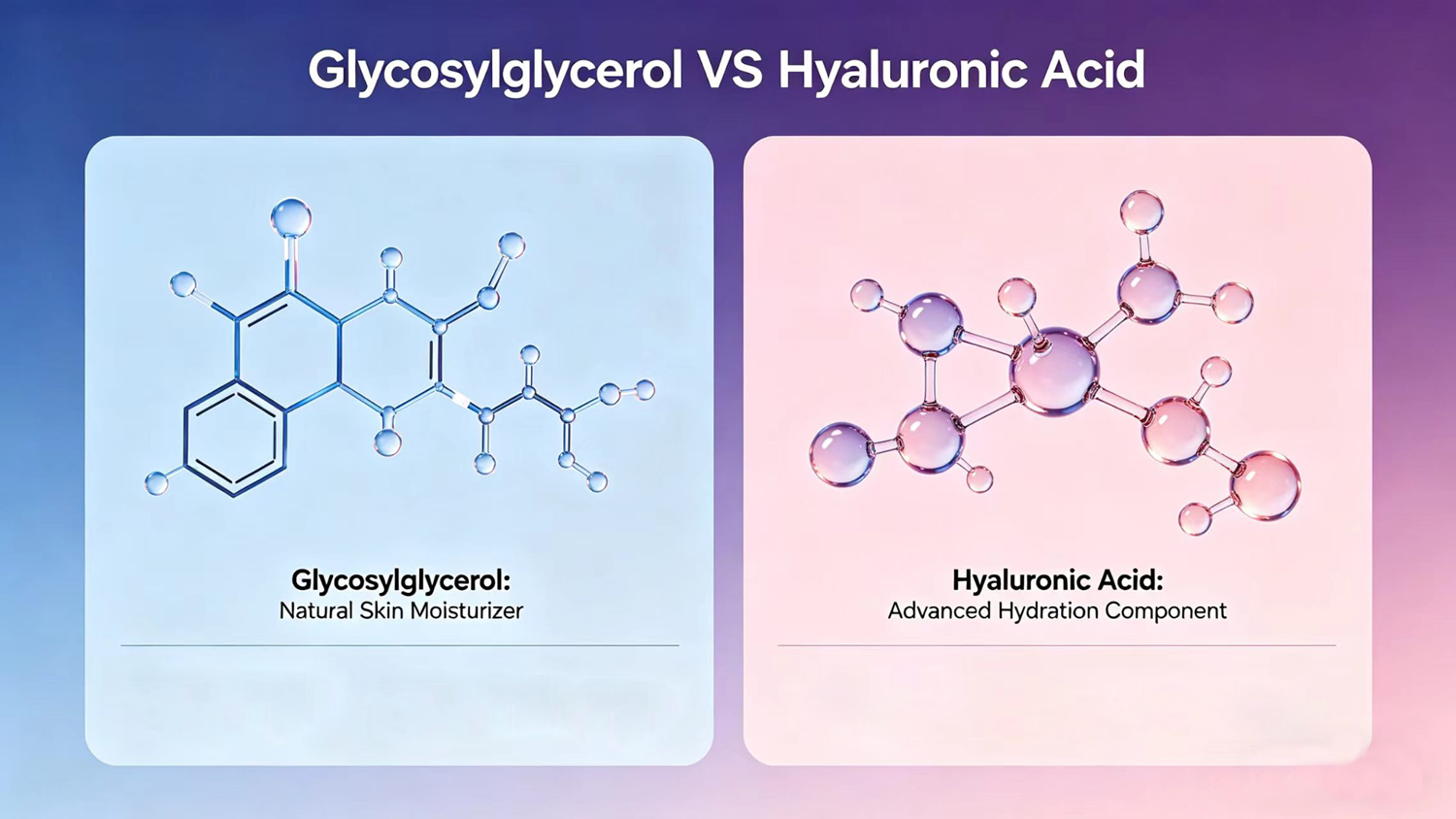
Glycosylglycerol is a natural moisturizing and protective compound found mainly in certain microorganisms like algae and cyanobacteria. Here’s a clear comparison between Glycosylglycerol and Hyaluronic Acid (HA) in skincare, breaking it down by structure, function, and typical uses:
1. Chemical Nature & Structure
Glycosylglycerol
- A sugar–glycerol derivative (glycoside of glycerol).
- Small molecule, highly water-soluble.
- Often naturally derived from marine organisms like algae.
Hyaluronic Acid (HA)
- A large polysaccharide composed of repeating disaccharide units of glucuronic acid and N-acetylglucosamine.
- Can exist in varying molecular weights (low, medium, high), affecting skin penetration.
2. Primary Skin Functions
- Acts as a moisturizer and skin protector.
- Protects skin cells from environmental stress, especially UV-induced oxidative stress.
- Helps maintain cellular hydration and supports barrier function.
Hyaluronic Acid
- Powerful humectant: binds and retains water (up to 1000× its weight).
- Adds plumpness to skin, reducing fine lines.
- Supports wound healing and skin elasticity.
3. Mechanism of Action
- Osmolyte properties: balances water inside skin cells under stress.
- Reduces reactive oxygen species (ROS), helping prevent premature aging.
Hyaluronic Acid
- Physically binds water in the extracellular matrix.
- Low molecular weight HA can penetrate deeper and stimulate collagen synthesis.
- High molecular weight HA mainly forms a surface film to lock in moisture.
4. Typical Cosmetic Uses
- Anti-aging serums, post-sun care, products targeting sensitive or stressed skin.
- Often combined with antioxidants or other marine-derived ingredients.
Hyaluronic Acid
- Moisturizers, serums, sheet masks, injectable fillers.
- Suitable for all skin types, especially dry or dehydrated skin.
5. Summary Comparison Table
| Feature | Glycosylglycerol | Hyaluronic Acid |
| Type | Sugar-glycerol derivative | Polysaccharide |
| Molecular size | Small | Large (variable) |
| Main function | Cellular hydration & stress protection | Intense water retention & plumping |
| Anti-aging effect | Indirect (stress reduction) | Direct (skin volume & elasticity) |
| Best for | Sensitive, stressed, sun-exposed skin | Dry, aging, or dehydrated skin |
| Additional benefits | Anti-oxidative, protective | Collagen stimulation, barrier support |
Takeaway:
- Glycosylglycerol is like a shield for stressed skin cells.
- Hyaluronic acid is like a sponge, holding water and smoothing the skin.
- Many modern formulas combine both for hydration + protection synergy.