
Sialic acid, with N-acetylneuraminic acid (Neu5Ac) as its major human form, is a nine-carbon acidic monosaccharide found mainly at the terminal positions of glycoproteins and glycolipids on cell surfaces. It has important roles in cell recognition, signaling, immunity, and biological protection.
1. Supports cellular recognition and communication
Sialic acid forms part of the glycocalyx—the carbohydrate-rich layer surrounding cells. It helps cells:
- Recognize and interact with other cells
- Respond to signaling molecules
- Regulate receptor activity
- Distinguish “self” from foreign structures
2. Supports immune-system regulation
Sialylated molecules participate in interactions between immune cells and other tissues. Sialic-acid-containing glycans can influence:
- Immune-cell activation
- Inflammatory signaling
- Recognition of pathogens
- Regulation of immune tolerance
This is a regulatory role, rather than simply an immune “booster.”
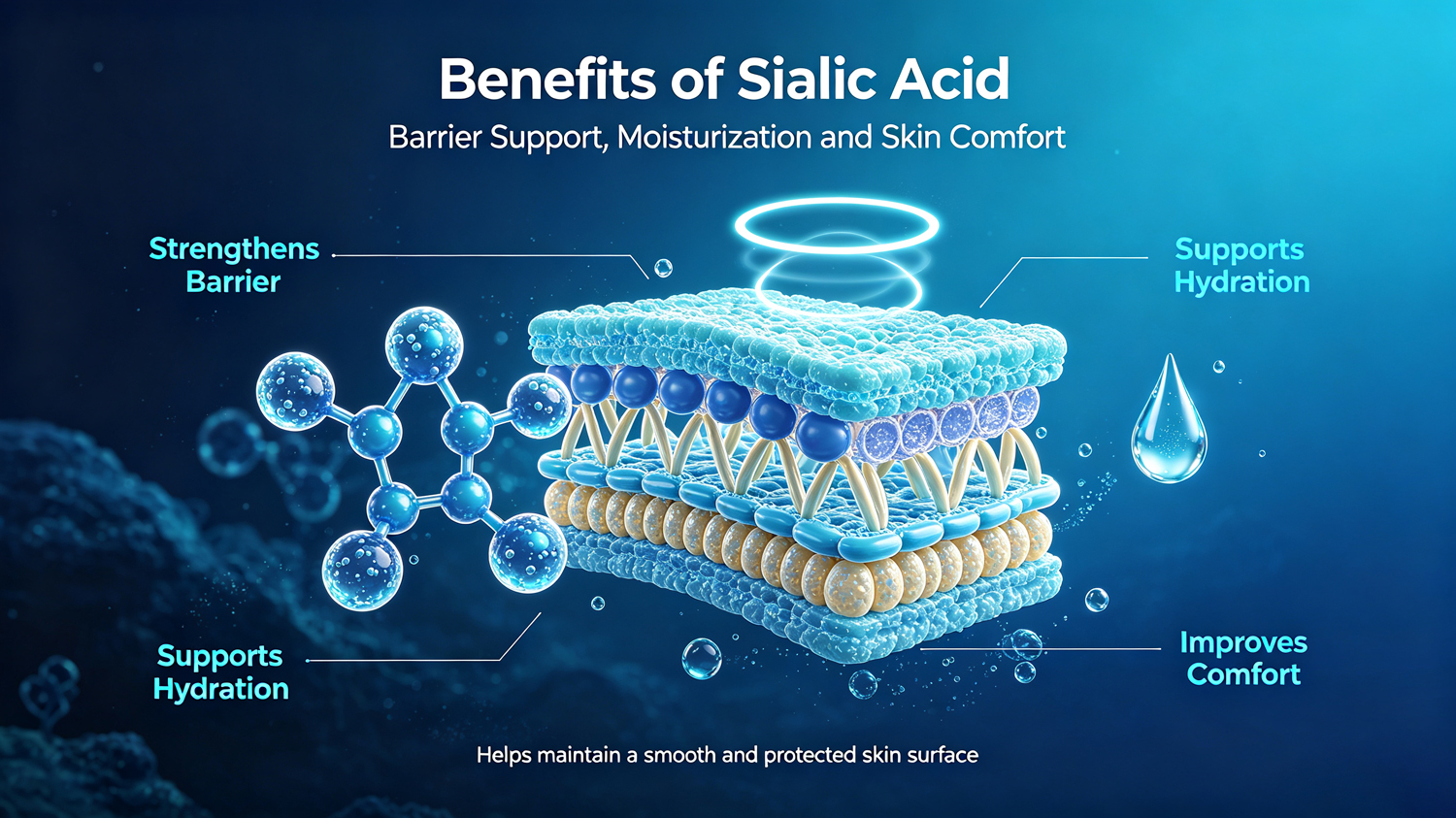
3. Protects cell surfaces
Because sialic acid is negatively charged and commonly occupies the outermost position of cell-surface glycans, it can contribute to a protective barrier around cells. It helps regulate interactions between cells and circulating proteins, enzymes, and other molecules.
4. Important for brain and nervous-system function
Sialic acid is abundant in the brain, particularly in gangliosides and neural glycoproteins. It contributes to:
- Neuronal membrane structure
- Cell-cell interactions
- Synaptic processes
- Neural development and plasticity
The brain contains particularly high concentrations of sialylated glycoconjugates.
5. Supports early brain development
Sialic acid is involved in neural development and is especially important during periods of rapid brain growth. Dietary sialic acid has therefore attracted interest in infant nutrition and cognitive development, although evidence for cognitive benefits from supplementation in healthy adults is much less established.
6. Helps regulate the lifespan of circulating cells and proteins
Sialylation can affect how long glycoproteins remain in circulation. Loss of terminal sialic acid residues can expose underlying sugars that are recognized by clearance receptors, resulting in faster removal from the bloodstream.
Thus, sialylation is important for protein stability, trafficking, and biological half-life.
7. Involved in pathogen interactions
Sialic acid can serve as a recognition site for some viruses, bacteria, and toxins. For example, certain influenza viruses recognize specific sialylated glycans on host cells.
This is a double-edged biological function: sialic acid can help protect cells and regulate immunity, but some pathogens exploit sialic-acid-containing receptors to attach to or enter cells.
8. Potential skin-related benefits
Sialic acid and sialylated glycoconjugates are present in skin and may contribute to:
- Cell-surface hydration and barrier properties
- Cellular communication
- Regulation of inflammatory responses
- Tissue repair processes
However, clinical evidence supporting topical or oral Neu5Ac specifically as an anti-aging or skin-brightening ingredient remains limited compared with better-established cosmetic actives.
9. Antioxidant-related effects — evidence is limited
Some experimental research has investigated sialic-acid-containing compounds in relation to oxidative stress. However, it would be misleading to characterize Neu5Ac as a conventional antioxidant like vitamin C or vitamin E. Its primary biological importance is glycan-mediated recognition and signaling, not direct free-radical scavenging.
10. Nutritional and biochemical importance
Sialic acid is synthesized naturally by human cells, so it is not generally considered an essential dietary nutrient in the same sense as vitamins or essential amino acids. Nevertheless, exogenous sialic acid can enter relevant metabolic pathways and has attracted research interest as a functional nutritional ingredient.
Summary
| Potential benefit | Evidence/importance |
| Cell recognition & communication | Very well established |
| Immune regulation | Well established biologically |
| Cell-surface protection | Well established |
| Brain and neuronal function | Well established |
| Early brain development | Strong biological rationale; supplementation evidence varies |
| Glycoprotein/cell clearance regulation | Well established |
| Pathogen recognition | Well established |
| Skin barrier/cellular effects | Promising but less clinically established |
| Antioxidant activity | Preliminary/secondary |
| Anti-aging supplementation | Insufficient clinical evidence |
Bottom line: The most important benefits of N-acetylneuraminic acid are its roles in cell-surface protection, cell recognition, immune regulation, nervous-system biology, and glycoprotein metabolism. Claims that oral sialic acid supplementation dramatically improves cognition, longevity, skin aging, or immunity should be treated cautiously because human clinical evidence is still developing.