
Tetraacetylphytosphingosine (TAPS) is an acetylated derivative of phytosphingosine, a naturally occurring sphingoid base associated with skin lipids and ceramide metabolism.
It is primarily used as an active ingredient in cosmetic and skincare formulations. Its main purpose is to support the skin barrier by promoting the production of endogenous ceramides, helping maintain skin hydration, softness, and barrier integrity.
Tetraacetylphytosphingosine is particularly interesting in formulations designed for dry, sensitive, mature, and barrier-impaired skin.
1. Basic Ingredient Information
| Property | Description |
| Common name | Tetraacetylphytosphingosine |
| Abbreviation | TAPS |
| INCI name | Tetraacetylphytosphingosine |
| CAS number | 13018-48-9 |
| Chemical category | Acetylated sphingoid base |
| Parent compound | Phytosphingosine |
| Chemical family | Sphingolipid derivatives |
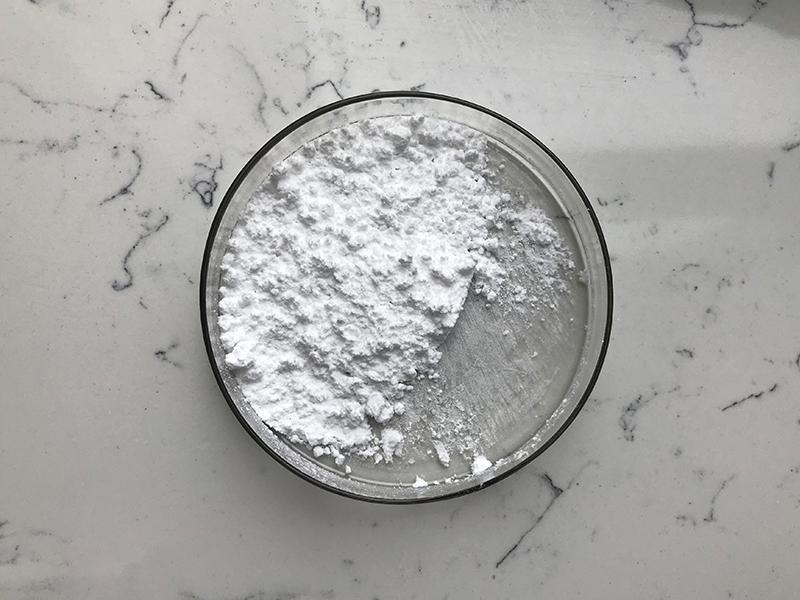
| Typical appearance | White to off-white powder |
| Solubility | Generally insoluble in water; soluble in suitable organic solvents and oil-compatible systems |
| Main application | Cosmetics and personal care |
| Primary function | Skin conditioning and barrier support |
2. Chemical Composition and Structure
Tetraacetylphytosphingosine is produced by chemically modifying phytosphingosine through acetylation.
Its molecular structure contains:
- An 18-carbon sphingoid backbone.
- One acetylated amino group.
- Three acetylated hydroxyl groups.
- Four acetyl groups in total.
This modification changes the physicochemical properties of the original phytosphingosine, particularly its solubility and compatibility with cosmetic formulations.
Tetraacetylphytosphingosine can subsequently undergo deacetylation, releasing phytosphingosine, which participates in sphingolipid and ceramide-related metabolic pathways.
3. Main Functions
Tetraacetylphytosphingosine is mainly recognized for its potential skin-conditioning and skin-barrier benefits.
(1) Promotes ceramide production
- Supports endogenous ceramide biosynthesis.
- Helps maintain the lipid composition of the stratum corneum.
- Contributes to skin-barrier integrity.
(2) Moisturizing and barrier support
- Helps improve the skin’s ability to retain moisture.
- Supports the protective lipid barrier.
- Helps reduce moisture loss associated with impaired barrier function.
(3) Skin repair and conditioning
- Supports skin-barrier recovery.
- Helps improve skin softness and smoothness.
- Is suitable for formulations targeting dry and sensitive skin.
(4) Under-eye appearance
Some supplier studies report improvements in under-eye dark-circle appearance and skin brightness.
These functions are supported mainly by ingredient research and supplier-specific efficacy information; the strength of independent clinical evidence varies.
4. Applications in Cosmetics
Facial skincare
Used in moisturizing creams, barrier-repair creams, and skin-conditioning products.
Eye-care products
Used in eye creams and eye-contour formulations targeting the appearance of dark circles.
Anti-aging skincare
Incorporated into formulations designed to support skin barrier quality, hydration, and smoothness.
Body-care products
Used in moisturizing lotions and skin-conditioning products.
5. Recommended Formulation Considerations
Commercial supplier recommendations vary according to the specific Tetraacetylphytosphingosine grade.
| Parameter | General consideration |
| Typical supplied form | Powder |
| Formulation phase | Usually introduced through a compatible oil or solvent system |
| Water compatibility | Poor |
| Formulation objective | Ceramide support and skin conditioning |
| Suggested concentration | Approximately 0.1–0.5% as an initial formulation reference, subject to supplier specifications |
| Product types | Creams, lotions, eye creams, and barrier-care formulations |
Some commercial specifications list broader recommended use levels of 0.05–2%. The appropriate concentration depends on the supplier’s grade and formulation testing.
6. Advantages of Tetraacetylphytosphingosine
- A specialized derivative of phytosphingosine.
- Supports endogenous ceramide production.
- Offers potential skin-barrier benefits.
- Can be incorporated into oil-compatible cosmetic formulations.
- Suitable for moisturizing and barrier-support skincare.
- Has potential applications in eye-care and anti-aging products.
7. Important Considerations
- Tetraacetylphytosphingosine is not itself a conventional preformed skin ceramide.
- Its poor water solubility requires careful formulation.
- Its stability and compatibility should be evaluated in the finished formulation.
- Cosmetic efficacy claims should be supported by appropriate testing.
- It should not automatically be considered a treatment for eczema, acne, or other medical skin conditions.
8. Summary
Tetraacetylphytosphingosine (TAPS) is an acetylated phytosphingosine derivative developed for cosmetic applications, particularly skin-barrier support and ceramide-related skincare.
Its main research and commercial value lies in its potential to stimulate endogenous ceramide production, improve barrier function, and support skin hydration and conditioning.
Its key positioning in modern skincare is as a ceramide-biosynthesis-supporting active ingredient rather than simply another conventional moisturizer.
9. Further Research Topics
For a comprehensive ingredient study, the following topics are particularly relevant:
(1) Chemical structure and physical properties of Tetraacetylphytosphingosine.
(2) Origin, production process, and synthesis of Tetraacetylphytosphingosine.
(3) Mechanism of action and ceramide biosynthesis.
(4) Efficacy and functions of Tetraacetylphytosphingosine.
(5) Benefits, disadvantages, and potential side effects.
(6) Tetraacetylphytosphingosine vs. phytosphingosine vs. ceramide.
(7) Applications in cosmetics and skin-barrier repair.
(8) Formulation compatibility, stability, and quality standards.
Useful scientific reference: Advances in the biosynthesis of tetraacetyl phytosphingosine, a key substrate of ceramides.