
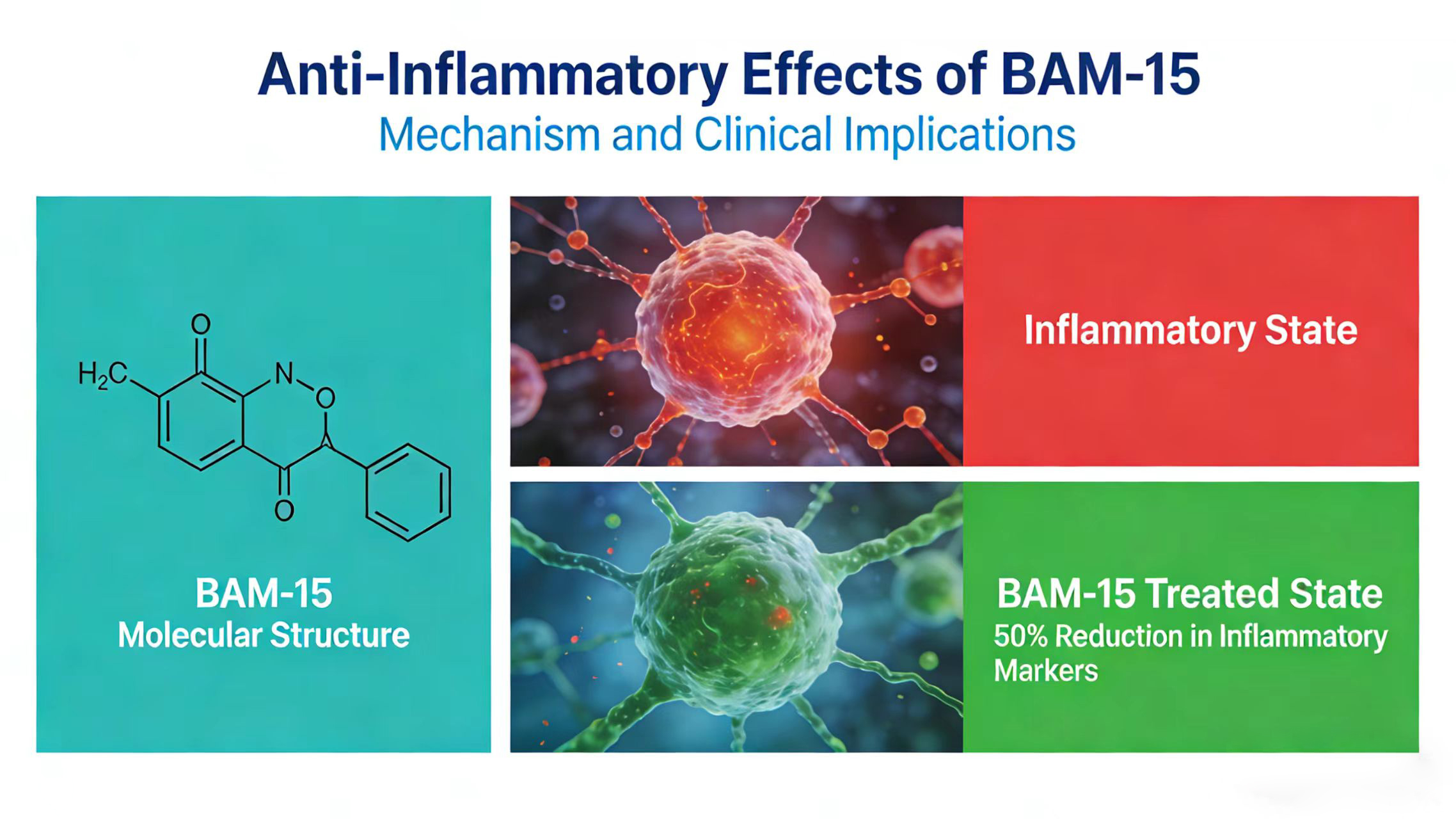
BAM-15, primarily known as a mitochondrial uncoupler, has been investigated for its metabolic effects, but it also shows anti-inflammatory properties, largely linked to its action on cellular energy metabolism and reactive oxygen species (ROS). Here’s a detailed breakdown:
Mechanism Behind Anti-inflammatory Effects
1. Reduction of Mitochondrial ROS
BAM-15 uncouples mitochondrial oxidative phosphorylation, which lowers the proton gradient and reduces mitochondrial membrane potential.
This leads to decreased ROS production, which is a major trigger for inflammation via pathways like NF-κB and NLRP3 inflammasome activation.
2. Modulation of Immune Cell Function
In immune cells, especially macrophages, mitochondrial metabolism regulates the inflammatory phenotype.
BAM-15 shifts macrophages toward a less pro-inflammatory state by:
- Decreasing glycolytic reprogramming.
- Reducing pro-inflammatory cytokine production (e.g., TNF-α, IL-6, IL-1β).
3. Activation of AMPK Pathway
Mild mitochondrial uncoupling activates AMP-activated protein kinase (AMPK), which has anti-inflammatory effects:
- Inhibits NF-κB signaling.
- Promotes autophagy, helping to clear damaged organelles and reduce inflammatory signals.
Evidence From Studies
1. Obesity and Metabolic Syndrome Models:
- BAM-15 reduces adipose tissue inflammation in obese mice. This is thought to occur via decreased ROS and altered macrophage polarization from M1 (pro-inflammatory) to M2 (anti-inflammatory).
2. Systemic Inflammation:
- Some preclinical studies indicate BAM-15 lowers circulating pro-inflammatory cytokines and improves insulin sensitivity partly due to reduced inflammation.
3. Neuroinflammation:
- While direct studies are limited, mitochondrial uncouplers like BAM-15 may protect neurons from inflammation-induced damage by lowering ROS and improving mitochondrial dynamics.
Summary
BAM-15 is anti-inflammatory effects are indirect, emerging from its ability to:
- Reduce mitochondrial ROS.
- Reprogram immune cell metabolism.
- Activate AMPK signaling and autophagy.
- Lower pro-inflammatory cytokines in tissues prone to metabolic inflammation (like fat, liver, and potentially brain tissue).
If you want, I can make a visual pathway diagram showing exactly how BAM-15 links mitochondria, ROS, AMPK, and inflammation—it makes this much easier to see.
Do you want me to do that?